 工業冷水機製造商 LNEYA Taiwan



What should I pay attention to when using the reactor for chilling and cooling?
When using the reactor chilling and cooling and cooling device, users need to pay attention to their refrigeration and heating operations. Pay attention to the operation within a reasonable temperature range to avoid excessive temperature and pressure causing the reactor to cool down and cool down. Therefore, for some use attention Point, we need to understand clearly.
The heat transfer jacket for chilling and cooling and cooling of the reactor is generally made of ordinary carbon steel, which is a container which is placed outside the reactor cylinder to form a sealed space, which is simple and convenient. The jacket is provided with water vapor, cooling water or other inlets for heating and cooling medium. (If the heating medium is water vapor, the inlet pipe should be close to the upper end of the jacket, and the condensate should be discharged from the bottom; if the heat transfer medium is liquid, the inlet pipe should be placed at the bottom, the liquid enters from the bottom, and the upper part flows out, so that the heat transfer medium Filling the space of the entire jacket. Sometimes, for larger containers, in order to obtain better heat transfer effect, a spiral baffle is arranged in the jacket space to reduce the flow area of the fluid in the jacket and increase the flow velocity of the fluid and Avoid short circuit, but the structure is more complicated. When the diameter of the kettle is larger or the pressure of the heat transfer medium is higher, the welded semicircular spiral tube or spiral angle steel structure is often used instead of the jacket type structure. The flow rate of the heat medium improves the heat transfer effect and increases the strength and rigidity of the external pressure resistance of the reactor.
After the reactor chilling and cooling and cooling operation is finished, it can be cooled by water (exothermic reaction) or air-cooled. The needle valve is sealed. Only the valve needle needs to be rotated slightly, and the cover is pressed tightly to achieve a good seal. Force so as not to damage the sealing surface. After the reaction is completed, the cooling and cooling are first carried out, and then the high-pressure gas in the kettle is discharged to reduce the pressure to a normal pressure, and then the bolts are loosely and symmetrically unscrewed and removed. Special attention should be paid to the protection of the sealing surface during the unloading process. After each reactor chilling and cooling and cooling operation is completed, the residue on the kettle body and the kettle lid should be removed. All sealing surfaces on the reactor should be cleaned frequently and kept dry. It is not allowed to be cleaned with hard objects or soft surfaces. The agitator should be removed for cleaning.
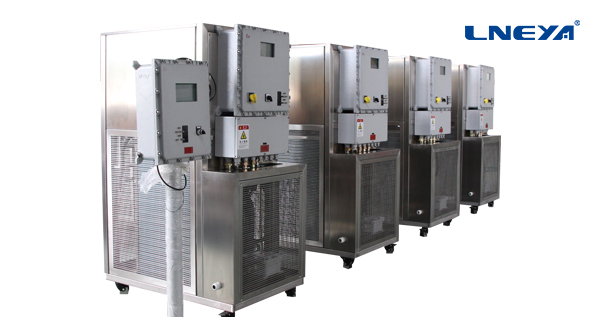
The height of the reactor cooling jacket is determined by the heat transfer area, which is determined by the process requirements. However, it should be noted that the height of the jacket is generally not lower than the height of the liquid, and should be about 50 to 100 mm higher than the liquid level in the device to ensure sufficient heat transfer.
The reactors for the reactor chilling and cooling and cooling device are available in all models. Therefore, the user must select the model according to his own working conditions in the early stage selection to avoid over- or too small selection.
(This article source network, if there is infringement, please contact LNEYA to delete, thank you.)
Raccomandazioni correlate
-
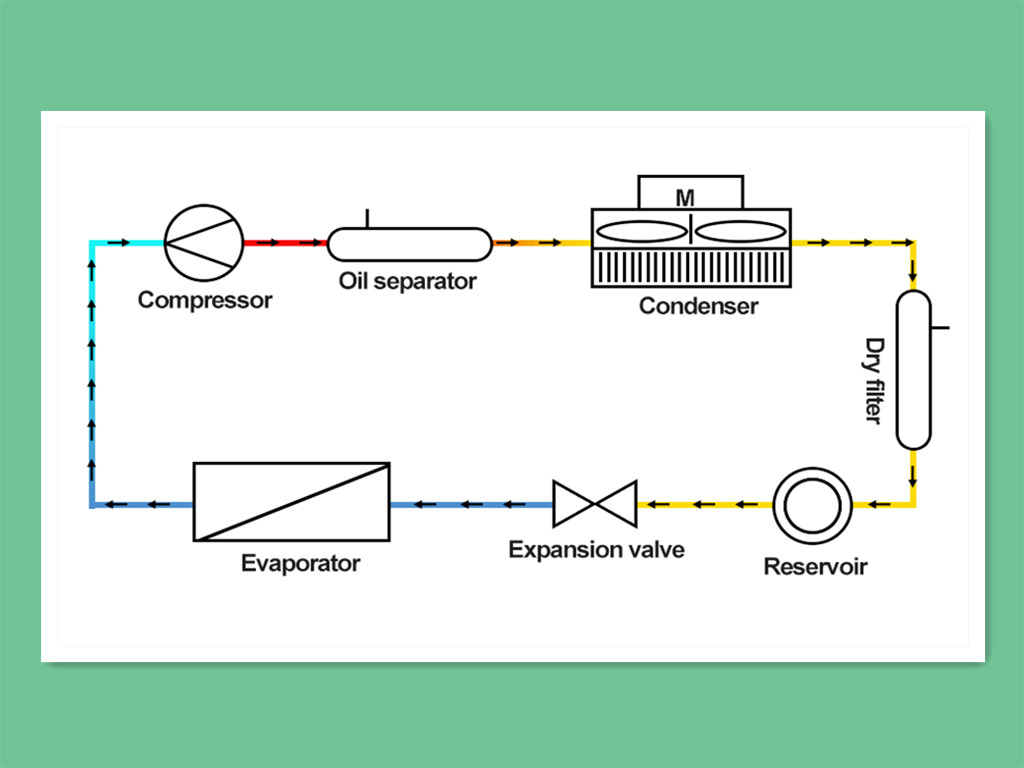
Troubleshoot the main points of failure of the high and low temperature cooling system
2285When the industrial high and low temperature cooling system is in use, what is the general reason if the temperature cannot drop down? How should we deal with such failures? Let's first analyze the principles and methods of industrial cooling. The...
Visualizza dettagli -
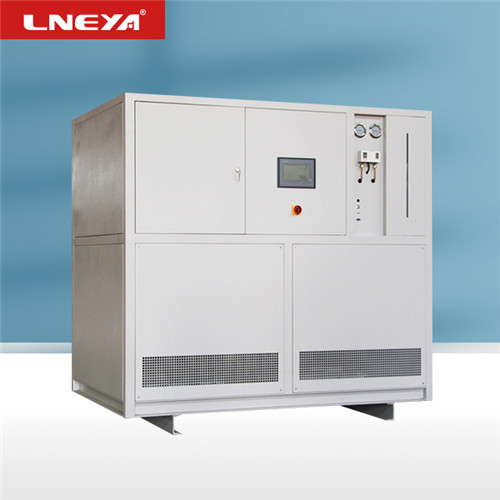
Punti di attenzione per l'ispezione giornaliera delle apparecchiature di controllo a bassa temperatura a meno 30℃
1901The low temperature control equipment at minus 30 degrees Celsius is a refrigeration unit or also called a refrigeration unit. The difference from the chiller is the temperature range. It is a commonly used low-temperature equipment in the industr...
Visualizza dettagli -
Vantaggi e svantaggi dei refrigeratori raffreddati ad acqua
2093I refrigeratori industriali raffreddati ad acqua prodotti da LNEYA sono apparecchiature di refrigerazione che forniscono acqua refrigerata. Oggi discuteremo la classificazione, i vantaggi e gli svantaggi dei refrigeratori raffreddati ad acqua. Configurazione dei refrigeratori raffreddati ad acqua: 1....
Visualizza dettagli -

Introduzione e vantaggi del sistema di refrigerazione criogenico
2255The medium-sized single-fluid cryogenic refrigerator produced by our company has a cooling temperature range from -150℃ to -5℃, fast cooling speed, safe and reliable, used for rapid liquid cooling, applied to high-tech such as biochemical, freeze-...
Visualizza dettagli