 工業冷水機製造商 LNEYA Taiwan



Principio di analisi del funzionamento del circolatore di riscaldamento a refrigerazione
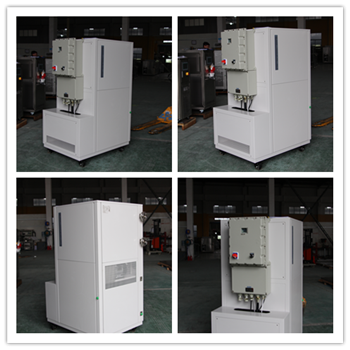
Con il continuo sviluppo della tecnologia, sempre più apparecchiature di refrigerazione sono apparse nella nostra vita, come ad esempio i circolatori di refrigerazione e di riscaldamento, che in realtà non sono ordinari, sono apparecchiature di refrigerazione notevoli. La refrigerazione...
The refrigeration heating circulator uses a limited amount of refrigerant in a closed refrigeration system to repeatedly compress, condense, expand, and evaporate the refrigerant, and continuously absorbs heat and vaporizes at the evaporator to perform cooling and cooling. The process of cooling the object to below ambient temperature and maintaining the low temperature by the refrigerant moving the heat from a low temperature object (such as a cold storage) to a high temperature object is achieved by using a refrigeration device.
An important parameter of the circolatore di refrigerazione e riscaldamento is the refrigeration coefficient, also known as the operating coefficient of the refrigeration unit, indicated by the symbol COP. The refrigeration heating circulator Xiaobian tells everyone that at a certain ambient temperature, the lower the cold storage temperature, the smaller the cooling coefficient.
So, what are its advantages?
The entire liquid circulation is hermetic, with an expansion vessel, the expansion vessel and the liquid circulation are adiabatic, do not participate in the liquid circulation, but are mechanically connected, regardless of whether the temperature of the liquid circulation is high temperature or the medium in the low temperature expansion vessel is less than 60 degrees. .
The entire liquid circulation is a closed system. There is no absorption of water vapor at low temperatures. There is no oil mist at high temperatures. The heat transfer oil can have a wide operating temperature; mechanical and electronic valves are not used in the entire circulation system.
Next, let’s look at the refrigeration principle of the refrigeration heating circulator.
Compressed air refrigeration cycle
Since the air temperature heating and the constant temperature heat removal are not easy to achieve, it cannot be operated in the reverse cycle. In the compressed air refrigeration cycle, two constant pressure processes are used to replace the two constant temperature processes of the reverse cycle, so it can be regarded as a reverse cycle. In engineering applications, the compressor can be piston or impeller.
Compressed vapor refrigeration cycle
The reverse refrigeration cycle of compressed steam can be theoretically achieved, but a state of too low dryness will occur, which is not conducive to the compression of two-phase materials. Refrigeration heating circulators, which tell you that in order to avoid adverse factors, increase cooling efficiency and simplify equipment, throttle valves (or expansion valves) are often used instead of expanders in practical applications.
The compressed vapor refrigeration cycle uses a low-boiling substance as a refrigerant, and utilizes the constant pressure in the wet vapor zone to determine the temperature, and the constant pressure gasification endothermic refrigeration at a low temperature can overcome some of the disadvantages of the above-mentioned compressed air and regenerative compressed air circulation.
Absorption refrigeration cycle
The absorption refrigeration cycle utilizes the different solubility characteristics of the refrigerant at different temperatures in the solution, so that the refrigerant is absorbed by the absorbent (ie solvent) at a lower temperature and pressure, while at the same time making it at a higher temperature and pressure. Evaporate from the solution and complete the cycle for refrigeration purposes.
Raccomandazioni correlate
-
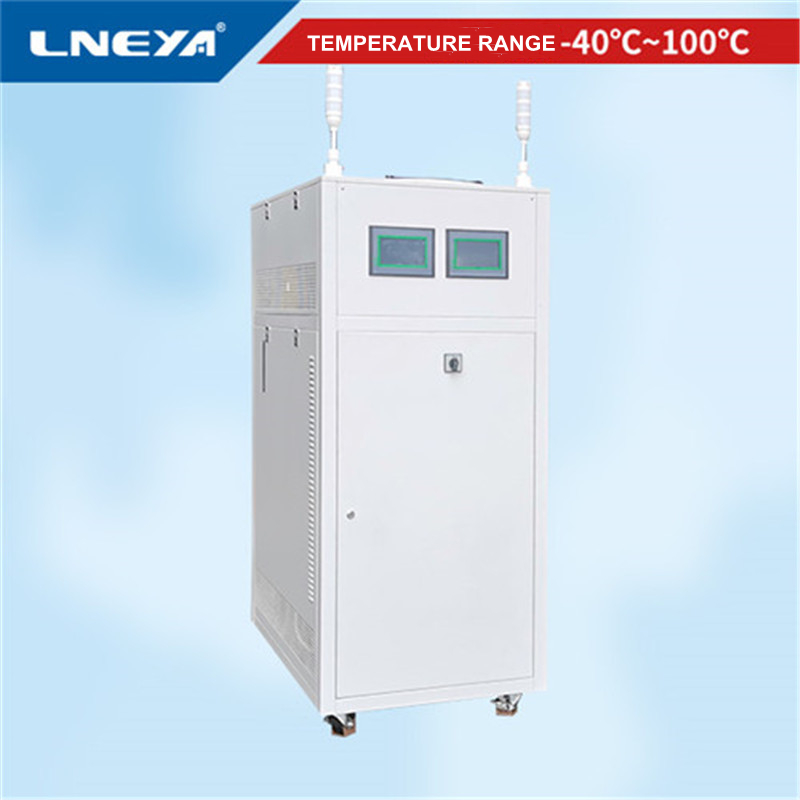
ISG/TM Motor Test Cooling System High Voltage Failure and Treatment Measures
2406The ISG/TM motor test cooling system is divided into two types in the industry: air-cooled and water-cooled. The working principle is to first inject a certain amount of water into the water tank in the machine, and then pass the ISG/TM motor test...
Visualizza dettagli -
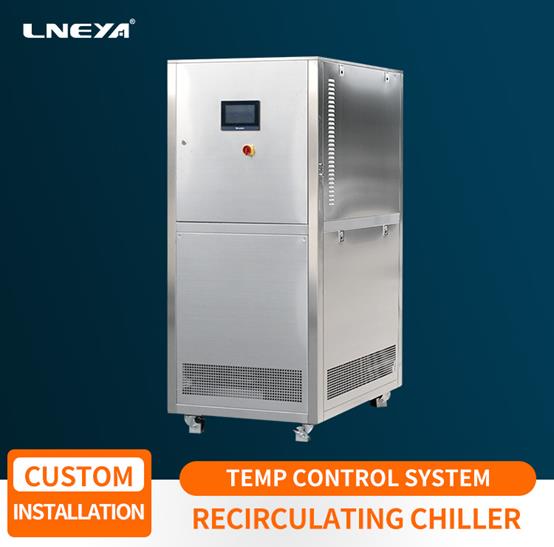
What is the refrigerant of the recirculating chiller
2121Different industries have different requirements for the refrigeration temperature of the recirculation chiller, so the selected refrigerant is also different. When choosing a recirculation chiller, it is also necessary to have a clear understandi...
Visualizza dettagli -
Suggerimenti per il rilevamento di perdite nel congelatore a bassa temperatura
1834Rilevamento delle perdite per immersioneLa sensibilità del rilevamento delle perdite per immersione è superiore a quella del test delle bolle, che viene solitamente applicato alle piccole unità freezer Freon. Quando si utilizza, l'apparecchiatura che non può entrare in contatto con l'acqua nel sistema deve essere...
Visualizza dettagli -
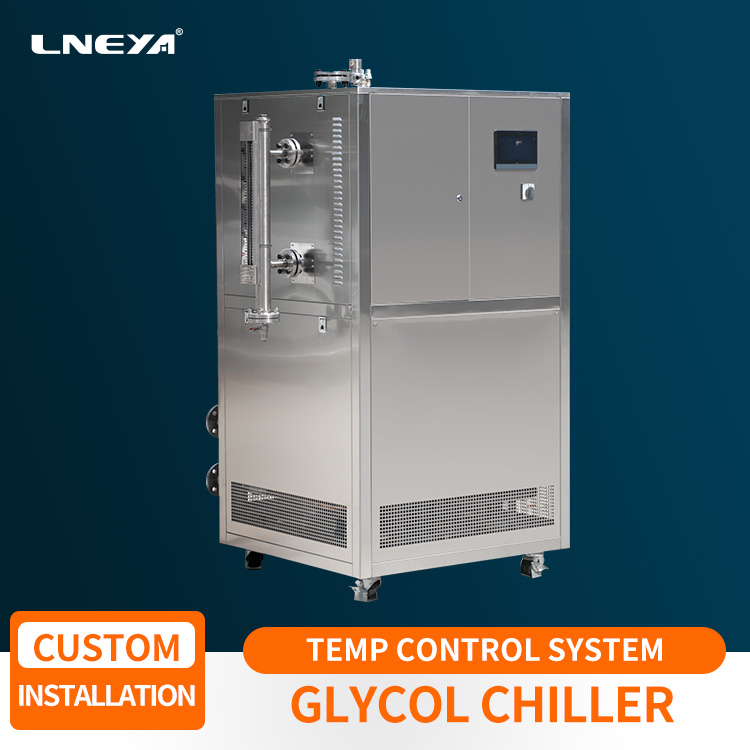
Spiegazione della temperatura anomala del condensatore del refrigeratore di glicole
2270Nel refrigeratore a glicole, la temperatura del condensatore è la temperatura di saturazione quando il refrigerante nel condensatore condensa sotto la pressione del vapore. Una volta che la temperatura del condensatore del refrigeratore a glicole è anormale, è necessario analizzare le specifi...
Visualizza dettagli