 工業冷水機製造商 LNEYA Taiwan



How to control the emulsification temperature of the emulsifier?
A good cream product is not only reflected in the quality of raw materials, but also has a great influence on the emulsification process during production, such as the texture and stability of the product, and the temperature control during production will affect the cream product.
Generally speaking, the emulsification temperature is determined by factors such as the melting point of the high melting point substance contained in the two phases, the type of emulsifier, the solubility of the oil phase and the water phase, etc. In addition, the temperature of the two phases needs to be kept at nearly the same state, especially for waxy and fatty oil phase components with a higher melting point, that is, the temperature is above 70. They cannot add a low-temperature water phase during emulsification to prevent emulsification before emulsification. Crystallization of wax and fat results in blocky or rough and uneven emulsion. The emulsification temperature sometimes also affects the size of the emulsion particles. For example, when the fatty acid soap anionic emulsifier is generally used for emulsification by the nascent soap method, the emulsion particle size is about 1.8-2.0 microns when the emulsification temperature is controlled at 80 degrees. When emulsifying, the particle size is about 6 microns. However, when non-ionic emulsifiers are used for emulsification, the effect of emulsification temperature on particle size will be relatively weak.

When emulsifying, the temperature of the oil and water phases can be controlled at 75 to 85 degrees. If the oil phase has components such as wax with a high melting point, the emulsification temperature should be higher at this time. In addition, if the viscosity increases during the emulsification process, it will also affect the stirring, so it is necessary to increase the emulsification temperature appropriately.
Tank bottom emulsifier, pipeline emulsifier, vacuum emulsifier, dispersion emulsifier, etc. are used in daily chemical, fine chemical, biopharmaceutical and cosmetic production. In the mixing and stirring process, a large part of material processing requires heating function to achieve the effect of high-quality finished products.
Heating methods include electric heating and dynamic heating. Electric heating requires a built-in functional module of the emulsifier, which can adjust the temperature easily and portablely, but the temperature uniformity is poor and cannot be cooled. Dynamic heating is our dynamic temperature control system SUNDI series. Heat transfer oil with different temperature points is used as the medium, which can not only heat but also cool. The emulsifier itself and the temperature of the material can be set to control the temperature. range, SUNDI-135 is used by customers for cooling and heating of emulsifiers. The temperature of the material in the reactor can be controlled and the temperature rise and fall curves can be displayed on the control panel, the temperature difference can be set independently, and the temperature control accuracy can also be adjusted.
Raccomandazioni correlate
-
Leakage Detection Tips of Low Temperature Freezer
2189Pressure leaking detection It is an effective way to check and find out the leakage point. The leakage detecting pressure of refrigerating system of freezer is relevant to the type of refrigerating fluid and cooling and the location of tube. The l...
Visualizza dettagli -

The benefits of choosing a cryostat
2700The temperature of the effluent of the cryogenic refrigerator is very low, so the carrier medium can not be used for water (the water will freeze when it reaches 0 ° C). At this time, it is necessary to use a brine solution or a glycol solution, a...
Visualizza dettagli -
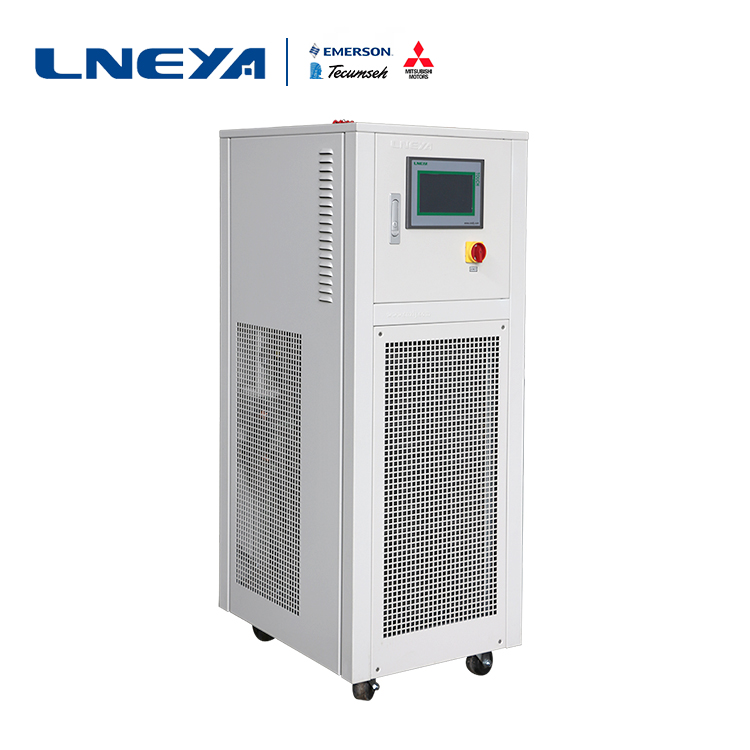
Fattori che influenzano la capacità di raffreddamento del refrigeratore del sistema di raffreddamento del reattore chimico
2734There are various types of chillers, such as air-cooled chillers, water-cooled chillers, etc. But no matter what the chiller is, there are some factors that affect the cooling capacity of the chiller. A cooler is an energy-saving device that is co...
Visualizza dettagli -
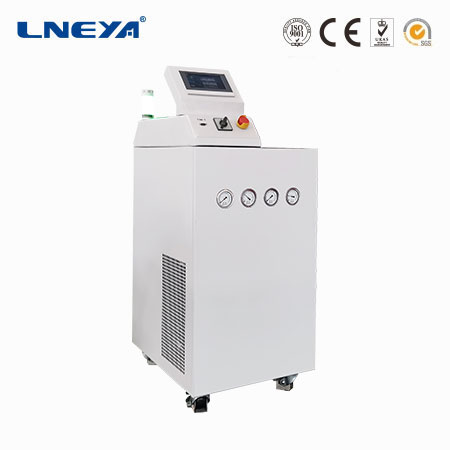
Quali sono i requisiti di installazione dei refrigeratori per litografia?
2173In order to ensure the reliable and normal operation of the chiller of the lithography machine and prevent the failure of the chiller caused by improper water distribution pipeline construction, the following matters should be paid attention to wh...
Visualizza dettagli