 工業冷水機製造商 LNEYA Taiwan



Variable Frequency Chiller Explained: Working Principle, Advantages, and Key Differences
As industries continue to pursue higher energy efficiency and more precise temperature control, variable frequency chillers have become increasingly popular in modern cooling systems. Unlike traditional fixed-speed chillers, variable frequency chillers can automatically adjust their operating capacity according to real-time cooling demand, helping reduce energy consumption while maintaining stable process temperatures.
What Is a Variable Frequency Chiller
A variable frequency chiller is a refrigeration device equipped with a variable frequency drive. It can automatically adjust the operating speed of core components such as compressors, pumps, and fans according to the actual cooling demand, and change the output power to match the cooling load at different times.
This intelligent capacity control improves energy efficiency and reduces unnecessary power consumption during partial-load conditions.
How Does a Variable Frequency Chiller Work
The core component of the variable frequency chiller is the variable frequency driver. The VFD changes the frequency and voltage supplied to the motor, allowing the motor speed to be adjusted continuously.
When cooling demand decreases, the compressor slows down and consumes less energy. When cooling demand increases, the compressor speeds up to provide additional cooling capacity. As a result, the entire cooling system operates more efficiently under varying load conditions.
Key Benefits of Variable Frequency Chillers
Energy Savings
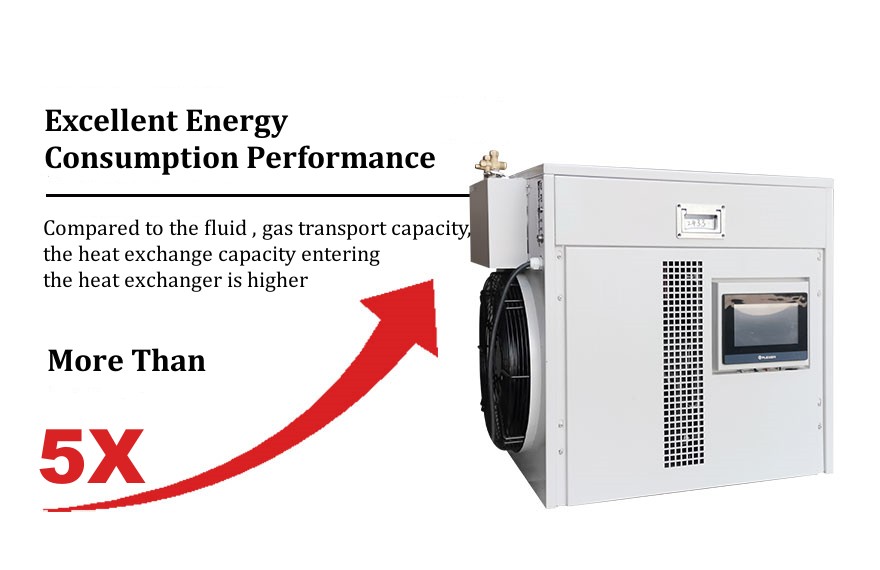
One of the biggest advantages of variable frequency chillers is reduced energy consumption. Most 工業用冷凍機 operate in a partial-load condition for a long time during actual operation. A variable frequency chiller can match capacity to actual demand instead of running continuously at maximum output.
Improved Temperature Stability
Variable frequency technology allows smoother capacity adjustment. Instead of frequent compressor start-stop cycles, the system continuously adapts to load changes.
Reduced Mechanical Wear
Frequent startup and shutdown cycles place stress on compressors and motors. By operating at variable speeds, the system experiences less mechanical stress and smoother operation. This helps to extend the equipment’s lifespan and reduce maintenance costs.
Lower Operating Noise
Because components often operate at lower speeds during partial-load conditions, variable frequency chillers typically generate less noise than traditional fixed-speed systems. This is particularly beneficial for laboratories, medical facilities, and indoor installations.
Variable Frequency Chiller vs Fixed-Speed Chiller
The following table lists the main differences between fixed-frequency chillers and variable frequency chillers.
| Feature | Variable Frequency Chiller | Fixed-Speed Chiller |
| Capacity Control | Adjustable | Fixed |
| エネルギー効率 | より高い | より低い |
| Temperature Stability | Better | スタンダード |
| Startup Frequency | Reduced | Frequent |
| Operating Noise | より低い | より高い |
| 初期投資 | より高い | より低い |
結論
Variable frequency chillers have become an important solution for modern industrial cooling applications.
For facilities seeking to improve efficiency and reduce long-term operating costs, variable frequency technology offers a practical and highly effective approach to temperature control.
LNEYA variable frequency chillers integrate advanced control technology, intelligent capacity adjustment, and reliable cooling performance to meet the demanding requirements of modern industrial processes.
無料で詳細なお見積もりを入手!
よくある質問
お問い合わせ
TEL
EMAIL:
WeChat と WhatsApp:

ウィーチャットQR