 工業冷水機製造商 LNEYA Taiwan



温度制御要件を満たす半導体試験用チラーの冷却方法
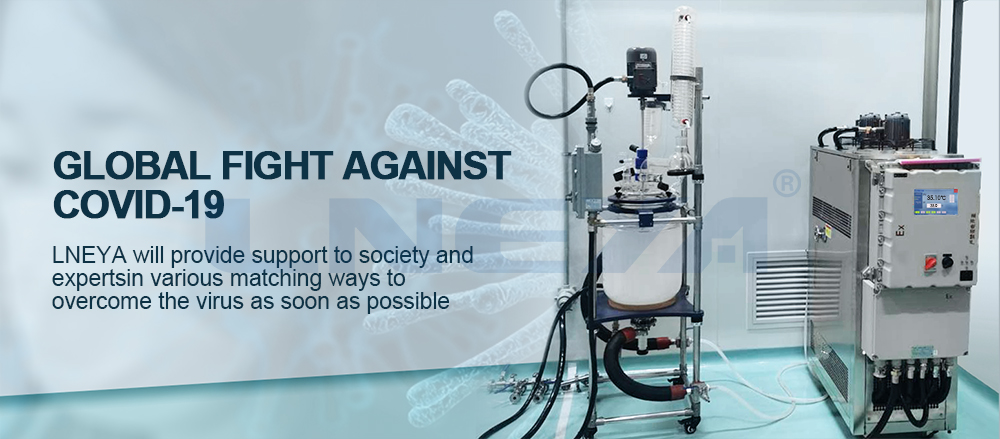 The biopharmaceutical field requires high-precision temperature to control the activity of enzymes and the production of products; the chemical industry field requires specific temperatures to stabilize chemical reactions; the electronic manufacturing field needs to provide a constant temperature environment for various electronic components to make them stable Work and achieve better performance status, such as: scanning probe microscope, quartz crystal oscillator, electronic linear accelerator, etc.
Although there are many manufacturers of temperature control equipment in China, there are few self-developed semiconductor testing chillers. Especially in high-precision measurement and control, semiconductor testing chillers have developed a model that combines high accuracy, high stability, The high-power temperature control system with wide adjustment range is of great significance.
Cooling method of chiller for semiconductor testing
1. Direct cooling method: The cooling unit directly cools the circulating water. First, the temperature sensor collects the temperature value to the temperature controller, and then after a specific control algorithm, the temperature controller controls the cooling unit and the heating unit to perform cooling and heating processes, thereby controlling the temperature near the set value. When the circulating water temperature deviates from the set value, the control system first performs cooling or heating treatment. When the circulating water temperature enters the set threshold range, the circulating water temperature is gradually stabilized by fine-tuning the cooling and heating power.
The temperature control method directly controls the circulating water, the temperature control accuracy is high, and can be used under low temperature conditions; the disadvantage is that the system structure and the control program are complicated.
2. Indirect cooling method: Generally, it is a kind of temperature adjustment method to obtain the required water temperature by adjusting the flow rate ratio of the circulating water of two different temperatures. The mixing process is mainly achieved by adjusting the opening of the electric three-way valve. First, the temperature sensor separately detects the temperature of the two circulating water, and transmits the temperature value to the temperature controller, and then the temperature controller controls the opening of the electric three-way valve according to a specific control algorithm, that is, it controls two different temperatures of water The final mixing ratio is the final temperature of circulating water.
The chiller heat exchanger for semiconductor testing is a widely used indirect cooling device in modern industrial production. It can achieve heat transfer between two or more different temperature fluids, so that the temperature of the high temperature fluid or the low temperature fluid can meet the process requirements. . During the working process of the heat exchanger, different heat exchange power and heat exchange efficiency can be achieved by adjusting the flow rate of the medium or refrigerant. This kind of equipment has large heat exchange power, usually more than several hundred kilowatts, and is bulky, which is not easy to integrate and transport.
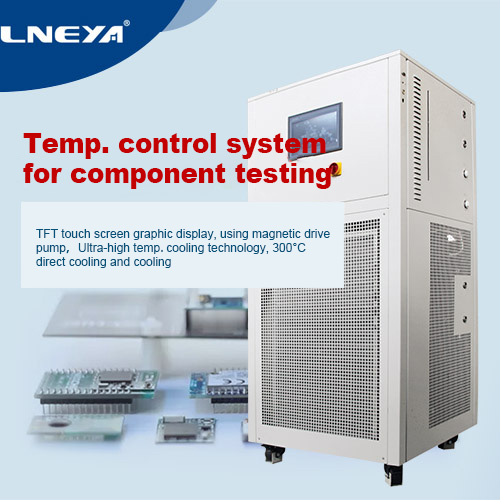
LNEYA semiconductor test chiller adopts advanced liquid temperature control technology, actively explores and studies component test system, mainly used for temperature test simulation in semiconductor test, with wide temperature orientation and high temperature rise and fall, temperature range is -92°C ~ 250°C, suitable for various testing requirements, solving the problem of temperature control lag in electronic components. The ultra-high temperature cooling technology can directly cool from 300°C.
関連推奨品
-

Product Features of Fluid Heat Transfer Temperature Control System
2120The fluid heat transfer temperature control system is the refrigeration and heating device of the matching reactor reactor in the pharmaceutical chemical industry. So, what are the characteristics of the fluid heat transfer temperature control sys...
詳細を見る -
高温と低温を交互にテストするチラー冷却システムの運転とメンテナンス
2183高温と低温を交互に試験するチラー冷却システムの運転方法:1.ユニット内の関連バルブの状態が起動条件を満たしているか確認する。2.電気制御装置に電源を供給する。
詳細を見る -

冷却循環システムは、蒸留の非凝縮性テールガスを回収するために使用される。
1919ほとんどの精留塔は2段式である。第一段は冷却水を使用し、主に上部の蒸気を凝縮し、第二段は冷水またはエチレングリコールを使用する。
詳細を見る -

有機化学合成反応における温度の影響
2421有機合成は化学において一般的な化学現象である。合成の全過程において、温度はそれに重要な影響を及ぼす。温度が上がると、熱を吸収する反応が加速し、その結果大きな変化が生じる...
詳細を見る