 工業冷水機製造商 LNEYA Taiwan



There are usually three ways to control the temperature of laboratory reactors
1. Manual control: Manually operate the knob on the front of the reactor controller.
2. Control by PC: The PC and the controller are connected by a network cable, and the operation is carried out on the PC.
3. Controlled by thermostat: Silicone oil is heated through the thermostat, and the thermostat naturally has a temperature control function. Although the thermostat heating limit (usually 250°C) is not as high as that of electric heating (can be as high as 400-500°C), the thermostat rises and falls smoothly, and the low temperature can reach -60/-80°C.
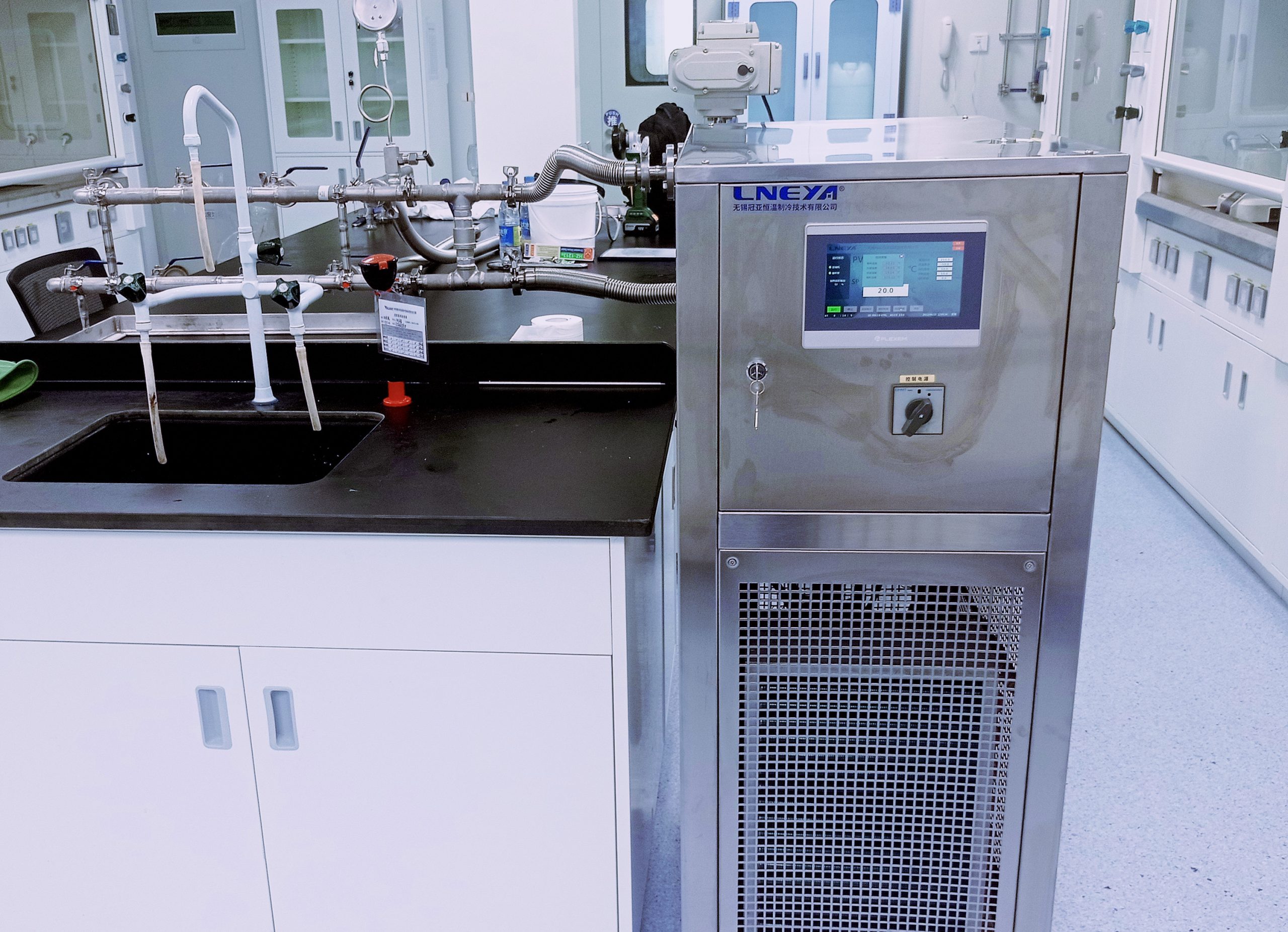
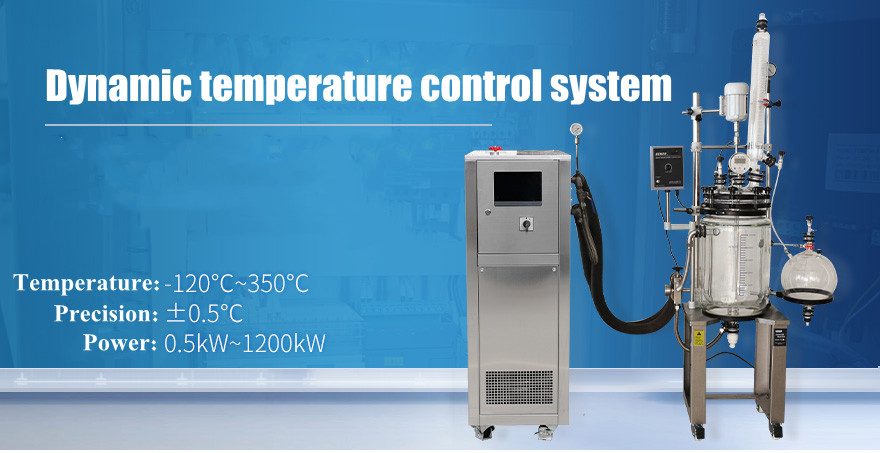
Our LNEYA laboratory reactor temperature control system belongs to the third category. However, the temperature control range is from -120 degrees to 350 degrees. It adopts a fully enclosed pipeline design and a high-efficiency plate heat exchanger, which reduces the demand for heat transfer oil, improves the heat utilization rate of the system, and realizes rapid temperature rise and fall. Continuous temperature control can be achieved in the temperature range of minus 90 degrees to 195 degrees and minus 70 degrees to 220 degrees without pressure.
Jacketed glass reactors are popular in current chemical experiments. The supporting temperature control equipment has also become a matter of widespread concern in the industry. It is known that the cooling and heating temperature in the reaction process has an absolute influence on the reaction process and results. The analysis of the temperature control equipment’s ability to increase and decrease the temperature of the material has become the basic basis for choosing chiller. Then the cooling and heating capacity is not only estimated by imagination and experience, but requires scientific analysis and calculation methods, and needs to calculate the required heating power and cooling power according to the heating rate and cooling rate.
When our technicians communicate with customers, they will first understand the requirements of engineering parameters, such as high and low temperature, how long is the temperature control time, etc., so as to calculate the cooling power and heating power of the chiller required, and determine the available chiller. model, to give customers the most complete temperature control solution. If you also have this need, you can contact us.
関連推奨品
-
自動車用新エネルギー電池/モーター熱管理性能試験
18781.熱管理物理アーキテクチャ解析 新エネルギー車の熱管理システムには、通常、エンジン冷却システム、モーター、モーター・コントローラー、バッテリー・パックの冷却/加熱システム、パッセンジャーなどのパワー・デバイス冷却システムが含まれます。
詳細を見る -
製薬産業における高温・低温循環装置のメンテナンス
1870製薬業界における高温・低温サーキュレーターもまた、あらゆる場面でますます一般的な温度制御機器となっている。長期間使用すると、どうしてもメンテナンスが必要になります。どのようにメンテナンス...
詳細を見る -
Why does the glass reactor need a heating refrigeration circulator in use?
1763The glass vacuum reactor is of double-layer glass design. The inner layer is filled with reaction solvent for stirring reaction, and the interlayer can be connected with different cold and heat sources (freezing liquid, hot water or hot oil) for c...
詳細を見る -
マイナス30℃の低温管理機器の日常点検の注意点
1901マイナス30℃の低温制御機器は冷凍機、あるいは冷凍ユニットとも呼ばれる。冷凍機との違いは温度範囲である。産業界でよく使われる低温装置である。
詳細を見る