 工業冷水機製造商 LNEYA Taiwan



Process Temperature Control for Industrial Systems
Many manufacturers pay close attention to the temperature displayed on a chiller or temperature control unit. However, the most important value is often the temperature inside your process rather than the equipment itself. Maintaining the correct process temperature helps improve product consistency, reduce energy consumption, and keep production running smoothly.

Why Equipment Temperature Cannot Represent Process Temperature
Between the temperature control unit and the product, heat must pass through piping, pumps, heat exchangers, metal surfaces, and process materials. Every transfer step introduces thermal resistance and response delay. As a result, the process temperature often differs from the equipment temperature.
For example, a temperature controller may display 25°C while the actual product temperature reaches 28°C because the product itself continuously generates heat.
What Is Process Temperature Control
Process temperature control means controlling the temperature of the actual manufacturing process instead of simply controlling the temperature of the heating or cooling equipment.
For example, during a chemical reaction, the target is the temperature inside the reactor rather than the outlet temperature of the circulating fluid. Likewise, in semiconductor manufacturing, engineers are concerned with wafer temperature instead of the temperature shown on the cooling unit.
How Process Temperature Control Works
Step 1: Measure the Actual Process Temperature
Temperature sensors are installed as close as possible to the critical process location. Instead of monitoring only the equipment temperature, the sensors continuously measure the actual temperature of the product, reactor, mold, or process fluid.
Step 2: Compare with the Target Temperature
The controller compares the measured process temperature with the preset setpoint. It continuously calculates the temperature difference and determines whether the process requires additional heating or cooling.
Step 3: Adjust the Thermal Output
Based on the calculated deviation, the controller automatically adjusts heating power, refrigeration capacity, circulation flow rate, or control valves. These adjustments compensate for changes in heat load and thermal transfer conditions, allowing the process temperature to return smoothly to the target value.
What Can Reduce Process Temperature Accuracy
Process Heat Load Changes
During production, equipment may generate different amounts of heat as operating conditions change. Rapid changes in heat load require the temperature control system to respond immediately. If response speed is insufficient, process temperature may drift away from the target value.
Heat Transfer Performance
The efficiency of heat transfer directly influences process temperature stability. Poor heat transfer, fouled heat exchangers, or insufficient circulation reduce the ability to remove or supply thermal energy. As thermal resistance increases, temperature response becomes slower.
Sensor Installation Position
Accurate measurement depends not only on sensor quality but also on installation location. If sensors are installed too far from the actual process, measured temperatures may not accurately represent real operating conditions.
Circulation Stability
Stable circulation allows thermal energy to be transferred continuously throughout the process. Flow fluctuations may create local hot spots or cold zones, resulting in uneven process temperatures.
Best Practices for Better Process Temperature Control
Optimize Heat Transfer Efficiency
Efficient heat transfer is the foundation of stable process temperature control. When heat exchangers become fouled or thermal resistance increases, the system needs more time to remove or supply heat. This often results in slower response and larger temperature deviations.
Regular maintenance, proper heat transfer fluid selection, and clean heat exchange surfaces help maintain consistent thermal performance throughout long production cycles.
Maintain Stable Circulation
Heat can only be transferred effectively when the circulating fluid moves continuously through the entire process. An unstable flow rate may create temperature differences between different sections of the process, reducing control accuracy. Selecting the appropriate pump capacity and minimizing unnecessary flow resistance help improve overall system stability.
Reduce Thermal Lag
Every industrial process has some degree of thermal inertia. Reducing unnecessary piping length, improving heat exchanger performance, and locating temperature sensors closer to the process all help shorten response time. A faster response allows the controller to maintain process temperature more accurately.
Use Intelligent Temperature Control
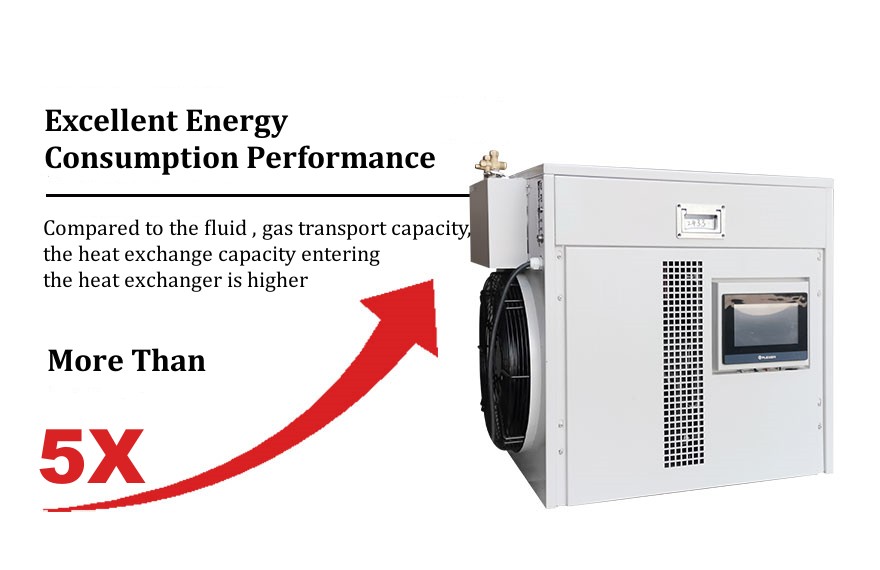
Modern industrial temperature control systems continuously adjust cooling and heating output according to real-time process conditions. Compared with traditional fixed-capacity operation, intelligent control reduces temperature fluctuations while improving energy efficiency.
Future Development of Process Temperature Control
As industrial manufacturing moves toward higher automation and greater production precision, process temperature control is becoming increasingly intelligent. Future systems will integrate predictive control algorithms, real-time monitoring, digital communication, and remote diagnostics to improve process stability while reducing energy consumption.
Artificial intelligence and digital thermal management are expected to become standard features in next-generation industrial temperature control systems.
Conclusión
LNEYA provides complete process temperature control solutions for demanding industrial applications. By integrating enfriadoras industriales, heating and cooling circulators, thermal control units, and high-precision process temperature control systems, LNEYA helps you build a more stable, efficient, and reliable thermal management system.
¿Necesita una solución de enfriamiento personalizada para su proceso?
Preguntas frecuentes
CONTÁCTENOS
TEL:
CORREO ELECTRÓNICO:
WeChat y WhatsApp:

Wechat QR