 工業冷水機製造商 LNEYA Taiwan



The solution to the fully enclosed heating and cooling thermostat lack of refrigerant alarm
What should I do if the fully enclosed heating and cooling thermostat alarms for lack of refrigerant? I believe that many customers will encounter this problem when they use it. In fact, this is relatively simple. As long as we know the principle of the lack of refrigerant alarm, it can be solved very well. Today I will share two points with you so that everyone will encounter this problem. It can be solved very quickly.
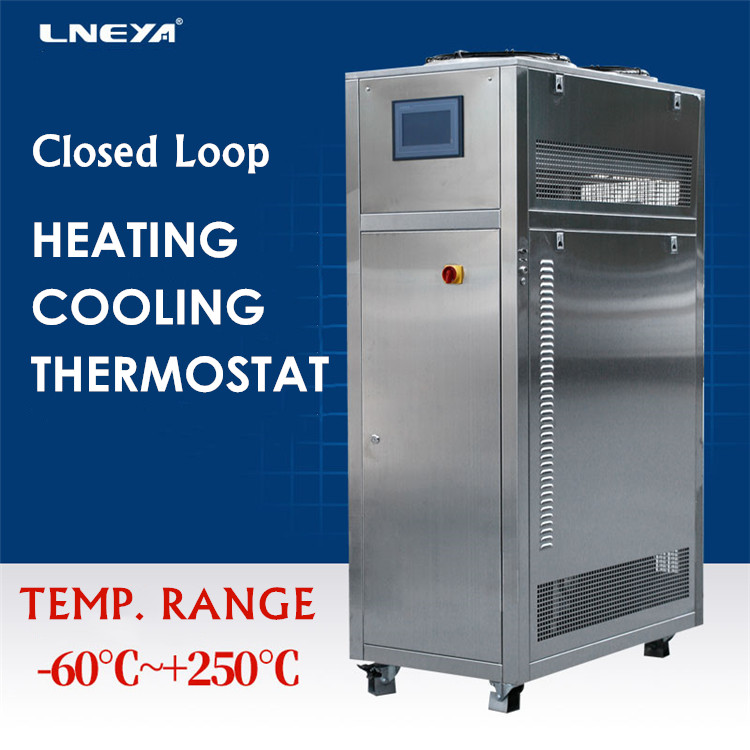
When we encounter a refrigerant shortage alarm in a fully enclosed heating and cooling thermostat, the first thing we have to do is to check to see if the liquid level on the expansion tank of the fully enclosed heating and cooling thermostat is at the normal level, if it expands at this time The liquid level of the fuel tank is lower than the low level, then this alarm is caused by the lack of oil in the system. What we need to do is to add new heat transfer oil in time until the system has a stable pressure and the liquid level of the expansion tank is at the normal level. It can be solved.
There is another situation that will also cause the fully enclosed heating and cooling thermostat to alarm for lack of refrigerant. That is, an alarm occurs after a period of use. At this time, we also need to check the liquid level of the expansion tank. If the heat transfer oil is lower than the low level, there must be a leak in the pipeline, which needs to be found and repaired in time. If it is not the leakage problem, then Most of it should be that the liquid level float switch of the expansion oil tank touches the wall of the expansion oil tank, causing the liquid level switch to not work normally. At this time, we need to remove the liquid level switch and re-reinforce it. The main reason for this situation may be due to The fully enclosed heating and cooling thermostat is caused by slight vibration during use.
The above are two solutions for the lack of refrigerant alarm. The alarm is a fully enclosed heating and cooling thermostat’s built-in protection, mainly to prevent the heating tube from burning dry, so when we encounter this problem, we can solve it in most cases according to the two methods shared by the editor. If it is solved No way to contact LNEYA after-sales technical support.
Recommandations connexes
-

Les points clés de l'utilisation d'un réfrigérateur cryogénique pour refroidir la réaction
2113Le réfrigérateur cryogénique est également appelé refroidisseur ou circulateur de réfrigération cryogénique. Il s'agit d'un instrument expérimental qui permet d'obtenir une réfrigération à basse température (-110 degrés). Ce type d'équipement est souvent utilisé dans les systèmes de réfrigération monofluide...
Voir les détails -

Pourquoi les refroidisseurs d'éthylène glycol peuvent-ils être utilisés pour les réactions de polymérisation et de couplage ?
16801. Polymerization heating Generally, the raw materials of polymerization reaction are some flammable solvents, and heating up quickly may cause local temperature to be too high and cause accidents. Every polymerization reaction has its proper reac...
Voir les détails -

Precautions for cooling and heating during operation of various reactors
1890In many laboratories, various reaction vessels of chemical companies are indispensable reaction vessels, and its operating temperature: -80°C-250°C. The laboratory reactor works at normal temperature, and cooling water must be passed normally to a...
Voir les détails -

Why is it dangerous to use an enamel reactor?
2305The enamel layer of the enamel reaction kettle is easy to burst when it is cold and hot. Because the enamel layer is sintered on the surface of the enamel reaction kettle, and the enamel layer will melt when it exceeds 200 degrees Celsius, so the...
Voir les détails