 工業冷水機製造商 LNEYA Taiwan



Working Principle of Glycol Chiller
For the low-temperature chiller using ethylene glycol solution, we
call it glycol chiller. Its outlet water temperature is generally below – 10 ℃, and the specific temperature requirements shall be subject to the
needs of users. Glycol chillers are common in chemical plants. In order to
ensure the safe and stable operation of equipment, many chemical plants will
strictly require water chillers to take explosion-proof measures, that is, what
we often call explosion-proof water chillers.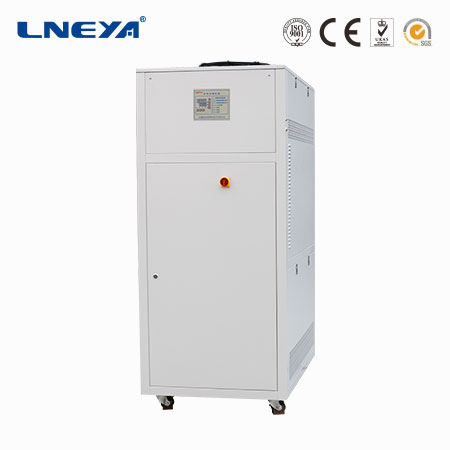
The structural composition of the water chiller is roughly the same,
which is composed of compressor, evaporator, condenser, throttling element and
electric control system. However, the glycol chiller adopts low-temperature
compressor and is equipped with economic separator and other components, which
are still different.
1、In order to keep the
pressure in the evaporator low enough to ensure that the refrigerant evaporates
at a sufficiently low boiling temperature, a compressor is used to extract the
evaporated refrigerant gas, that is, the refrigerant steam with low temperature
and low pressure is compressed into a refrigerant gas with high temperature and
high pressure. When the suction speed of the compressor is greater than the
evaporation speed of the refrigerant, the evaporation pressure and evaporation
temperature will decrease. Conversely, the suction speed of the compressor is
less than that of the refrigerant, and the evaporation temperature and pressure
will rise accordingly.
2、 High temperature and
high pressure refrigerant is condensed into liquid in the condenser. In the
condenser, the refrigerant releases heat to air or water lower than its
temperature. This part of heat includes the heat absorbed when the refrigerant
evaporates in the evaporator and the heat converted when the compressor
compresses. Special attention: the temperature of air or water must be lower
than that of refrigerant, otherwise the refrigerant cannot release heat, that
is, the temperature of cooling medium (cooling tower water or air) must be lower
than that of refrigerant gas at the outlet of compressor.
3、Through the restrictor,
the pressure of the refrigerant drops from the condensation pressure to the
evaporation pressure. The liquid from the condenser is stored in the liquid
reservoir. At this time, the refrigerant is in the state of normal temperature
and high pressure. After passing through the expansion valve, the boiling point
decreases due to the decrease of pressure. After entering the evaporator, the
liquid is easy to absorb heat and evaporate.
Le précédent : Principle Analysis of Glycol ChillerLe suivant : How to avoid incorrect operation of heating and cooling thermostat?
Recommandations connexes
-

Tips on how to save energy for enterprises using industrial chiller
2036Nowadays, energy conservation has been advocated, and power consumption has always been a concern for everyone. Everyone knows that industrial equipment consumes electricity. For many chemical material manufacturing enterprises, the pressure of th...
Voir les détails -

Chambre d'essai d'impact multifonctionnelle à haute et basse température élément de qualité et de prix
2153Especially when purchasing multi-functional high and low temperature impact test chambers, the price factor often determines the quality of its products. After all, manufacturers have to survive. It is unlikely that they will sell high-quality equ...
Voir les détails -
Advantages and disadvantages of water-cooled chillers
2093The water-cooled industrial chillers produced by LNEYA are refrigeration equipment that provides chilled water. Today we will discuss the classification, advantages and disadvantages of water-cooled chillers. Water-cooled chiller configuration: 1....
Voir les détails -
The Structural Characteristics Of Heating Cooling Systems SST-15 SST-20
1933Anyway, Heating Cooling Systems SST-15 SST-20 is a high-performance product with comprehensive functions and simple operation. It will help customers expedite the experiment and save resources so that improve work efficiency.
Voir les détails