 工業冷水機製造商 LNEYA Taiwan



Unité de contrôle thermique du réacteur et solutions pour les produits chimiques
Temperature control is a process in which the temperature of a substance or a change in temperature is measured or otherwise detected, and the transfer of thermal energy into or out of the space or substance is adjusted to achieve the desired temperature.
When dealing with pharmaceutical production, maintaining accurate temperature control is critical. Starting with research throughout production, precise temperature control is required at every stage of the process. We fully understand the importance of process cooling, and simple temperature fluctuations (positive and negative) can ruin research or production.
Our TCU can meet all your heating, cooling and temperature control needs for your chemical or pharmaceutical reactor. The LNEYA-TCU temperature control system can utilize existing thermal energy (such as steam, cooling water and ultra-low temperature liquids-the “primary system”) infrastructure integration to achieve dynamic temperature control of the equipment temperature in a single fluid system or a secondary circuit. This only completes the flow of a heat transfer liquid into the jacket of the reaction vessel (rather than directly into the steam, cooling water or cryogenic liquid), and the temperature of the entire reaction process is controlled by calculation.

From -120°C for cryogenic pharmaceutical applications to 300°C for chemical applications, the maximum temperature can be set according to the supplier’s heating or cooling source. The maximum temperature range can be set using a glycol water formula. Through three-point sampling (material temperature point, outlet temperature of temperature control system, inlet temperature of temperature control system), and our own model-free self-building algorithm and general anti-lag cascade algorithm, the problem of large drug delays is solved. Chemical temperature control . Our SR series and ZLF series are completely suitable for low temperature reaction, synthesis, separation process, pilot plant, reactor system, autoclave, combinatorial chemistry, etc.
This will increase product profitability and reactor utilization, and reduce energy and plant operating costs. Our TCU is fully automated and easy to operate. The temperature control accuracy of the product is ± 0.5 ° C, and the cooling power can be provided from 0.5 kW to 1200 kW.
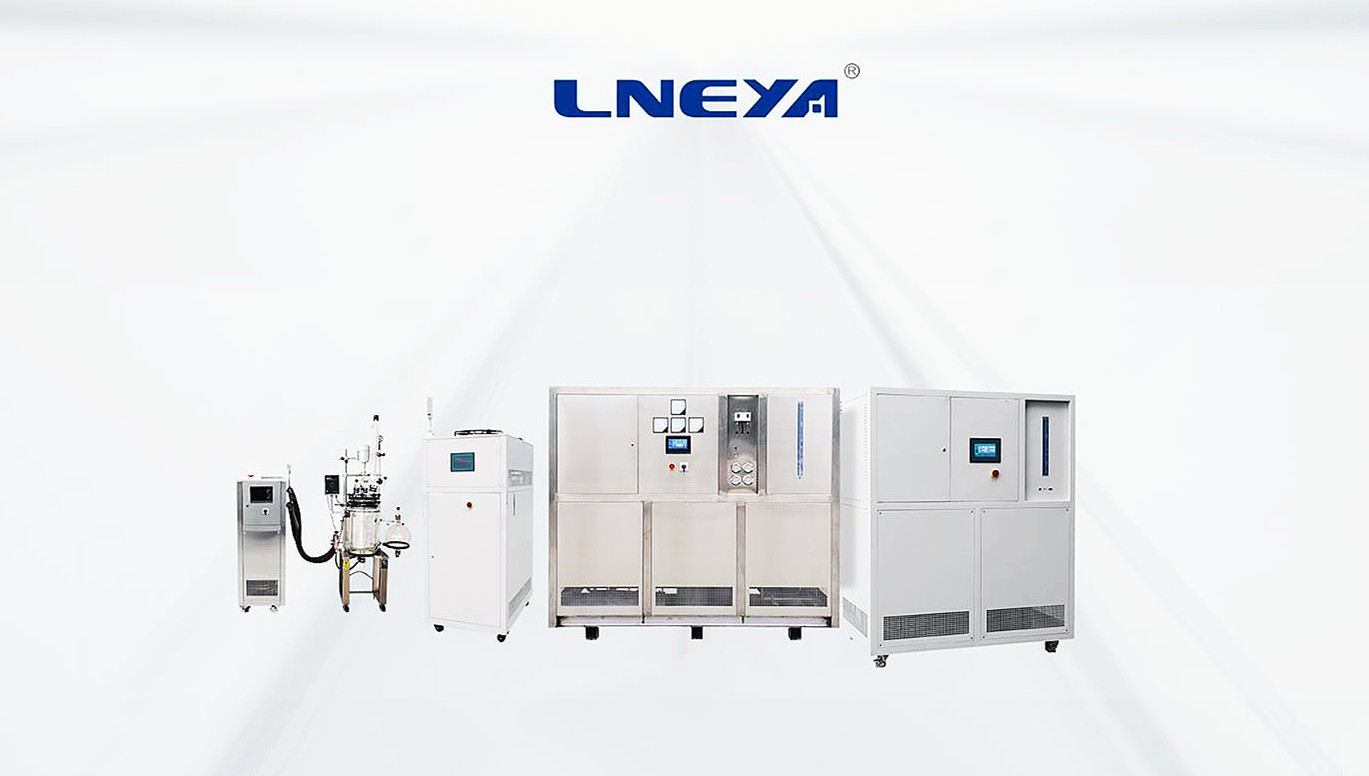
The picture below shows the TCU thermal control unit customized by domestic customers
Recommandations connexes
-

Instructions de câblage de la bobine du ventilateur du congélateur industriel à basse température
1977La ligne rouge de la vanne électrique à deux voies du congélateur industriel à basse température est le fil chaud 220V (L) directement connecté à l'interface de la ligne de feu du thermostat, la ligne bleue est la ligne zéro (N), la bobine, la vanne à deux voies, le thermostat sont connectés i...
Voir les détails -

Small environmental test chamber compressor should pay attention after maintenance
2001In the centrifugal small-scale environmental test chamber, the suction recovery device is generally an independent system, and if necessary, the pipeline connected to the condenser and the evaporator can be closed for separate maintenance. After r...
Voir les détails -
Selection Method of Water Cooled Chiller or Air Cooled Chiller
2038Nowadays, the application of industrial water chiller has involved various industries, including petrochemical industry, plastic industry, electronic industry, vacuum coating and so on. However, when purchasing industrial water chillers, many ente...
Voir les détails -
Introduction à l'utilisation d'un refroidisseur de précision antidéflagrant
2078Wuxi Lneya résout le problème de la charge des réfrigérants en l'absence de réfrigération. 1. Connectez bien tous les types d'équipement, fermez les trois vannes lorsque la pression du vide est descendue à 133,3Pa, retirez le tuyau de l'orifice d'aspiration de l'appareil de...
Voir les détails