 工業冷水機製造商 LNEYA Taiwan



Temperature conditions of new energy vehicle batteries

When automobile manufacturers continue to improve battery life to overcome the driver’s mileage anxiety, the energy density of the large batteries installed is also gradually increasing, which means that the temperature monitoring function of the battery system needs to be more perfect. No matter in the case of normal driving or fast charging, in order to ensure battery life and avoid battery thermal runaway, the design of the battery system needs to consider the heat dissipation strategy and overheating protection mechanism.
Generally, the battery system of a pure electric vehicle (BEV) has about 100 temperature measurement points, and each measurement position represents the battery temperature state in this area. The overall temperature distribution state is collected by the BMS, and is monitored and communicated by the BMS. Judging the result, the temperature control strategy of the whole vehicle can be corrected in real time, for example: improving water cooling efficiency, limiting battery charge and discharge current, etc.
Because of the importance of the combination of battery temperature control mechanism and BMS, existing testing laboratories and battery manufacturers have put forward the verification requirements of battery temperature control and BMS judgment mechanism. In the test process, in addition to requiring temperature measurement accuracy and temperature reading synchronization, it also has a detection function that can simulate temperature control changes in real time when the temperature changes.
The reasonable temperature of the battery pack is between 10°C and 30°C, and the liquid cooling system may reach -40°C in low temperature weather. It is necessary to increase the temperature of the -40°C liquid cooling system to cool down. How much liquid needs to pass through at this time? To ensure that the battery temperature is controlled within the range of 10°C-30°C, and the pipe diameter of the automotive liquid cooling system is fixed, then the pressure needs to be adjusted to control the flow. By analogy, as the temperature of the car coolant changes, the pressure also needs to change in order to ensure the flow of the battery coolant.
In high temperature weather, the temperature of the car coolant and the battery pack may reach above 50°C, what is the charging and discharging condition of the battery pack? The cooling capacity of the vehicle refrigeration system (cooling of the air-conditioning space in the vehicle, battery pack, electric drive, and engine liquid cooling system) is distributed in any way, so that the thermal management of the vehicle can be quickly balanced, and the performance of the vehicle can reach a reasonable range.
The above data comes from a test platform, if you have any questions, please contact us to delete and modify.

Le précédent : Cooling and heating of the reactor and the principle of useLe suivant : How to choose the optimal chiller solution?
Recommandations connexes
-
Principe de fonctionnement du thermostat de réfrigération et de chauffage pour l'industrie chimique
2009In the selection process of the special refrigeration and heating thermostat for chemical industry, the heating power and the pressure and flow rate of the heat transfer medium are also factors to be considered. Different raw materials have differ...
Voir les détails -

Instructions de câblage de la bobine du ventilateur du congélateur industriel à basse température
1977La ligne rouge de la vanne électrique à deux voies du congélateur industriel à basse température est le fil chaud 220V (L) directement connecté à l'interface de la ligne de feu du thermostat, la ligne bleue est la ligne zéro (N), la bobine, la vanne à deux voies, le thermostat sont connectés i...
Voir les détails -

Deuxième place en 2022
2801On November 18, 2022, it was sponsored by the Jiangsu Provincial Association for Science and Technology, the Provincial Taiwan Affairs Office, the Provincial Department of Industry and Information Technology, the Provincial Department of Agricultu...
Voir les détails -
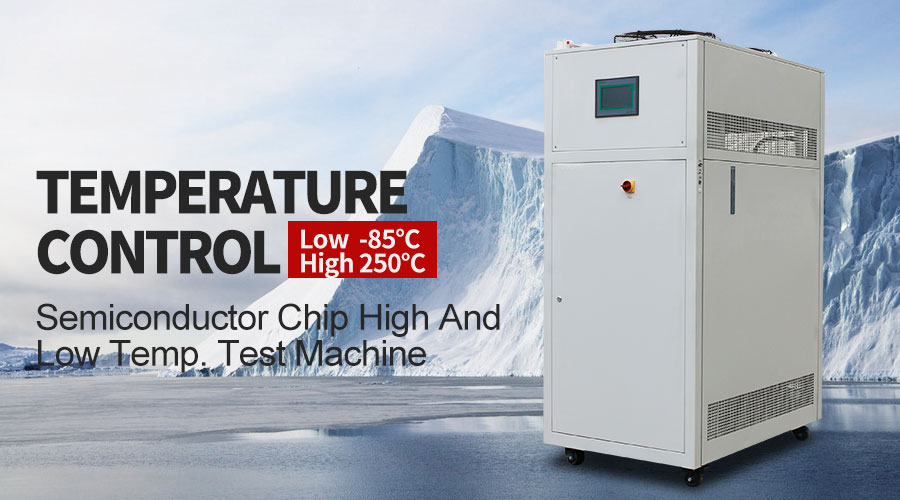
Système de contrôle de la température pour contrôler la température de test d'une puce de circuit intégré
1959Les progrès de la technologie des semi-conducteurs ont conduit au développement de dispositifs électroniques de nouvelle génération tels que les circuits intégrés, qui comportent de plus en plus de composants actifs, une plus grande complexité de circuit, une surface plus petite et un câblage plus serré. Ces attr...
Voir les détails