 工業冷水機製造商 LNEYA Taiwan



Quel type de refroidisseur est nécessaire pour la gravure à basse température ?
The low-temperature etching process usually requires extremely high precision temperature control and strong cooling ability to maintain stable operation of the etching equipment at extremely low temperatures, in order to achieve finer etching effects and optimize the performance of semiconductor devices.
For this requirement, the applicable types of coolers mainly include:
Multi channel chiller: A chiller with multiple independent temperature control circuits that can accurately control the temperature of different parts, ensuring uniform and stable temperature throughout the entire system. This is particularly important for complex etching equipment that requires maintaining different temperatures in different regions.
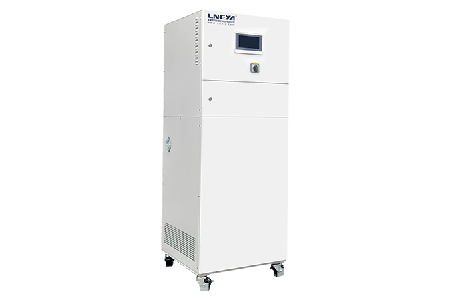
Low temperature chiller: This type of cooler is designed to generate and maintain extremely low temperatures, providing cooling capacity from ambient temperature to far below freezing point, suitable for low-temperature etching process requirements such as -70℃.
Closed loop refrigeration system: The closed loop system can more effectively control temperature and reduce energy consumption, suitable for etching processes that require long-term stable low-temperature operation, while reducing the impact on the external environment.
Semiconductor specific chillers: These chillers are customized to meet the needs of the semiconductor industry and have characteristics such as high-precision temperature control, fast response, low vibration, and low noise. Some are also designed with special material heat exchangers to cope with corrosive environments.
Handheld low-temperature chiller: Although not as widely used in production lines as large chillers, handheld low-temperature coolers may also be adopted in certain specific local low-temperature control or portable application scenarios due to their flexible and convenient advantages.
Therefore, the chiller used must not only achieve the required low temperature, but also be compatible and capable of handling cooling media under such special working conditions, while also having good corrosion resistance. When choosing a cooler, factors such as energy efficiency, ease of maintenance, level of intelligent control system, and ease of integration into existing production lines should also be considered.
Customization of chiller solutions


Recommandations connexes
-
Refroidissement industriel au Japon : à quoi servent les refroidisseurs de process ?
1455Process chillers in Japanese industry provide precise, reliable cooling for electronics, automotive, pharmaceutical, and chemical production.
Voir les détails -

Chip Testing Temperature Control System
1584Without a stable temperature environment, the test results may fluctuate, making it impossible to accurately screen out qualified and unqualified products, thereby increasing the overall production cost.
Voir les détails -
Quel type de refroidisseur peut-on choisir pour refroidir la XRD ?
2161Quel type de refroidisseur pour le refroidissement de la XRD ?
Voir les détails -
Série ZLJ
3555Multiple control requirements can be achieved by merging multiple devices into a larger cabinet Used for small heat exchange area and large heat exchange capacity The product directly outputs and evaporates the refrigerant in the refrigeration sys...
Voir les détails