 工業冷水機製造商 LNEYA Taiwan



Principales différences entre les refroidisseurs d'intérieur et les refroidisseurs d'extérieur
Bien que les refroidisseurs d'intérieur et les refroidisseurs d'extérieur soient tous deux des dispositifs utilisés pour fournir de l'eau froide afin de répondre à des besoins de refroidissement spécifiques, ils présentent des différences significatives en termes de conception, de lieu d'installation, d'environnement de travail et de méthodes de dissipation de la chaleur...
The following are the main differences between indoor chillers and outdoor chillers:
Installation location:
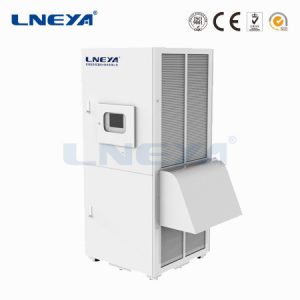
Indoor chiller: As the name suggests, installed inside buildings such as computer rooms, equipment rooms, laboratories, data centers, etc., located in the same indoor environment as the cooled equipment or system.
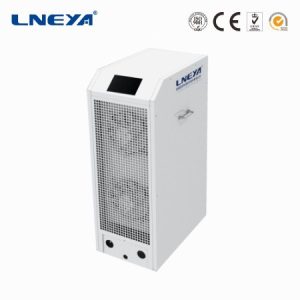
Outdoor chiller: installed outside buildings, such as roofs, terraces, dedicated equipment platforms, or floors, separated from the cooled equipment, usually in an open or semi open outdoor environment.
Working environment:
Indoor chiller: The working environment is relatively stable, less affected by external climate changes, and factors such as temperature, humidity, and dust are relatively controllable. But it is necessary to consider the ventilation, noise control, and coordinated layout with other equipment in the indoor space.
Outdoor chiller: Directly exposed to outdoor climate conditions, the working environment changes greatly, and needs to cope with various weather conditions (such as high temperature, low temperature, wind and rain, sand and dust, etc.), and may face greater corrosion risks. Design should consider measures such as rain protection, sun protection, dust prevention, frost resistance, and anti heat island effect.
Heat dissipation method:
Indoor chiller: Heat dissipation is usually achieved through air-cooled or water-cooled condensers. The air-cooled indoor chiller uses a built-in fan to directly discharge the heat generated by the condenser into the indoor air, which is then discharged through the indoor ventilation system. The water-cooled indoor chiller is connected to a cooling tower or cooling water system to transfer heat to the outside through the circulation of cooling water.
Outdoor chiller: It often uses air-cooled condensers to use outdoor air for natural or forced convection heat dissipation. Outdoor chillers are usually equipped with large air flow fans and large-area heat dissipation fins to enhance heat dissipation efficiency. In cold regions, antifreeze devices such as electric heaters or hot gas bypass valves may also be required.
Noise control:
Indoor chiller: Due to its installation indoors, there are high requirements for noise control, and noise reduction measures are usually designed, such as soundproof covers, silencers, low-noise fans, etc., to reduce the impact on the working environment.
Outdoor chiller: Although installed outdoors and relatively less sensitive to noise, it still needs to comply with certain environmental standards and community regulations. Some high-end outdoor chillers adopt appropriate noise reduction designs, but overall, their noise control requirements are slightly lower compared to indoor chillers.
Maintenance convenience:
Indoor chiller: Due to its relatively concentrated location, it is easy for daily inspection and maintenance. But it may be necessary to consider the entry and exit channels of indoor space, equipment relocation, and coordination with other facilities.
Outdoor chiller: During maintenance, it may be necessary to consider safe climbing, harsh weather conditions, and compatibility with the building’s exterior. However, due to its distance from the work area, the impact of maintenance operations on normal operations is relatively small.
Installation costs and limitations:
Indoor chillers: Factors such as indoor space occupation, ventilation facility renovation, and increased air conditioning load may need to be considered, especially in places with limited space or special environmental requirements (such as clean rooms), where installation costs and complexity may be high.
Outdoor chiller: It is necessary to consider outdoor installation conditions such as building structural load-bearing, waterproofing, lightning protection, drainage, power supply, insulation, as well as possible regulatory limitations such as urban planning, environmental protection, and noise control.
In summary, there are significant differences between indoor and outdoor chillers in terms of installation location, working environment, heat dissipation method, noise control, maintenance convenience, installation cost and limitations. The selection of which type should be based on factors such as actual application environment, building conditions, cooling requirements, cost budget, and local regulations.
chargement...
已经是到最后一篇内容了!
Recommandations connexes
-

Introduction to cold plate liquid cooling system products and equipment
2058Introduction to cold plate liquid cooling chiller
Voir les détails -
Refroidisseur à liquide(Energy Storage) (stockage d'énergie)
5085Model CNYL -45~55 Cooling Capacity 45KW Temperature Control Accuracy ±0.5℃ Real-time temperature record Secondary Refrigerant Ethylene glycol antifreeze, fully enclosed design of refrigerant circulation system Refrigerant R410A Flow 300L/min~400L...
Voir les détails -
Chemical process is inseparable from temperature control
1698Chemical process is inseparable from temperature control
Voir les détails -
Refroidisseur de liquide(Commercial Energy Storage) (en anglais)
3771Battery Energy Storage Systems are filled with many battery cells, generating a large amount of extreme heat load. This means that the cooling system needs to precisely control the temperature and efficiently dissipate the large amount of heat gen...
Voir les détails