 工業冷水機製造商 LNEYA Taiwan



原子炉の温度制御はどうなっていますか?

The reactor cooling system is one of the common equipment in the chemical industry. It can not only heat but also refrigerate to meet the needs of heating and cooling in the reaction process.
There are usually three ways to control the temperature of laboratory reactors:
1. Manual control: Manually operate the knob on the front of the reactor controller.
2. Control by PC: The PC and the controller are connected by a network cable, and the operation is carried out on the PC.
3. Controlled by thermostat: Silicone oil is heated through the thermostat, and the thermostat naturally has a temperature control function. Although the thermostat heating limit (usually 250°C) is not as high as that of electric heating (can be as high as 400-500°C), the thermostat rises and falls smoothly, and the low temperature can reach -60/-80°C.
Generally, the cooling system of the laboratory reactor is divided into a tank type and a fully enclosed type. The temperature control of the reactor cooling system mainly relies on the temperature of the heat transfer oil of the reactor jacket to control the temperature of the reactor body and even the materials in the reactor. The disadvantage of the slotted type is that the heat transfer oil cannot be recycled. The more heat transfer medium the reactor needs, the slower the temperature control speed.
For example, the stainless steel reactor needs to be given heating conditions from the outside, which is equivalent to stirring or mixing. Otherwise, the reaction itself will be endothermic or exothermic. Therefore, its temperature change depends on the temperature and flow of the heat transfer oil, and the heat exchange area is the area of the jacket or the surface area of the coil in the kettle. It is cooled and heated by the heat transfer oil in the chiller system. In the process of heating and cooling, it is necessary to control the temperature difference of the tank wall as much as possible. The cold tank heats the material, the hot tank adds the cold material, the jacket or the inner tank lifts the pressure and temperature slowly, which can prevent the product from being affected to a certain extent. Thermal shock.
Our LNEYA laboratory reactor temperature control system belongs to the third type. The temperature control range is from -120 degrees to 350 degrees. It adopts a fully enclosed pipeline design and a high-efficiency plate heat exchanger, which reduces the demand for heat transfer oil, improves the heat utilization rate of the system, and realizes rapid temperature rise and fall. Continuous temperature control can be achieved in the temperature range of minus 90 degrees to 195 degrees and minus 70 degrees to 220 degrees without pressure.
関連推奨品
-
液冷式エネルギー貯蔵キャビネット・チラーの冷却システム
1976新エネルギー技術の発展に伴い、新エネルギー、太陽光発電、電気エネルギーステーションにおけるコンテナ型エネルギー貯蔵システムの応用が増加している。もし蓄電池パックの温度が低ければ、蓄電池パックの温度は上昇する。
詳細を見る -

グリコールチラーシステムを長持ちさせるには?
1898工業用グリコールチラーを長寿命化するために、以下の点にご注意ください:1.1.自動車グレードの不凍液は慎重に使用してください自動車グレードの不凍液や不適格な不凍液は使用しないでください。なぜなら、このグリ...
詳細を見る -
Application of supporting experimental equipment for refrigeration and heating system
2180The mixing tank with jacket and insulation layer is a three-layer insulation mixing tank with heating function, which has the functions of heating, insulation, mixing, etc. It is widely used in dairy, chemical, food, beverage, pharmaceutical, phar...
詳細を見る -
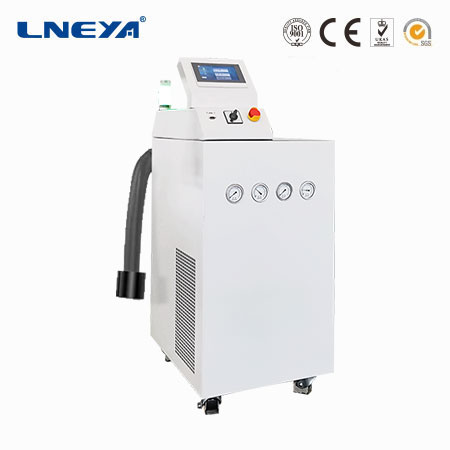
Purchasing a special chiller for etching machine and precautions for operation
2025The special chiller for etching machine is used for testing of components, chips, etc. These industries are more supporting use, so what aspects should be paid attention to when choosing the chiller for etching machine drilling? What should I pay ...
詳細を見る