 工業冷水機製造商 LNEYA Taiwan



The cooling circulation system is used to collect the non-condensable tail gas in the distillation s
Most rectification towers are two-stage condensation. The first stage uses cooling water, mainly condensing the top steam, and the second stage uses chilled water or ethylene glycol, which is mainly used to treat tail gas and remove a small amount of light components. The exhaust gas is condensed. Therefore, the secondary condensation is very small.
Generally, a rectification tower (especially in the case of non-condensable gas, such as a vacuum tower, an atmospheric tower with gas dissolved in the feed, etc.), a two-stage condenser is placed on the top of the tower, and the first stage is cooled by cooling water. Part of the top steam is condensed, and the second stage adopts chilled water cooling to condense the light components in the tail gas as much as possible to reduce material loss. The reason for this is that the operating cost of chilled water is much greater than that of circulating chilled water, so it can be used as little as possible. The primary cooler uses cooling water to condense most of the easily condensable media, and the secondary cooler uses chilled water to condense the remaining small part of the exhaust gas that is not easy to condense. This can reduce the use of chilled water and save energy.
Distillation device, the device is divided into two stages of distillation, the first stage distillation condenser uses cooling water for condensation, while the second stage uses chilled water for condensation. The first stage adopts cooling water cooling to condense most of the top steam, and the second stage adopts chilled water cooling to recover the light components in the tail gas as much as possible to reduce material loss. The light components of the two stages are the same, but the amount of steam from the top of the second stage is smaller than that of the first stage. What is the difference between using chilled water to condense and chilled water to condense? Why do the primary and secondary condensers use different cold media for condensation?
Cooling water is circulating water, the temperature is generally 32-40 degrees. Low cost, easy to use, economical. Chilled water is low-temperature water produced by a low-temperature system. The temperature is generally below 20 degrees, and there are many grades to choose from. Chilled brine is relatively expensive, so the primary cooling will condense a lot of steam, and the secondary will condense the remaining steam.
For the recovery of non-condensable tail gas components in the distillation system, cooling water and chilled water are indispensable, but this also invisibly increases the consumption of resources. The role of one or more water cooling systems is particularly important. The LNEYA cooling cycle system adopts secondary subcooling, which has a fast cooling speed, safe and reliable, and is used for rapid liquid cooling. It is widely used in petrochemical, medical, pharmaceutical, biochemical, freeze-drying, pharmaceutical, military and other high-tech industries. In order to save water resources, ethylene glycol-water mixture can be used for circulating refrigeration, and the circulation pipeline design is strictly designed to prevent circulating water pollution and extend the use time of circulating water.
Recomendações relacionadas
-

Rotary shaft freezing process in new energy automobile motor assembly
2387As the market for new energy vehicles has gradually expanded, the new energy motor manufacturing industry has also grown. Then, for the motor manufacturer, the rotor into the core process during the motor assembly process is particularly important...
Ver detalhes -
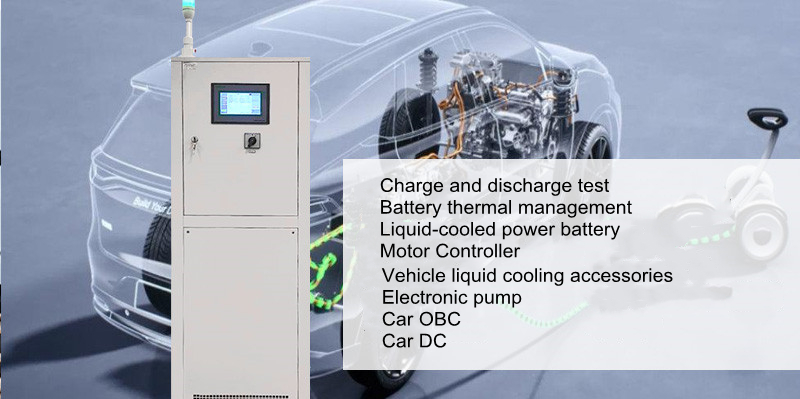
Analysis of operating parameters and working conditions of automobile power module cooling system
2264Before choosing, you need to know what factors are related to the operating parameters and working conditions of the automotive power module cooling system. Then, from which aspects? 1. Evaporating pressure and evaporating temperature In the ope...
Ver detalhes -

How to extend the service life of heat transfer oil in dynamic temperature control system?
1884In the chemical industry, the heat transfer medium of the heat transfer oil of the dynamic temperature control system of the reactor is mainly determined by the heat transfer oil itself, the operating temperature of the heat transfer oil, the dyna...
Ver detalhes -
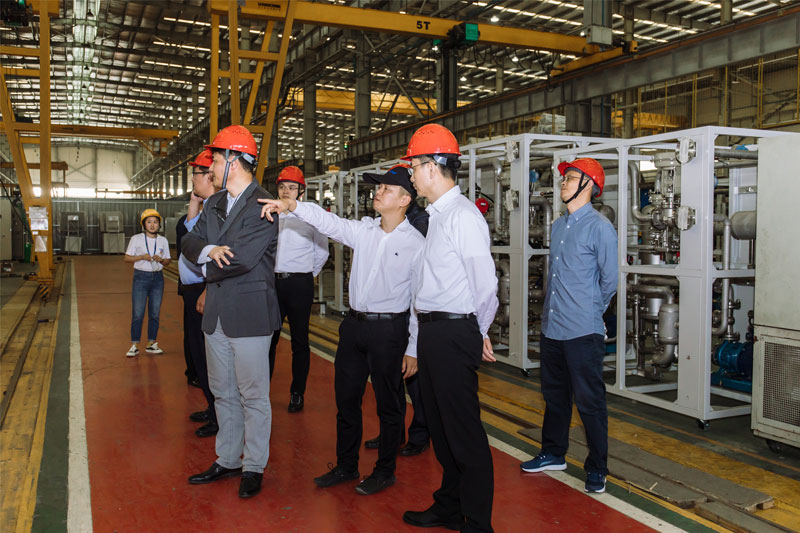
Cooperação com os fortes! A cerimónia de assinatura da cooperação estratégica LNEYA&Siemens terminou com sucesso
3662On May 25, 2021, the signing ceremony of strategic cooperation between LNEYA Constant Temperature Refrigeration Technology Co., Ltd. and Siemens (China) Co., Ltd. was held in Wuxi, China. At the signing ceremony, leaders such as Que Yaoyao, dire...
Ver detalhes