 工業冷水機製造商 LNEYA Taiwan



Precauções para um pequeno refrigerador de água de laboratório antes e depois do arranque
In the pharmaceutical and chemical industry, small laboratory water chillers are widely used refrigeration equipment, which are often used in various reaction kettles for refrigeration reactions. In order to maintain the stable operation of the equipment, attention should be paid to the precautions before and after the start-up of small laboratory water chillers.
1、 Small laboratory water chiller before startup
1. Placement environment: when handling and moving the small laboratory water chiller, the body must be kept vertical and upward. Provide a stable fixed device to ensure that the small laboratory water chiller will not tilt. Ensure that the distance between the surrounding walls and the rear panel of the instrument and equipment is more than 70cm, and ensure that there is enough ventilation to allow the small laboratory water chiller to dissipate heat in time under the condition of high operation.
2. Notes on supporting connection: check the tightness of the connecting pipe interface between the small laboratory water chiller and peripheral equipment. Closed applications of external equipment (such as reactors) need to ensure that the material and performance of oil pipelines match the range of heat transfer oil and temperature. In order to ensure the correct operation of the small laboratory water chiller, it is necessary to ensure that no bubbles remain in the system, ensure that the outlet of the heat transfer medium is connected to the lower interface of the reactor, and the inlet of the heat transfer medium is connected to the upper interface of the reactor. Do not place tools, quantities, clamps, cutting tools, products and other items on the equipment.
3. Filling refrigerant: without special reasons, the small laboratory water chiller will not produce a large amount of leakage. If a certain amount of refrigerant leaks due to improper use or after maintenance, it is necessary to add refrigerant again. Pay attention to the refrigerant model used in the unit when filling refrigerant.
4. Filling heat conducting fluid: heat conducting medium. Water cannot be used for heat conducting medium. See the emptying and filling operation instructions for the filling steps. Check the working conditions of all parts for abnormalities and sounds during the power on test run
2、 Small laboratory water chiller in use
1. The small laboratory water chiller should be prepared before starting up as above. After filling the heat-conducting medium and exhausting, set the temperature and start the operation key to start the temperature control.
2. When starting, pay attention to whether the temperature, pressure, liquid level, hydraulic pressure, air pressure, electrical system, air pressure system, instrument signal and other protections of the small laboratory water cooler are normal. In case of any abnormality, stop the machine immediately for inspection until the cause is found out and eliminated.
3、 After the small laboratory water cooler stops
1. Before the small laboratory water cooler is shut down, wait for the equipment to return to normal temperature;
2. Power off through the program: click the “stop” button in the main control window, and power off directly after the unit components completely stop working.
3. When the small laboratory water cooler stops working, all operating handles, etc. should be placed in the non working position, the electrical control switches, knobs, etc. should be restored to the off state, and the power supply should be cut off
4. The small laboratory water cooler is clean and free of dirt, the processed parts are stored neatly, and there is no leakage at the interface of each transmission pipe.
5. If the small laboratory water chiller needs to be out of operation for a long time, and the ambient temperature of the equipment is lower than 0 ℃, the accumulated water in the system is easy to cause the cracking of the condenser components, so when shutting down, be sure to drain all the accumulated water in the small laboratory water chiller to prevent the pipeline from rusting or cracking, resulting in the damage of the condenser. And discharge the heat conducting medium inside the equipment.
During the use of small laboratory water coolers, they should be maintained regularly to maintain the accuracy and performance of small laboratory water coolers as much as possible and prolong the service life of the equipment.
Recomendações relacionadas
-

Qual é o refrigerante do equipamento de arrefecimento por circulação de água?
1924Diferentes indústrias exigem diferentes temperaturas de refrigeração para o equipamento de arrefecimento de água em circulação, pelo que os refrigerantes selecionados também são diferentes. Ao escolher o equipamento de arrefecimento por circulação de água, também é necessário ter um conhecimento claro das...
Ver detalhes -

Manutenção de rotina do equipamento de controlo da temperatura do multi-reator tcu
1847O equipamento de controlo da temperatura do multi-reator TCU é amplamente utilizado em departamentos de investigação como petróleo, química, instrumentos electrónicos, física, química, bioengenharia, testes de propriedades físicas e análise química, faculdades e universidades...
Ver detalhes -
Análise das vantagens e desvantagens do refrigerador de água de parafuso
2382Em comparação com outros tipos de chillers, o consumo global de energia do refrigerador de água de parafuso de alta qualidade é relativamente pequeno. Como a tecnologia de produção do resfriador de água de parafuso é mais avançada e menos energia é usada, o equipamento pode...
Ver detalhes -
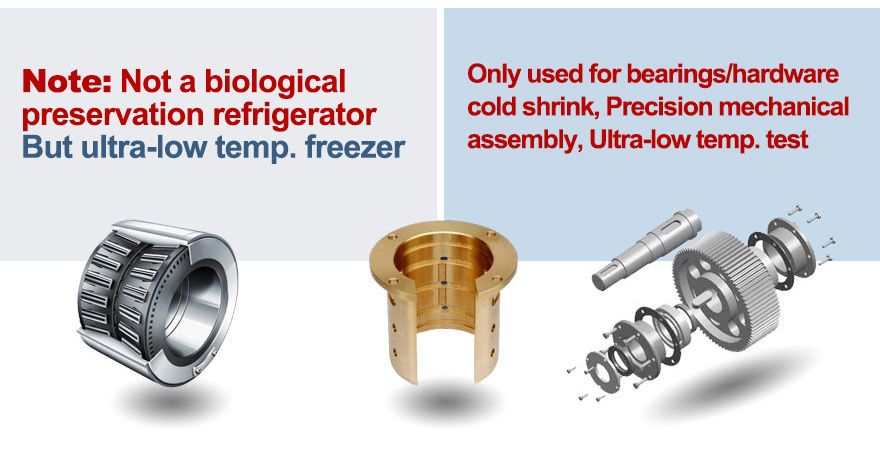
O equipamento mecânico de montagem a frio é dedicado ao processamento a frio da montagem de peças metálicas
1796O equipamento mecânico de montagem a frio é um método de processamento de peças de trabalho a temperaturas abaixo de -130 ℃. O tratamento criogénico pode melhorar significativamente a tenacidade da peça de trabalho sem reduzir a resistência e a dureza da peça de trabalho.
Ver detalhes