 工業冷水機製造商 LNEYA Taiwan



Bioreactor temperature rise and temperature control equipment
НОВОСТИ 1748
A bioreactor is a reaction system in which a naturally occurring microorganism or a microorganism having a special degrading ability is inoculated into a liquid phase or a solid phase. The two reactors currently studied the most are “elevator type reactors” and “soil mud reactors”. The elevator type reactor provides the proper nutrients, carbon sources and oxygen through the flow of the aqueous phase to achieve the purpose of degrading pollutants in the soil. Compared to solid phase systems, bioreactors are capable of effectively degrading contaminants in less time.
Bioreactors sound strange, but the basic principles are quite simple. The stomach is a complex bioreactor that processes food inside the body. The food is digested by various enzymes in the stomach and becomes a nutrient that we can absorb. Bioengineering bioreactors are functions that mimic the function of living organisms in vitro and are designed to produce or test various chemical reaction devices. In other words, a bioreactor is a device system that uses a biological function of an enzyme or an organism (such as a microorganism) to perform a biochemical reaction in vitro, and is a biological function simulator such as a fermentor, an immobilized enzyme, or an immobilized cell. Reactor, etc. Then the problem of how to cool the bioreactor is generated.
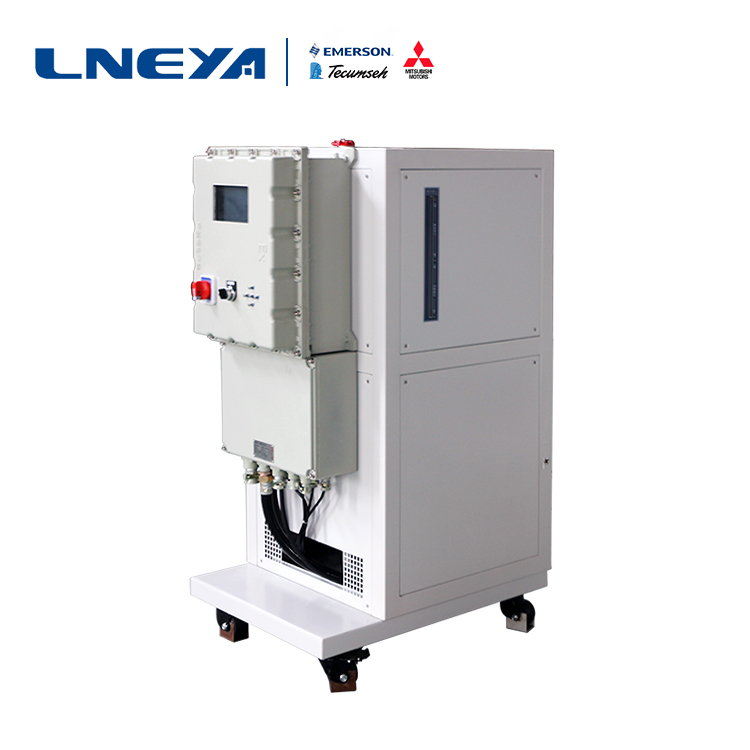
Wuxi Guanya LNEYA refrigeration heating temperature control system adopts fully enclosed pipeline design, adopts high efficiency plate heat exchanger, and is applied to the temperature rise and temperature control of glass reactor, metal reaction kettle and bioreactor, especially suitable for reaction process. There is a need for heat and heat release process control.
Temperature process control principle (control reactor material temperature)
TCU temperature control unit schematic
1. The method of changing the control set value can respond to the system lag in the process as soon as possible, and obtain the minimum system overshoot. The control consists of two sets of PIDs (each set of PIDs are variable) control loops. These two sets of control loops are called: the primary loop and the slave loop, and the control loop of the master loop is used as the setpoint of the slave loop. The system adopts feedforward PV, and the output of the PID operation result of the main control loop is combined with the feedforward PV signal as the set value of the slave control loop, so that the temperature change gradient is controlled to ensure the temperature control accuracy of the system. (General anti-lag cascade control)
2. A specially designed lag predictor (no model self-built tree algorithm) generates a dynamic signal yc(t) instead of the process variable y(t) as a feedback signal. An e(t) signal is generated to the controller to cause the controller to predict that there is no large hysteresis in the control, so that the controller can always generate a suitable control signal. That is to say, even if there is a large hysteresis, the dynamic signal yc(t) can keep the feedback loop working normally. While the general PID is used to control the process with significant time lag, the controller output is not suitable due to the lag time. The feedback signal keeps growing, causing the system to overshoot and even out of control.
3. Through three-point sampling (material temperature point, temperature control system outlet temperature, temperature control system inlet temperature), through our company’s own model-free self-built tree algorithm and general anti-lag cascade algorithm.
Предыстория: Parameters of small gas condensing liquefaction systemСледующий: Heat sink temperature application note
Похожие рекомендации
-

Operation Precautions for ZLF/SR Series Reactor Temperature Control Equipment
2087The temperature control equipment of the reaction kettle adopts the PID control method, which greatly improves the temperature control accuracy of the whole machine. The microcomputer for cooling or heating will automatically switch to work accord...
Посмотреть детали -

What is a laboratory glycol chiller What should I pay attention to
2368The laboratory glycol chiller is a common cooling equipment in the laboratory. It is generally used to achieve the temperature requirement of the cold source. What are the benefits? 1. Why choose a laboratory glycol chiller: The single-machine s...
Посмотреть детали -

The cooling circulation system is used to collect the non-condensable tail gas in the distillation s
1919Most rectification towers are two-stage condensation. The first stage uses cooling water, mainly condensing the top steam, and the second stage uses chilled water or ethylene glycol, which is mainly used to treat tail gas and remove a small amount...
Посмотреть детали -
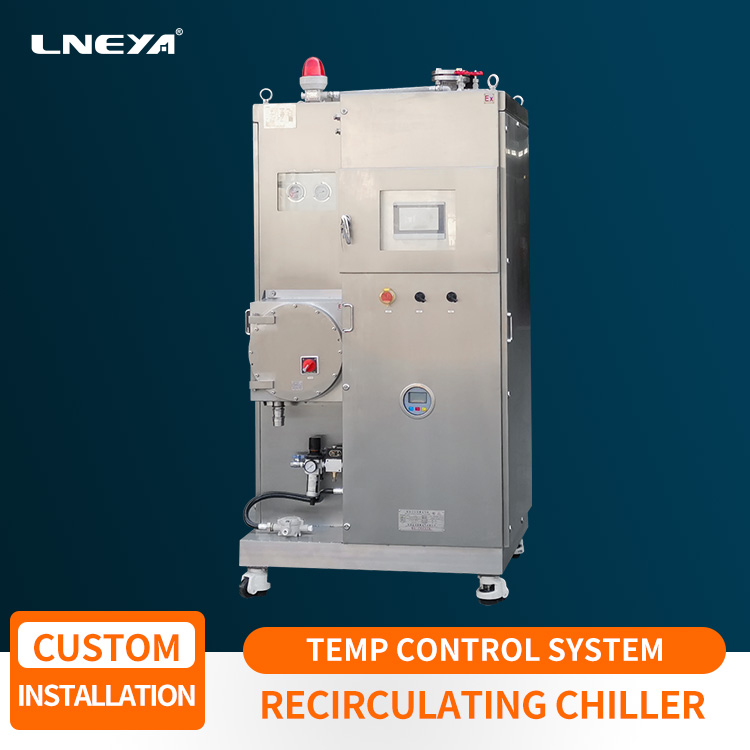
Structural Characteristics of Industrial Recirculating Chiller
1614In the chemical reaction, there are strict requirements for the reaction temperature. It is necessary to raise the temperature to an appropriate temperature to carry out the chemical reaction smoothly. After the reaction, the temperature in the re...
Посмотреть детали