 工業冷水機製造商 LNEYA Taiwan



What to Ask Before Buying a Custom Chiller
Buying a custom chiller isn’t just about picking a 冷却能力 from a spec sheet. It’s about designing a system that truly fits your process, environment, and control needs.
Many buyers focus only on price or tonnage, but the real value of a custom chiller lies in how well it matches your application. Asking the right questions before purchase helps you avoid hidden costs and ensures long-term, stable operation.
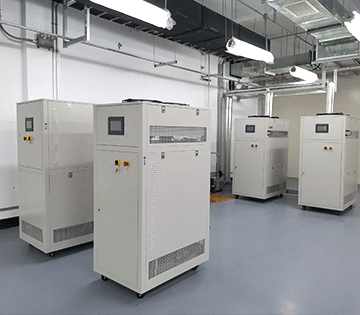
1. What Process Are You Cooling?
This is the most critical question. A chiller for laser cutting is completely different from one for a bioreactor or semiconductor bath. Define your heat source, 温度範囲, fluid type, and load variation. The more accurate your process data, the better your custom chiller will match your needs.
Every process has a thermal personality. A fiber laser generates short, intense heat bursts, while a fermentation tank produces steady heat over time. If a chiller isn’t designed around those load patterns, it will short cycle, wear out faster, or deliver unstable temperature control.
Some users just tell the manufacturer the cooling capacity they think they need, without giving process details. The result is often a system that overcools or can’t respond fast enough.
2. What Temperature Stability Do You Need?
In precision environments, even small temperature swings cause alignment errors, viscosity changes, or optical drift. Standard 工業用冷凍機 control temperature within about ±1°C, but laboratory, medical, or semiconductor processes may demand ±0.1°C or even tighter precision.
Defining this tolerance helps determine the right control logic, compressor type, and sensor accuracy.
3. What Is Your Operating Environment?
Ambient temperature, humidity, dust, and ventilation all affect chiller design.
Outdoor chillers may need rainproof or antifreeze protection. Cleanroom equipment must be quiet and low-vibration. Areas with flammable gases or dust require explosion-proof construction.
Providing this information early helps the manufacturer confirm protection levels and choose suitable materials and components.
Ask your supplier if the chiller can maintain performance under your worst-case ambient temperature. That’s what determines real reliability. A good design should handle both summer peaks and winter lows without shutdowns or alarms.
4. What Cooling Medium and Flow Conditions Do You Require?
Is your process fluid water, グリコール、または サーマルオイル? Each medium has different viscosity, freezing point, and heat transfer performance. Flow rate and pressure drop affect pump selection. A well-matched circulation system ensures even heat transfer and prevents cavitation or unstable flow.
5. What Control and Communication Do You Need?
Modern chillers do more than simple on/off control. They can integrate with PLCs, transmit data to SCADA platforms, or support remote monitoring via IoT. Specify whether you need PID control, Modbus or Ethernet communication, alarm outputs, or touchscreen interfaces.
In automated plants, chillers are part of a connected system. If you plan future integration, it’s much cheaper to design communication ports now than retrofit later.
6. What Space and Installation Constraints Do You Have?
Custom chillers can be designed with compact layouts, split systems, or flexible piping. Knowing your factory height, door width, and maintenance clearance helps avoid costly redesign or installation delays.
It’s surprisingly common to see a perfectly good chiller that can’t fit through a doorway or elevator. Compact chillers with service access on one side, or split-type designs with remote condensers, can save major installation headaches.
7. What Are Your Reliability and Maintenance Goals?
Is your system running 24/7 or intermittently? Who handles maintenance? Engineers can recommend redundancy pumps, dual circuits, or easy-maintenance components based on your operation schedule.
A chiller that runs around the clock needs components designed for long duty cycles and stable oil management. Systems that shut down often may need soft-start features or oil return controls to prevent compressor wear.
Choosing the lowest-cost design without considering maintenance access. A few inches of clearance can double the time needed for service, driving up labor costs in the long run.
8. How Will You Handle Future Expansion?
Projects often grow. To avoid downtime or equipment replacement later, plan for scalability early. Ask if the chiller can be expanded, connected in parallel, or integrated into an existing management system.
Partner with a Manufacturer Who Understands Your Process
Standard chillers don’t fit all. Therefore, when purchasing a chiller, don’t simply buy a standard model that roughly matches your needs. Instead, customize a unit that’s truly tailored to your application.
LNEYA offers customization services. Our technicians will guide you through all necessary considerations to design the optimal chiller that perfectly matches your specific operating conditions.
最近のブログ
- Clean Room Temperature Control
- Data Center Cooling System
- Power Electronics Cooling
- Feedback Control System
- Electronic Expansion Valve
- R32 vs R410A
- 半導体製造
- 冷凍サーキュレーター
カタログ
- 2026年7月
- 2026年6月
- 2025年12月
- 2025年11月
- 2025年10月
- 2025年9月
- 2025年8月
- 2025年7月
- 2025年6月
- 2025年5月
- 2025年3月
- 2025年2月
- 2025年1月
- 2024年12月
- 2024年11月
- 2024年10月
- 2024年9月
- 2024年8月
- 2024年7月
- 2024年6月
- 2024年5月
- 2024年4月
- 2024年3月
- 2024年2月
- 2023年9月
- 2023年7月
- 2023年6月
- 2023年5月
タグ
空冷チラー チラー チラーの設置 チラーメンテナンス chiller refrigerant チラーズ チラーのトラブルシューティング 冷却チラー 冷却システム 動的温度制御システム 省エネチラー 防爆チラー 暖房用サーキュレーター 工業用冷凍機 工業用冷凍機 工業用冷却 工業用冷凍庫 ジャケットリアクター ラボ用チラー liquid cooling ニュース プロセスチラー プロセス冷却 process cooling system リアクターチラー 原子炉冷却 原子炉加熱冷却 リアクターシステム スクリューチラー 半導体チラー 半導体テストチラー 温度調節 車両試験用冷凍機 ウォーターチラー 水冷チラー
お問い合わせ
関連チラー
お問い合わせ
TEL
EMAIL:
WeChat と WhatsApp:

ウィーチャットQR

ご質問やお見積もりが必要ですか? 下記のフォームにご記入いただくと、24時間以内に当チームからご連絡いたします。