 工業冷水機製造商 LNEYA Taiwan



How Dynamic Temperature Control Systems Support Reactor Operations
In the pharmaceutical, chemical, and advanced materials industries, reactor temperature control requirements are becoming increasingly stringent and complex. Traditional single-function refrigeration and heating equipment combinations are no longer able to meet the demands of modern processes in terms of operational efficiency, response speed, and temperature control accuracy. Dynamic temperature control systems are becoming a core component of reactor systems. How do they support reactor systems? This article provides a deeper understanding.
Integrated Design
Traditional reactor temperature control solutions typically consist of multiple separate devices, such as 냉각기, heaters, water tanks, and controllers. Each component requires separate wiring and independent operation. This results in complex wiring, slow system response, and numerous potential fault points.
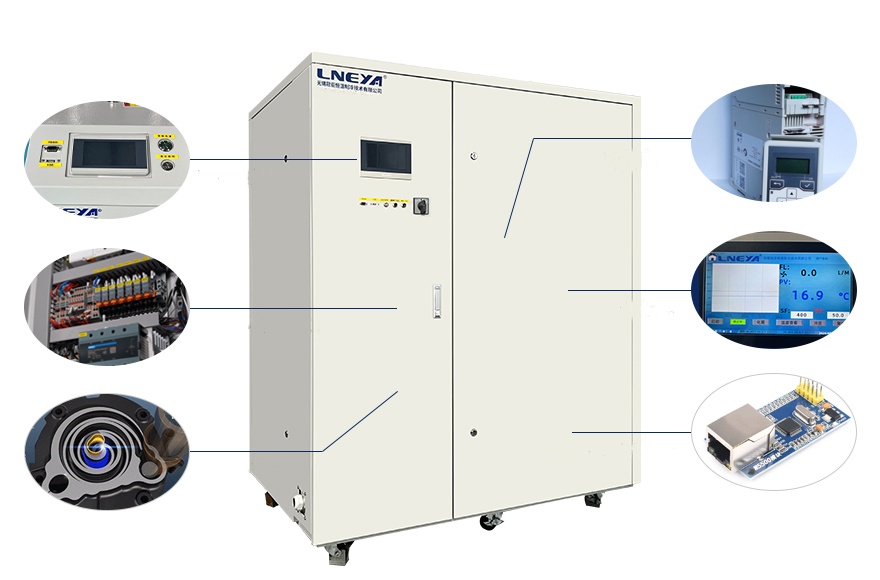
Dynamic temperature control systems utilize an integrated structure, integrating refrigeration, heating, circulation, and control systems into a compact housing. This reduces floor space requirements and is suitable for space-constrained locations such as laboratories and cleanrooms. Furthermore, upon receipt, the system can be used simply by filling the coolant and connecting the device’s interface to the reactor jacket or coil, saving installation time and 비용.
정밀 온도 제어
Many processes within reactors are extremely sensitive to temperature fluctuations. Reaction rates, side reaction control, crystallization processes, and product selectivity are all affected by temperature stability.
Dynamic temperature control systems utilize PID closed-loop control logic. Multiple Pt100 sensors collect real-time data on the reactor reflux temperature, output coolant temperature, and reactant temperature, enabling high-frequency adjustments to the coolant temperature, flow rate, and pressure.
Some high-performance systems can control temperature fluctuations to within ±0.02°C and adjust the temperature within a very short time. Furthermore, temperature profiles can be configured, allowing the system to automatically adjust the temperature to accommodate multiple reaction stages.
Control Panel
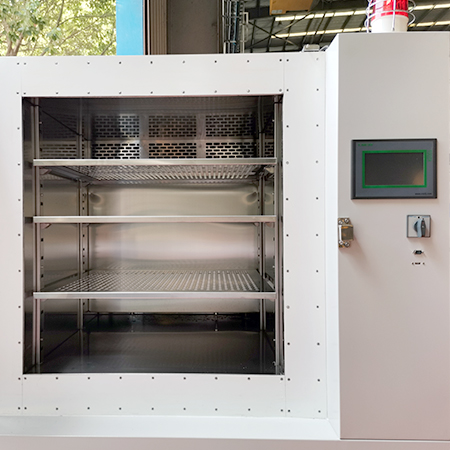
The dynamic temperature control system’s user interface is used to input control commands and view equipment operating parameters. Compared to knob-based and push-button control panels, the use of a high-definition color touchscreen greatly improves ease of use. This HMI resembles a mobile phone or tablet screen, offering simple and intuitive functions that are easy to use even without specialized training.

Remote Control
To improve production flexibility and management efficiency, many companies have introduced digital and automated production equipment. Therefore, reactor temperature control systems must not only be able to but also integrate with other systems and support remote monitoring and control.
Modern temperature control units generally support mainstream industrial communication protocols such as Modbus RTU/TCP, RS485, and CAN. These allow for remote parameter setting, operating status monitoring, data upload, and data export. They can also be connected to higher-level systems such as DCS, PLC, and MES, enabling synchronized control with the reactor’s stirring, feeding, and vacuum systems.

Safety Devices
Reactors are often used in hazardous areas involving high pressure, high temperature, and organic solvents. Failure of the temperature control system can have serious consequences. To ensure process safety, dynamic temperature control systems often include standard safety features such as high and low temperature alarms, automatic shutdown, pressure protection, flow monitoring, electrical safety protection, and fault diagnosis. To minimize safety hazards, processes involving flammable solvents should utilize explosion-proof chillers with higher safety standards.
Suitable for Multiple Scenarios
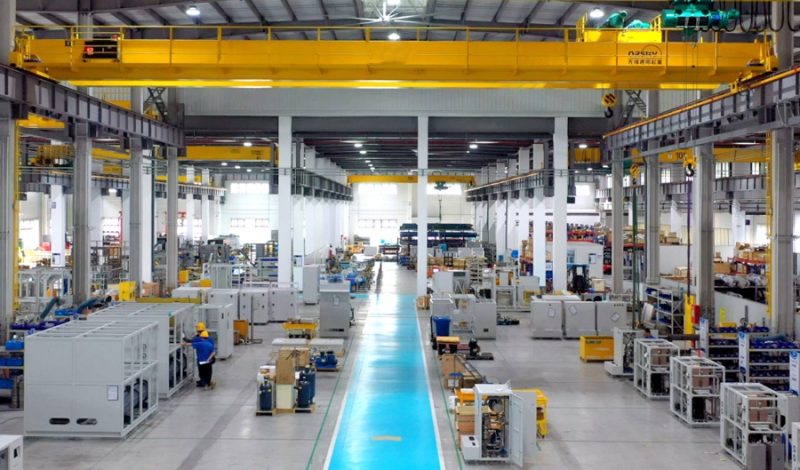
Reactor type, volume, and process flow vary across applications. Laboratory from small laboratory reactors to large-scale industrial systems, require different temperature control solutions. LNEYA, a chiller manufacturer with both R&D and production capabilities, can flexibly customize equipment to your application, eliminating the need to worry about standard models not being suitable for your process.
결론
A dynamic temperature control system can meet the demands of precise, stable, and efficient reaction processes. If your process demands high-performance temperature control, explore LNEYA’s proven SUNDI 시리즈. It has been recognized by numerous pharmaceutical and chemical companies, with some users becoming long-term partners.
Looking for product brochures and case studies? Contact us now to receive them.
최근 블로그
- Clean Room Temperature Control
- Data Center Cooling System
- Power Electronics Cooling
- Feedback Control System
카탈로그
- 2026년 7월
- 2026년 6월
- 2025년 12월
- 2025년 11월
- 2025년 10월
- 2025년 9월
- 2025년 8월
- 2025년 7월
- 2025년 6월
- 2025년 5월
- 2025년 3월
- 2025년 2월
- 2025년 1월
- 2024년 12월
- 2024년 11월
- 2024년 10월
- 2024년 9월
- 2024년 8월
- 2024년 7월
- 2024년 6월
- 2024년 5월
- 2024년 4월
- 2024년 3월
- 2024년 2월
- 2023년 9월
- 2023년 7월
- 2023년 6월
- 2023년 5월
태그
공냉식 냉각기 냉각기 냉각기 설치 Chiller Maintenance chiller refrigerant 냉각기 칠러 문제 해결 냉각 냉각기 cooling system 동적 온도 제어 시스템 에너지 효율적인 칠러 방폭형 냉각기 난방 순환기 산업용 냉각기 산업용 냉각기 산업용 냉각 산업용 냉동고 재킷 리액터 실험실 냉각기 liquid cooling 뉴스 공정 냉각기 공정 냉각 process cooling system 원자로 냉각기 원자로 냉각 원자로 가열 냉각 리액터 시스템 스크류 냉각기 반도체 냉각기 반도체 테스트 냉각기 온도 제어 차량 테스트 냉각기 물 냉각기 수냉식 냉각기
문의하기
관련 냉각기
문의하기
TEL:전화
이메일: 이메일
WeChat 및 WhatsApp:

Wechat QR

질문이 있거나 견적이 필요하신가요? 아래 양식을 작성해 주시면, 저희 팀이 24시간 내에 연락드리겠습니다.