 工業冷水機製造商 LNEYA Taiwan



Troubleshoot the main points of failure of the high and low temperature cooling system
When the industrial high and low temperature cooling system is in use, what is the general reason if the temperature cannot drop down? How should we deal with such failures?
Let’s first analyze the principles and methods of industrial cooling. The circulating heat transfer medium is different. Generally, the high and low temperature cooling system industry mostly uses direct cooling, while indirect cooling is used, with plate heat exchangers or oil coolers installed inside. In other devices, the heat medium and cooling water source in the system exchange heat in the heat exchanger to reduce the temperature of the medium.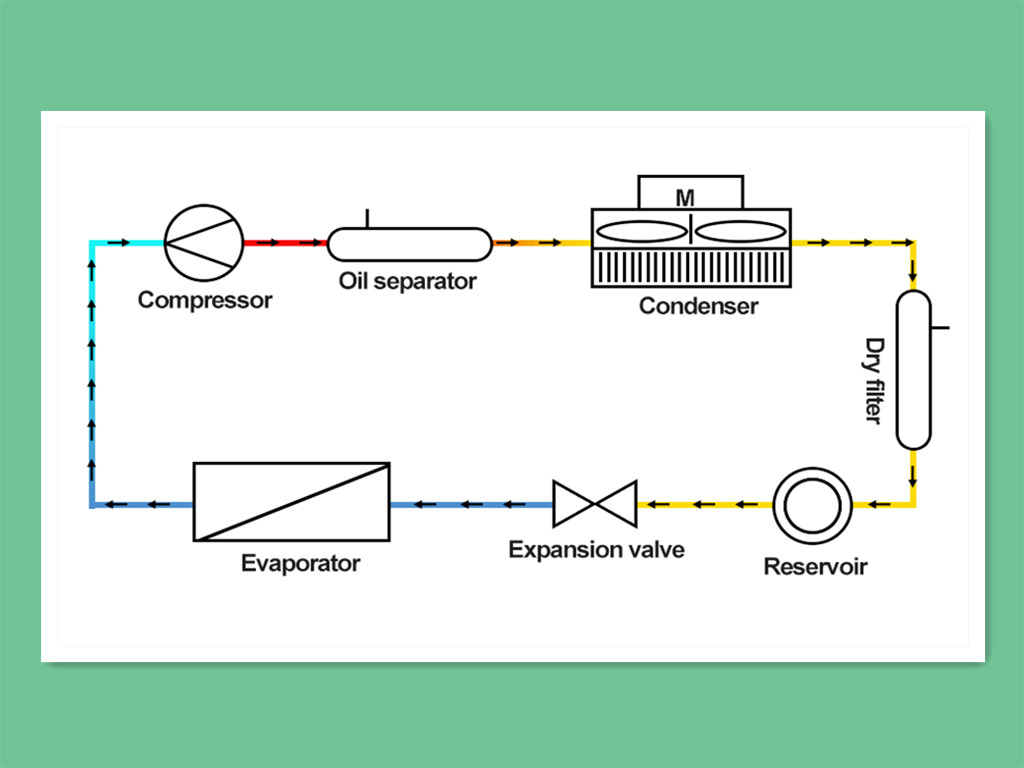
The temperature of the high and low temperature cooling system cannot be reduced. Generally, we conduct inspection and maintenance from the following aspects:
1. The cooling solenoid valve is damaged: it is necessary to check whether the solenoid valve coil can work normally, if it is damaged, it needs to be replaced; the panel does not output a cooling signal, carefully check the circuit or use the component replacement method to check.
2. Circuit failure: Check the circuit part of the system, the cooling water inlet or outlet pipeline is blocked: check whether the valve in the cooling water pipeline is fully opened, and ensure that the flow and pressure of the cooling water are sufficient, and the heating contactor is stuck, Always heating: observe the pull-in state of the contactor, and worsen damaged electrical parts.
In addition to troubleshooting the above two possible causes of failure, we also need to check whether the cooling plate is replaced or the cooling exchanger is blocked.
The advantage of using indirect cooling is that it has high temperature control accuracy and strong adaptability. It can be applied to the temperature control of high and low temperature cooling system industries. And because the heat transfer medium is cooled first, the cooling impact on the temperature control equipment is relatively small. Of course The disadvantage is that the cooling speed is relatively slow, and the price is more expensive than direct cooling.
Verwandte Empfehlungen
-

Classification and Application of Industrial Water Chillers
2236In lots of industrial production processes, it is difficult to obtain high efficient industrial production efficiency if there is no industrial water chiller to provide a low temperature production environment. Therefore, industrial water chil...
Details anzeigen -

Umgang mit dem Störungsalarm der Rückkühleinrichtung
1910Was ist zu tun, wenn während des Betriebs der Rückkühleranlage eine Störung und ein Alarm auftritt? Um die Produktion zu gewährleisten, müssen solche Probleme schnell behoben werden. Wir müssen zunächst die Ursachen von Ausfällen und Alarmen verstehen und verschiedene...
Details anzeigen -
Die Bedeutung der Steuerung des Temperaturzyklus von Heizung und Kühlung bei der Herstellung von API
2353China hat sich zum weltweit größten Absatzmarkt für Wirkstoffe entwickelt. Die meisten der von ausländischen Herstellern benötigten Wirkstoffe und Zwischenprodukte werden in meinem Land gekauft. Der Outsourcing-Prozess für die meisten Präparate, der Produktionsprozess und die...
Details anzeigen -
What do the LNEYA chiller fault codes mean? What is the solution?
2985Q: What is the fault code of the chiller? Answer: E1 means extremely high indoor temperature alarm, E2 means extremely high temperature alarm, E3 means extremely low temperature alarm, E4 means indoor temperature controller failure, E5 means water...
Details anzeigen