 工業冷水機製造商 LNEYA Taiwan



The Reasons of Frosting on Ultra low Temperature Recirculating Chillers
NACHRICHTEN 1932
Frosting will appear when many users take advantage of ultra low temperature recirculating chillers, while some are not. It is confusing and whether it is relevant to refrigeration.
First of all, why does ultra low temperature recirculating chillers frost? To sort it out, we can turn our eyes on the reasons of direct-cooling ultra low temperature recirculating chillers. The frost is a white crystal of vapour which will congeal on the surface of ultra low temperature objects.
The air will frost on the surface of the inner wall inside ultra low temperature recirculating chillers, which is the root cause. It will affect the heat transfer efficiency, resulting in the decline of refrigerating capacity, so the users should remove it manually.
We understand why the ultra low temperature recirculating chillers will frost on one hand, and for the other hand the air-cooled one is frostless. Are their reasons against each other? The principle of that is the air-cooled ultra low temperature recirculating chillers applies air to refrigerate. When high temperature air flows through the inner evaporator, both of them will change the heat directly because they are in opposite conditions so that the temperature of air will lower.
Meanwhile, cool air is blown in the ultra low temperature recirculating chillers, which is exactly what air-cooled one uses for cycling constantly to reduce its own temperature. However, vapor always exists in the air, so it becomes solid when it freezes, which shows that whenever heat transfer happens, frosting will be in the ultra low temperature recirculating chillers.
In fact, air-cooled ultra low temperature recirculating chillers is carried with frost, but only on the surface of the evaporator. When opening the door, we can not see it because the frost is inside. Thus, we call it as frostless on the whole.
Therefore, we make it clear why ultra low temperature recirculating chillers is out of frosting.
Verwandte Empfehlungen
-
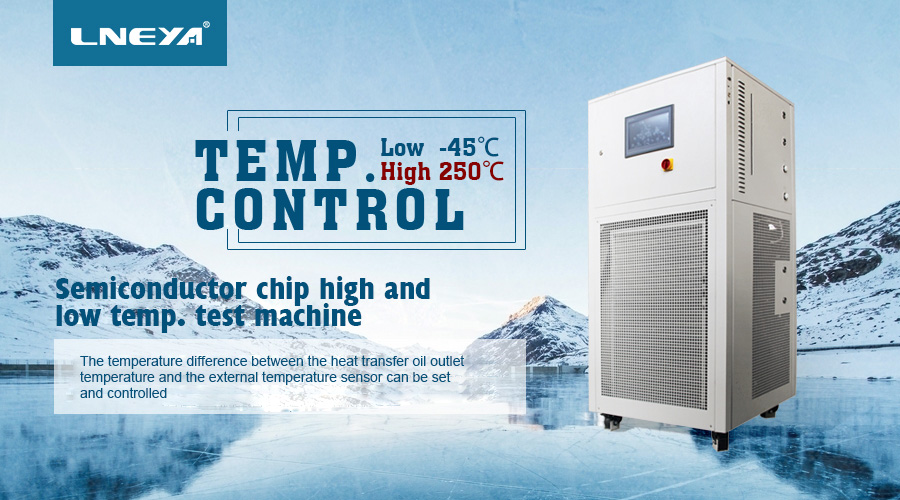
Beschreibung der Entwicklung des Wafer-Chip-Testsystems
1856Mit der Entwicklung der Halbleiterindustrie hat auch die Wafer-Chip-Testmaschine große Fortschritte gemacht. Wie viel wissen Sie über die Entwicklung der Wafer-Chip-Test-Maschine? Die Industrie für integrierte Schaltkreise hat sich seit dem...
Details anzeigen -

Wie wird die Temperatur des Reaktors geregelt?
1802Der Reaktionskessel, der zur Temperaturregelung verwendet wird, hat ein großes Fassungsvermögen und eine dicke Wand, so dass er ein kontrolliertes Objekt mit einer großen Wärmekapazität und einer langen reinen Verzögerungszeit ist. Mit fortschreitender Reaktion steigt der Wärmeübergangskoeffizient jedes Wärmeübertragers...
Details anzeigen -

Welche Art von Kältemittel wird von Industriekühlern in verschiedenen Branchen verwendet?
1715Die von den verschiedenen Industriezweigen für industrielle Kältemaschinen benötigten Kühltemperaturen sind unterschiedlich, so dass auch die Wahl der Kältemittel unterschiedlich ist. Daher müssen Sie bei der Auswahl einer industriellen Kältemaschine ein klares Verständnis der R...
Details anzeigen -
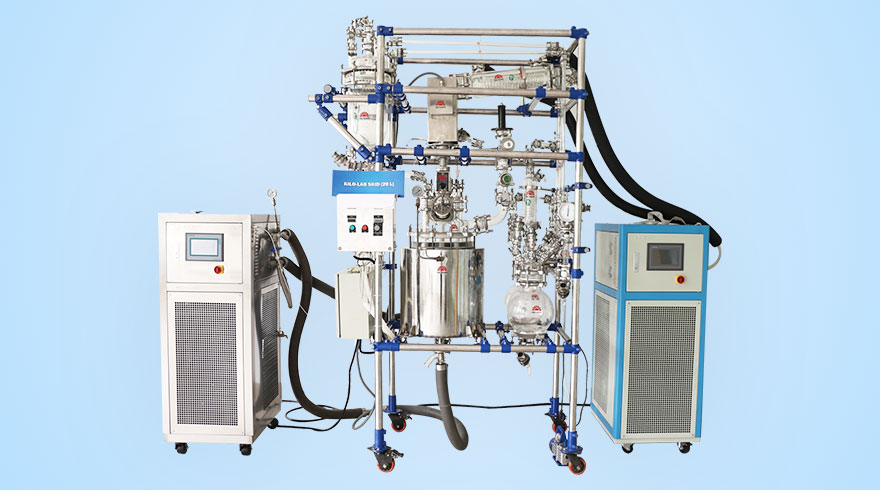
Vorsichtsmaßnahmen für die Verwendung von explosionsgeschützten Einstoffkälteanlagen mit Temperaturregelung de
1979There are many types of reactors, and laboratory reactors are one of them. What is the point of attention of LNEYA reactor temperature control system-explosion-proof single-fluid refrigeration heating temperature control device? The temperature me...
Details anzeigen