 工業冷水機製造商 LNEYA Taiwan



Working Principle of Glycol Chiller
For the low-temperature chiller using ethylene glycol solution, we
call it glycol chiller. Its outlet water temperature is generally below – 10 ℃, and the specific temperature requirements shall be subject to the
needs of users. Glycol chillers are common in chemical plants. In order to
ensure the safe and stable operation of equipment, many chemical plants will
strictly require water chillers to take explosion-proof measures, that is, what
we often call explosion-proof water chillers.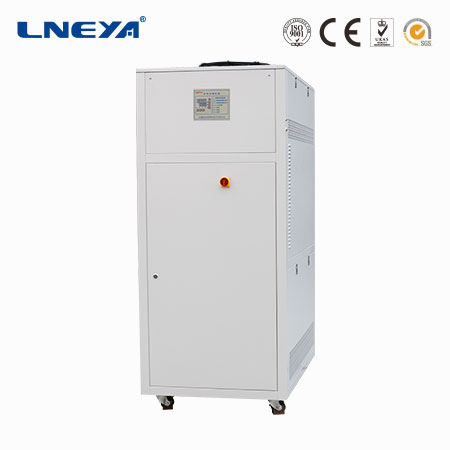
The structural composition of the water chiller is roughly the same,
which is composed of compressor, evaporator, condenser, throttling element and
electric control system. However, the glycol chiller adopts low-temperature
compressor and is equipped with economic separator and other components, which
are still different.
1、In order to keep the
pressure in the evaporator low enough to ensure that the refrigerant evaporates
at a sufficiently low boiling temperature, a compressor is used to extract the
evaporated refrigerant gas, that is, the refrigerant steam with low temperature
and low pressure is compressed into a refrigerant gas with high temperature and
high pressure. When the suction speed of the compressor is greater than the
evaporation speed of the refrigerant, the evaporation pressure and evaporation
temperature will decrease. Conversely, the suction speed of the compressor is
less than that of the refrigerant, and the evaporation temperature and pressure
will rise accordingly.
2、 High temperature and
high pressure refrigerant is condensed into liquid in the condenser. In the
condenser, the refrigerant releases heat to air or water lower than its
temperature. This part of heat includes the heat absorbed when the refrigerant
evaporates in the evaporator and the heat converted when the compressor
compresses. Special attention: the temperature of air or water must be lower
than that of refrigerant, otherwise the refrigerant cannot release heat, that
is, the temperature of cooling medium (cooling tower water or air) must be lower
than that of refrigerant gas at the outlet of compressor.
3、Through the restrictor,
the pressure of the refrigerant drops from the condensation pressure to the
evaporation pressure. The liquid from the condenser is stored in the liquid
reservoir. At this time, the refrigerant is in the state of normal temperature
and high pressure. After passing through the expansion valve, the boiling point
decreases due to the decrease of pressure. After entering the evaporator, the
liquid is easy to absorb heat and evaporate.
Verwandte Empfehlungen
-
New energy vehicle quality test water cooling chiller simulation equipment
1840It is mainly used in the water cooling system stability test of new products such as electric drives, motors, reducers, and charging piles of new energy vehicles. Constant temperature, constant pressure and constant current heat test (5-85°C), h...
Details anzeigen -
Introduction To The Use Of Explosion-Proof Precision Chiller
2078Wuxi Lneya solves the problem of how to charge refrigerants in the absence of refrigeration. 1. Connect all kinds of equipment well, close the three valve when the vacuum pressure is down to 133.3Pa, remove the hose from the suction port of the va...
Details anzeigen -

Welches sind die wichtigsten Ausrüstungsgegenstände, die für industrielle Kältemaschinen benötigt werden?
1674Main equipment of industrial chiller: compressor, condenser, expansion valve, evaporator, chilled water pump, cooling water pump cooling tower (water cooling) Selection: know the required inlet and outlet water temperature, the required cooling ca...
Details anzeigen -

Solution to oil spill of reactor cooling and heating circulator
1814When we use some reactor cooling and heating circulators, we will find that the system pressure fluctuates up and down as the temperature rises, and the oil tank is overflowing. So what are the reasons for these conditions in the cooling and heat...
Details anzeigen