 工業冷水機製造商 LNEYA Taiwan



다양한 주변 온도에서의 배터리 충전 테스트 조건
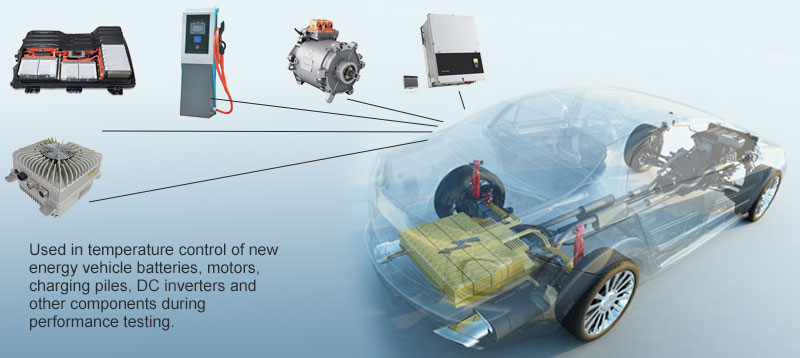
At present, the battery is undoubtedly the most core and critical component in electric vehicles. Therefore, both the OEM and the battery factory need to conduct a comprehensive test of the battery. The characteristics of automotive lithium-ion power batteries are greatly affected by ambient temperature. In low temperature environment, the available energy and power attenuation is more serious, because long-term charging in low temperature environment, the life will be greatly shortened.
In the case of -10 degrees, the battery capacity and operating voltage are significantly reduced; in the case of -20 degrees, the discharge capacity decreases sharply, and the specific capacity is only about 30% of that at normal temperature. Charging at low temperatures is also difficult. Metal lithium formed on the surface of the negative electrode is easy to accumulate. Further chemical reactions will cause internal short circuits in the battery, greatly reducing safety. In the measured temperature range, the internal resistance of the battery is higher under low temperature conditions, and the internal resistance becomes lower and lower as the temperature increases. The change of discharge energy is basically opposite to the change of internal resistance.
According to authoritative tests, the battery charging start current in hot cars is higher than cold cars, and the charging current is higher than cold cars, because the charging voltage is significantly higher than cold cars.
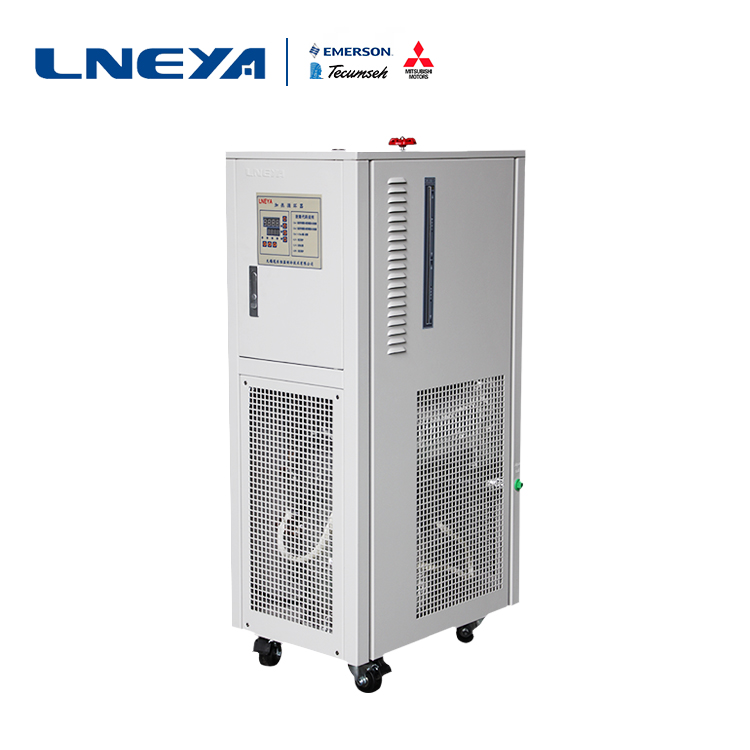
In these tests, the accuracy and temperature simulation become a very important factor. LNEYA’s KRY series-battery motor test cooling heating system is a product born for this emerging field. Fully enclosed tube design, high-efficiency plate heat exchanger, used for lifting temperature and constant temperature control in the test of new energy batteries and motors, especially suitable for heat dissipation and heat release process control during the test. With automatic fault protection function, it can output corresponding signals to ensure equipment safety. The main parts are international brands, quality assurance, the surface is treated with high-voltage electrostatic spraying, and auxiliary equipment can be added according to specific needs. It can achieve multi-channel temperature and flow control, one device can achieve multi-channel output, and each channel can control different flows without interfering with each other. Accepting customization requires solutions that control different flows and temperatures simultaneously.
관련 추천
-
-

유리 반응기 온도 제어를 지원하는 냉각 및 가열 온도 제어 시스템
2116우리나라의 화학 산업은 빠르게 발전해 왔으며 많은 기업들이 안정적인 발전을 가속화했습니다. 화학 산업에서 냉동 가열 온도 제어 시스템은 유리 원자로와 일치하여 반응을 제어합니다.
세부 정보 보기 -
Industrial Application Of Water-Cooled Chillers
1739Chillers, commonly known as freezers, chillers, chillers, chillers, chillers, etc., are widely used in various industries, so the names are numerous. The principle of its nature is a versatile cooling device that removes liquid vapor through a com...
세부 정보 보기 -

Introduction of distillation principle and temperature cycle control device
1895Distillation is a common method for purifying liquid substances and separating mixtures. The boiling point of the compound can also be measured by distillation, so it also has a certain significance for the identification of pure liquid organic co...
세부 정보 보기