 工業冷水機製造商 LNEYA Taiwan



Working Principle of Glycol Chiller
For the low-temperature chiller using ethylene glycol solution, we
call it glycol chiller. Its outlet water temperature is generally below – 10 ℃, and the specific temperature requirements shall be subject to the
needs of users. Glycol chillers are common in chemical plants. In order to
ensure the safe and stable operation of equipment, many chemical plants will
strictly require water chillers to take explosion-proof measures, that is, what
we often call explosion-proof water chillers.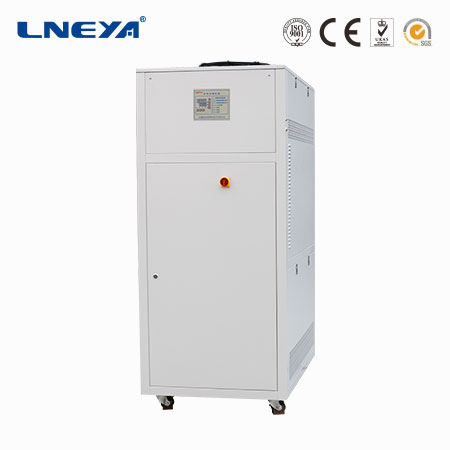
The structural composition of the water chiller is roughly the same,
which is composed of compressor, evaporator, condenser, throttling element and
electric control system. However, the glycol chiller adopts low-temperature
compressor and is equipped with economic separator and other components, which
are still different.
1、In order to keep the
pressure in the evaporator low enough to ensure that the refrigerant evaporates
at a sufficiently low boiling temperature, a compressor is used to extract the
evaporated refrigerant gas, that is, the refrigerant steam with low temperature
and low pressure is compressed into a refrigerant gas with high temperature and
high pressure. When the suction speed of the compressor is greater than the
evaporation speed of the refrigerant, the evaporation pressure and evaporation
temperature will decrease. Conversely, the suction speed of the compressor is
less than that of the refrigerant, and the evaporation temperature and pressure
will rise accordingly.
2、 High temperature and
high pressure refrigerant is condensed into liquid in the condenser. In the
condenser, the refrigerant releases heat to air or water lower than its
temperature. This part of heat includes the heat absorbed when the refrigerant
evaporates in the evaporator and the heat converted when the compressor
compresses. Special attention: the temperature of air or water must be lower
than that of refrigerant, otherwise the refrigerant cannot release heat, that
is, the temperature of cooling medium (cooling tower water or air) must be lower
than that of refrigerant gas at the outlet of compressor.
3、Through the restrictor,
the pressure of the refrigerant drops from the condensation pressure to the
evaporation pressure. The liquid from the condenser is stored in the liquid
reservoir. At this time, the refrigerant is in the state of normal temperature
and high pressure. After passing through the expansion valve, the boiling point
decreases due to the decrease of pressure. After entering the evaporator, the
liquid is easy to absorb heat and evaporate.
관련 추천
-
60P ultra-low temperature water chiller consumes too much energy and needs attention
174460p ultra-low temperature water chillers of different manufacturers have different performance configurations and different energy consumption. If you find that the energy consumption is too large, you must check in time to see if there is a probl...
세부 정보 보기 -
Influence of refrigeration factors on high temperature enclosed explosion-proof industrial chillers
2078Check whether the high and low temperature enclosed explosion-proof industrial chiller is the cause of its own failure. The selection must be accurate. If the model is not in place, the required refrigeration effect will also not be achieved. It i...
세부 정보 보기 -

LNEYA 난방 냉각 서큘레이터 서모 스탯 소개
2287Nowadays, the problem that plagues the pharmaceutical and chemical industry is the problem of temperature control. With the increasing industry demand and temperature control requirements of the pharmaceutical and chemical industry, the use of hea...
세부 정보 보기 -

TCU 온도 제어 모델 선택 및 기술 파라미터 설명
2611TCU 온도 제어는 2사이클 단위 단일 유체 온도 제어 시스템이기도 합니다. 모델을 선택할 때 전체 온도 제어 반응에 매우 중요합니다. 적절한 반응 시스템만이 발열 및 흡수에 사용됩니다.
세부 정보 보기