 工業冷水機製造商 LNEYA Taiwan



Principle of TCU temperature control system
Use area: can be used in various explosion-proof areas
The temperature control unit (TCU) is mainly used in reactor heating, cooling temperature control in fine chemical, chemical pharmaceutical, and biopharmaceutical processes. It can realize automatic control of temperature rise, temperature drop, constant temperature and distillation during the reaction process, especially suitable for the reaction process. There is a process control that requires heat and heat.
When the TCU 온도 제어 장치 is in high-efficiency operation, it must pay attention to timely protection and maintenance. If the equipment is actively handled under the condition that the equipment is subject to defects, the service life of the equipment will become longer.
Users can get a closed and repeatable temperature control over a wide temperature range, temperature control from -120 to 300 °C; avoid the need for replacement of traditional equipment and jacket maintenance; smaller fluid volume is also guaranteed The control loop reacts quickly and the thermal reaction delay is small. Built-in electric heating and heat conduction and auxiliary system, can be automatically opened according to demand, reducing steam pressure. The device has a standardized interface, which can increase the heat source heat exchange module according to actual needs.
The TCU device opens the angle of the electric regulating valve according to the instruction given by the system PLC, and controls the flow rate of the low temperature liquid into the reaction jacket jacket, thereby achieving energy saving and high efficiency. All signals fed back by this process are based on temperature.
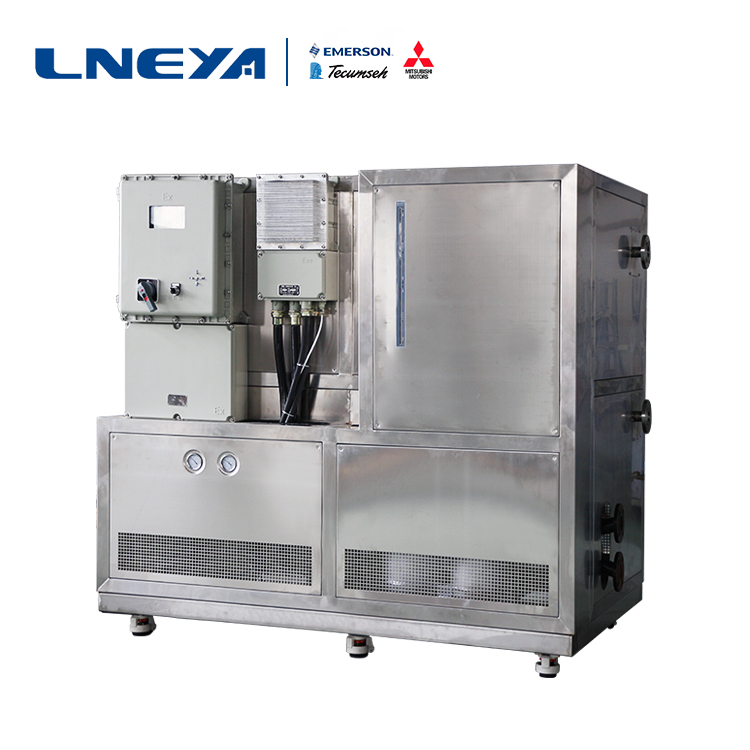
LNEYA’s TCU temperature control system principle:
1. The method of changing the control set value can respond to the system lag in the process as soon as possible, and get a small system overshoot. Control consists of two sets of PIDs (each group of PIDs are variable) control loops;
2. A specially designed lag predictor (no model self-built tree algorithm) generates a dynamic signal yc(t) instead of the process variable y(t) as a feedback signal. Generating an e(t) signal to the controller to cause the controller to predict that the control action has no large hysteresis, so that the controller can always generate a suitable control signal;
3. Through three-point sampling (material temperature point, temperature control system outlet temperature, temperature control system inlet temperature), through our company’s own model-free self-built tree algorithm and general anti-lag cascade algorithm.
관련 추천
-

How should an industrial chiller manufacturer choose
15842. Try to select well-known brand industrial chiller manufacturers with technical professional work experience. 3. If there are visits and inspections, we must attach great importance to the big aspects and pay more attention to the small key po...
세부 정보 보기 -

Low temperature industrial freezer fan coil wiring instructions
1977The electric two-way valve red line of the low-temperature industrial freezer is 220V hot wire (L) directly connected to the thermostat fire line interface, the blue line is zero line (N), the coil, the two-way valve, the thermostat is connected i...
세부 정보 보기 -
저온 챔버에 대한 세 가지 테스트 방법 비교
22642. Non-heat dissipation test samples and heat dissipation test samples When the temperature of the test sample is stable during the conditional test period, the hottest spot temperature on the surface of the test sample is higher than the ambient...
세부 정보 보기 -
500리터 용량의 냉난방 온도 제어 장비에 대한 요구 사항은 무엇인가요?
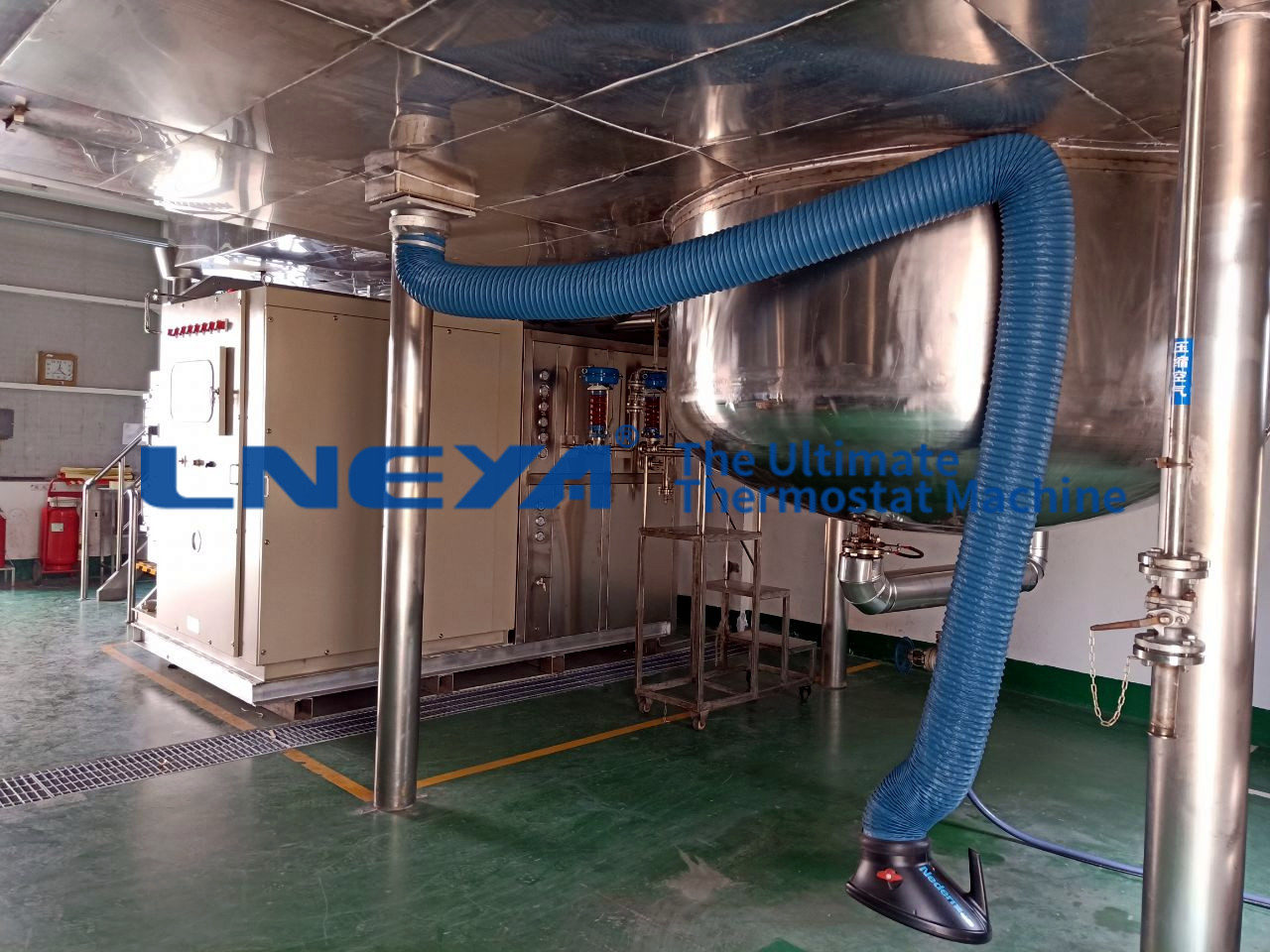
1802The 500-liter reaction kettle cooling and heating temperature control equipment is a dynamic temperature control system, a fully closed circulation pipeline, which can be automatically heated or cooled according to the process requirements. 1. A s...
세부 정보 보기