 工業冷水機製造商 LNEYA Taiwan



스테인리스 스틸 반응기 및 유리 반응기를 위한 온도 제어 지침
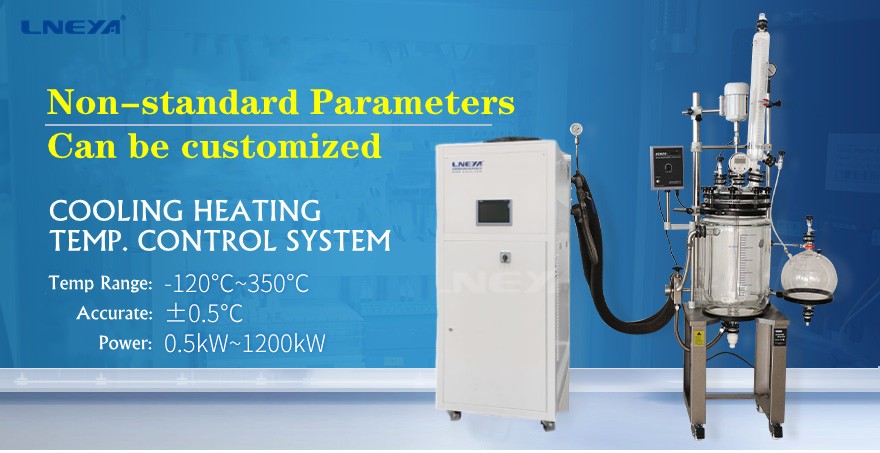
Reactor is a kind of reaction equipment in industrial production. It generally needs to be refrigerated or heated. Whether the temperature is suitable or not directly affects its reaction effect. Therefore, if conditions permit, it is generally equipped with a reactor temperature control device. The temperature control device of the reaction kettle uses the conversion of heat conduction oil to heat the material to be heated. Inferior heat conduction oil has a short service life and is prone to scaling. Impurities will decompose under high temperature conditions, and the temperature cannot rise. There is water vapor It will cause more fuel injection. Generally, it is advisable to control the temperature of the reaction solution within 30-300°C for the electric heating reactor. Furthermore, the double-layer glass reactor can choose the corresponding low-temperature refrigeration cycle system for refrigeration, and the low temperature can reach -120°C. Heating can choose water vapor, hot water, heat transfer oil and other heat carriers, and the high temperature can reach 300 °C. Another example is that the temperature of the enamel reaction kettle is 200°C, so the temperature of the material in the kettle is not allowed to exceed this temperature.
Most temperature control applications involve stainless steel reactors, which are more durable, and glass reactors, which allow the user to observe the reaction process inside the reactor. There are many precautions to consider for the safety of glass reactors. Typically, a reactor has an internal cavity in which materials requiring temperature control are stored. The inner cavity is surrounded by a jacket that can be connected to heat-conducting oil, and the temperature control system is connected with the jacket of the reactor. In order to control the temperature of the reactor, the thermal oil is heated and cooled in the temperature control equipment. The temperature control system of the reactor continuously pumps the heat transfer oil into the jacket of the reactor through the circulation pump. Sudden temperature changes inside the reactor will be compensated by rapid heating and cooling of the temperature control equipment to achieve dynamic equilibrium.
Temperature control uses water circulation or oil circulation for temperature control, and the connecting equipment must have flow channels and interlayers. In industry, wherever temperature is required, temperature control is required. Our LNEYA cooling and heating temperature control system can basically be used for temperature control in the above industrial processes. The temperature is from -120~350℃. Plate heat exchangers and pipeline heaters are used to increase the temperature control rate, high-efficiency production stability and repeatable results, providing dynamic constant temperature control of cold source and heat source, fully enclosed system, reducing the demand for heat transfer fluid and increasing the heat of the system utilization rate.
관련 추천
-

Product Features of Fluid Heat Transfer Temperature Control System
2120The fluid heat transfer temperature control system is the refrigeration and heating device of the matching reactor reactor in the pharmaceutical chemical industry. So, what are the characteristics of the fluid heat transfer temperature control sys...
세부 정보 보기 -

글리콜 냉각기 설치 시 주의사항은 무엇인가요?
2031In the summer, the use of glycol chillers is relatively frequent. Therefore, when installing glycol chillers, they need to be installed on a smooth and tidy floor. Why choose a smooth ground when installing? Users who have known the glycol chiller...
세부 정보 보기 -

What are the system components of various distillation devices?
15011. A complete set of short-path distillation equipment: including short-path evaporator, heating system, feeding system, cooling system, vacuum system, material collection unit, etc.; 2. A complete set of thin film distillation equipment: includin...
세부 정보 보기 -

재결정화 온도와 영향을 미치는 요인은 무엇인가요?
1710재결정화는 용매에 용해되거나 녹은 후 용액 또는 용융물에서 결정을 재결정화하는 과정입니다. 재결정화는 불순물을 정화하거나 혼합된 염을 서로 분리할 수 있습니다. 그중에는 ...
세부 정보 보기