 工業冷水機製造商 LNEYA Taiwan



Explosion-Proof Chiller: When Do You Need One
An explosion-proof chiller is required in industrial environments where flammable gases, solvents, dust, or hazardous chemicals are present. In such conditions, an standard chiller can become an ignition source and create safety risks. This article explains when an explosion-proof chiller is needed and how it differs from a standard chiller.
What is an Explosion-Proof Chiller
An explosion-proof chiller is a cooling system designed for hazardous areas. It usually adds safety features such as spark protection, anti-static, anti-leakage, and anti-high-temperature arc protection during the design stage, which can prevent the equipment from becoming an ignition source and provide a safe operating environment for industrial production. Different countries and regions have different explosion-proof standards, such as China GB3836, US NEC/UL, Europe ATEX, etc.
Why an Explosion-Proof Chiller Is Required
Chillers are not flammable, but they contain many electrical components and moving parts inside, which can become ignition sources in some cases.
1.Electrical sparks
Compressors, electric control boxes, relays, starters and other components may generate electrical sparks during operation, start-stop or failure. When electrical sparks are exposed to an environment containing flammable gases such as methane, hydrogen, acetylene, ethylene, etc., they may detonate the gas mixture in the air.
2.Surface temperature
The surface temperature of compressors, motors, and condensers may reach hundreds of degrees Celsius during operation, while the auto-ignition point of flammable gases such as hydrogen sulfide and ethanol is low. Explosions may also occur when the surface temperature of the equipment exceeds the auto-ignition point of the gas.
3.Static electricity discharge
The chiller will generate static electricity due to fluid flow or friction during operation. If the chiller does not have static electricity protection function, it can also form an arc to detonate the gas.
4.Refrigerant leakage
Natural refrigerants such as R290 and R600a are flammable and explosive gases. If the refrigerant leaks, it may form an explosive mixture with air. When combined with an electrical fault, this can lead to fire or explosion.
Explosion-Proof Chillers VS Standard Chillers
Compared with standard chillers, explosion-proof chillers use a large number of explosion-proof structures, so they can be safely used in applications containing flammable gases, solvents, dust or hazardous chemicals.

1.Explosion-proof electrical system
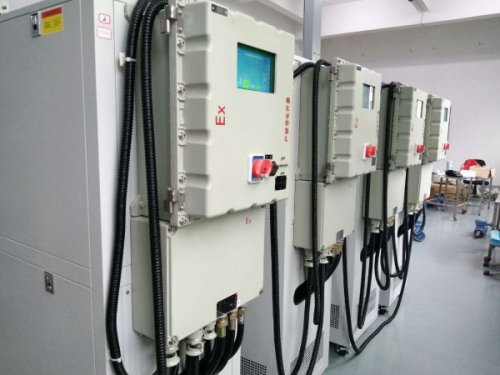
Explosion-proof chillers use explosion-proof motors, electric control boxes, thermostats, relays and junction boxes. All electrical components are encapsulated in thick-walled explosion-proof housings, so that even if there is an internal short circuit or spark, the electric spark will not be exposed to the external environment. All its wiring ports and cable entry points use explosion-proof sealed connectors, which can effectively prevent gas from entering the interior of the equipment.
2.Explosion-proof structure
Explosion-proof chillers are equipped with pressurized seals, typically using positive pressure or explosion-isolated designs to prevent external flammable gases from entering the body. It adopts a non-sparking design to avoid the use of accessories that will cause friction and sparks. In addition, its high-temperature components are physically isolated from the housing to prevent external contact.
3.Anti-static and anti-leakage
Explosion-proof chillers are grounded at multiple points to avoid static electricity accumulation. The refrigerant pipeline is reliably sealed to prevent the leakage of flammable gas. A pressure relief device is used, and the high-pressure end is equipped with a safety valve, explosion-proof membrane and other pressure relief protection.
Applications Requiring Explosion-Proof Chillers
The following scenarios recommend the use of explosion-proof chillers:
• Chemical industry
The process of chemical plants will contain volatile solvents such as ethanol, toluene, and acetone, and the air contains flammable vapors.
• Lithium battery
The electrolyte is flammable and very sensitive to temperature.
• Pharmaceuticals
Organic solvents are often used in pharmaceutical extraction, reaction, and separation processes, and explosion protection should be paid attention to.
• Spraying and printing
Paints, coatings, and inks contain a large amount of flammable components.
• Oil/gas
The risk of natural gas leakage is high and explosion protection is required.
• Dust
For example, in flour mills, metal powder processing, and 3D printing laboratories, dust concentrations can form explosive mixtures when they reach a certain limit, causing explosions under the action of ignition sources.

How to Determine If You Need an Explosion-Proof Chiller
Does your factory have volatile organic solvents? Is there a possibility of gas leakage or dust accumulation? Have you ever triggered an alarm or accident due to sparks or short circuits in the equipment? Do you use chillers to control the temperature of reactors, fermenters, concentrators, etc.? Are you doing ATEX/explosion-proof factory inspections or customer audits? If the answer to any of the above questions is “yes”, you probably need an explosion-proof chiller.
| Zone Classification | Meaning | Is Explosion-Proof Chiller Required? |
| Zone 0 | Explosive gases are present continuously or for long periods | Yes. Must use explosion-proof equipment with high rating |
| Zone 1 | Explosive gases may occur during normal operation | Yes. Explosion-proof chiller is required |
| Zone 2 | Explosive gases occur only under abnormal conditions | Recommended. Explosion isolation may be acceptable |
If you use it in workshops in industries such as petroleum, chemical, pharmaceutical, coating, lithium battery, and fine chemical, it basically involves Zone 1 or Zone 2.
How to choose an explosion-proof chiller
When purchasing an explosion-proof chiller, you need to pay attention to the explosion-proof level, working condition matching, and the integrity of safety electrical equipment.
1.Explosion-proof level
Explosive gases are divided into IIB and IIC levels. The higher the level, the higher the requirements for explosion-proof equipment. When choosing an explosion-proof chiller, you need to clarify which group the flammable gas in your application belongs to avoid buying substandard equipment.
| Gas Group | Typical Gases | Required Explosion-Proof Level |
| IIA | Propane, ethanol, etc. | Standard explosion protection |
| IIB | Ethylene, ammonia, etc. | Enhanced explosion protection |
| IIC | Hydrogen, acetylene, etc. | Advanced protection (upgraded enclosure, electrical parts) |
2.Working conditions
You should clarify the cooling method (air cooling or water cooling), temperature range, and temperature control accuracy of the chiller according to your application requirements.
3.Electrical control system
Some manufacturers only make electrical boxes explosion-proof, and compressors, pumps, solenoid valves, etc. are still ordinary components. This type of chiller is not truly explosion-proof as a whole machine and still has explosion hazards. You need to confirm whether the control box and motor are explosion-proof or designed with positive pressure protection, and whether the chiller has an explosion-proof certification.
4.Special design
Corrosive gases are often used in the chemical industry. The shell of the chiller is made of 304/316 stainless steel, which is more corrosion-resistant. Multiple safety devices can add an extra layer of insurance to your chiller, such as temperature protection, pressure protection, phase loss, overcurrent, pressure relief, sound and light alarm, etc.
LNEYA explosion-proof chiller solution
LNEYA supports the customization of explosion-proof chillers and positive-pressure explosion-proof chillers. Key components, including the motor, heater, temperature sensors, pressure sensors, compressor, and circulating pump, are designed with explosion-proof protection. The electrical cabinet and fan blades are made of aluminum. The system is equipped with safety devices, remote alarm, and remote communication functions. Water-cooled chiller models can be customized to EXPXdmd II BT4 and EXPXdmd II CT4 ratings.
FAQ
CONTACT US
TEL:
EMAIL:
WeChat & WhatsApp:

Wechat QR

Have a question or need a quote? Fill out the form below, and our team will get back to you within 24 hours.