 工業冷水機製造商 LNEYA Taiwan



Effect of Temperature on Reactions of Chemical Organic Synthesis
 Organic synthesis is a common chemical phenomenon in chemistry. Temperature has an important influence on it during the whole synthesis process. As the temperature rises, the heat-absorbing reaction will speed up, resulting in a significant change in the equilibrium constant; once the temperature decreases, The exothermic reaction will be accelerated.
Endothermic and exothermic, as the main characteristics of organic synthesis reactions, need to be paid enough attention to by researchers in the process of organic synthesis research. When the temperature reaches about 100C, the content of organic compounds will decrease, but when the temperature is lower than 50C, the content of organic compounds will be higher. Therefore, temperature has a great influence on chemical equilibrium.
1. Initiate the reaction; 2. Control the reaction rate; 3. Control the degree of reaction; 4. Adjust the direction of the reaction; 5. Prevent the volatilization of reactants.
In some chemical synthesis reactions, once the temperature rises, the mechanism will become more free, it is difficult to grasp the process of the entire synthesis reaction, and finally the selectivity will be significantly reduced. In addition, temperature will also dissolve related substances in the chemical reaction process. Solubility is an important parameter in the chemical reaction process. Changes in temperature will cause changes in solubility during the synthesis reaction process, resulting in different phenomena in the entire synthesis reaction.
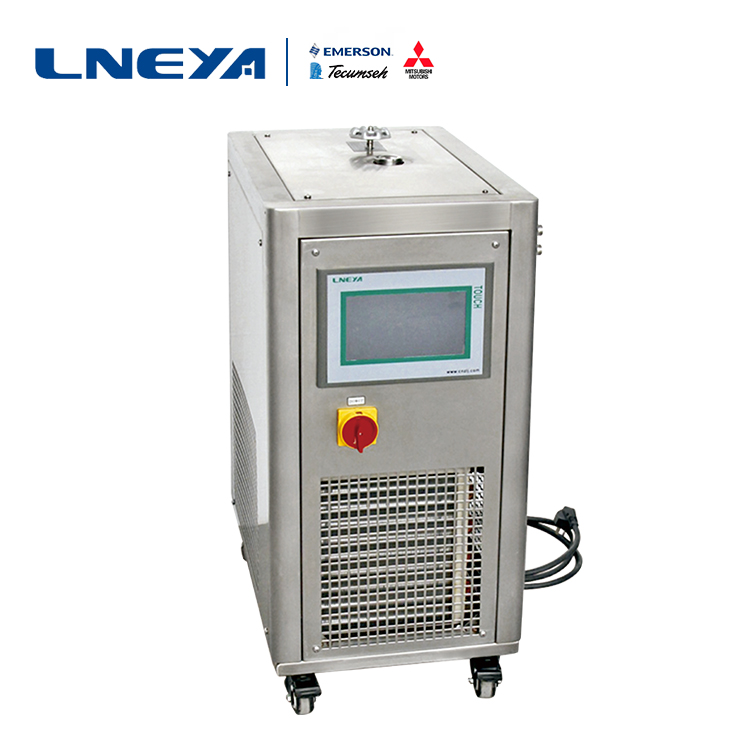
Our LNEYA cooling heating system all-in-one SUNDI series equipment is a leader in temperature control equipment in the chemical and pharmaceutical industry. Not only can the dynamic constant temperature control of the cold source and heat source be achieved for the reaction vessel, but also the reaction material can be cooled and heated, which greatly improves the safety of the reaction process and the quality of the product.
Related recommendations
-

How to choose low temperature and high temperature aging test equipment?
2175The refrigeration capacity and temperature range of materials in different industries are different. Generally speaking, the cooling capacity is divided into 80kw, 120kw, 180kw, 240kw, 360kw, and the cooling temperature ranges from -25°C to -5°C. ...
View details -
How to choose the cooling and heating temperature control system?
2118The price of the refrigeration heating temperature control system is not the main factor. The main purpose is to implement the temperature control technology through the temperature control function. However, it is not the temperature control syst...
View details -

Main points of maintenance of LNEYA ultra-low temperature refrigeration circulator
1975Ultra-low temperature refrigeration circulators need to be maintained after a long period of operation, so what aspects should be paid attention to? Check and maintain the ultra-low temperature refrigeration circulator on time. It can find problem...
View details -
The difference between direct contact liquid cooling and cold plate liquid cooling technology
2350The cold plate liquid cooling technology is an implementation method in which the heat of the heating components is indirectly transferred to the cooling liquid enclosed in the circulating pipeline through the cold plate, and the heat is taken awa...
View details