 工業冷水機製造商 LNEYA Taiwan



Configuration form of circulating heating unit for laboratory
The standard model of the circulating heating unit for LNEYA laboratory is: SUNDI, the temperature range is from room temperature to minus 120 degrees Celsius, and the capacity can be divided into 5L, 10L, 20L, 30L, 40L, 50L, 80L, 100L, larger capacity equipment needs to be provided by the user Parameter requirements and experimental programs, customers can customize according to this information.
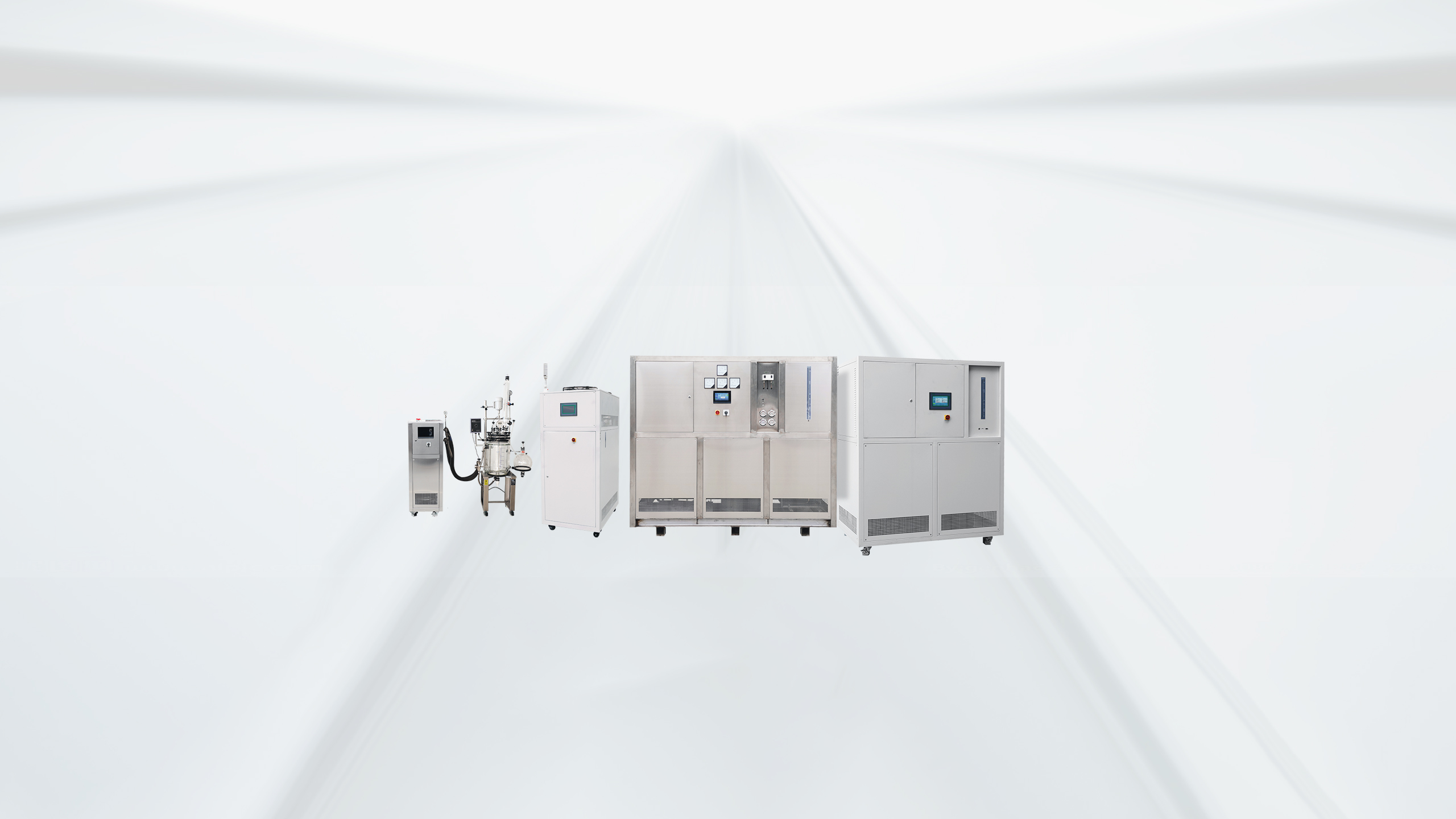
Basic configuration of circulating heating unit for laboratory:
1. Closed circulation system: Circulation devices with closed loops such as cooling coils and insulating sleeves.
2. Water-cooled chiller: The size of the chiller is adjusted according to the capacity of the equipment itself. Fans cannot be used to dissipate heat, which has little impact on the environment. It is suitable for use in dust-free laboratories without air conditioning and ventilation equipment. The refrigeration system has a delay. The components of heating, over-current protection and other devices are all imported products to ensure the quality and service life of the equipment.
3. High-pressure pump: The piping is longer, generally 1-3 meters (adjusted according to the actual situation), which can carry out long-distance cyclic transportation smoothly.
4. Shell and inner liner: stamped and welded with high-density corrosion-resistant materials. The interior can be filled with solutions such as tap water and ethanol, and the key parts are made of stainless steel (SUS304).
5. Circulating medium: silicone oil, water, ethanol, absolute ethanol, etc.
6. Computer control: The entire system provides microcomputer control, including host and software (genuine/cracked version), capable of high-precision control, and superior overall performance. All operations can be operated by buttons on the computer or touch screen, which is simple and intuitive. The PID system eliminates external factors that affect temperature regulation and reduces equipment errors.
We analyze the principles and methods of circulating heating unit cooling in the laboratory. The circulating heat transfer medium is different. Generally, direct cooling is generally used, while the circulating heating unit in laboratory mostly adopts indirect cooling. A plate heat exchanger or oil cooler is installed inside, and the heat medium and cooling water source in the system exchange heat in the heat exchanger to reduce the temperature of the medium.
The temperature of the circulating heating unit used in the laboratory cannot be lowered. Generally, we conduct inspection and maintenance from the following aspects:
1. The cooling solenoid valve is damaged: it is necessary to check whether the solenoid valve coil can work normally, if it is damaged, it needs to be replaced; the panel does not output a cooling signal, carefully check the circuit or use the component replacement method to check.
2. Circuit failure circuit: Check the circuit part of the system, the cooling water inlet or outlet pipeline is blocked: check whether the valve in the cooling water pipeline is fully opened, and ensure that the flow and pressure of the cooling water are sufficient, and the heating contactor is stuck, Always heating: observe the pull-in state of the contactor, and worsen damaged electrical parts.
If the temperature of the circulating heating unit in the laboratory cannot be lowered, in addition to troubleshooting the above-mentioned possible causes of failure, we also need to check whether the cooling plate is replaced or the cooling exchanger is blocked.
The advantage of using indirect cooling is that it has high temperature control accuracy and strong adaptability. It can be applied to the temperature control of the circulating heating unit in the laboratory. Since the heat transfer medium is cooled first, the cooling impact on the temperature control equipment is relatively small. Of course, the disadvantage is that the cooling rate is relatively slow, and the price is more expensive than direct cooling.
Related recommendations
-

New energy automobile motor comprehensive test system
2219When the LNEYA new energy vehicle motor integrated test system is running, the control panel settings are required. At the time of setting, if the user does not know how to use it, you can check the manual for use. The indicator of the new energy ...
View details -

How to choose the model of the temperature control device of the lithography machine?
1774How to choose a suitable industrial chiller, and what aspects should be paid attention to in the design of the unit? 1. Choose air-cooled or water-cooled temperature control device for lithography machine The condensation methods of industrial chi...
View details -
Integrated control system high and low temperature cycle device ZLF series use items
2048With the development of society, the chemical industry has been further developed, and the temperature system control of the reactor has been strengthened, so as to ensure that the monitoring environment is in a good state, to ensure that the temp...
View details -
LNEYA’s 300,000 kcal air-cooled unit on air tightness
2044When the user runs the 300,000 kcal air-cooling unit, it needs to check the air tightness, because the airtightness may cause the air-cooling unit to consume too much energy. In order to prevent the temperature from falling for a long time during ...
View details