 工業冷水機製造商 LNEYA Taiwan



What is the refrigeration principle of the glycol chiller system
Glycol Chiller System , as we can tell from
its name, it is to use Glycol as the refrigeration agent for the chiller.
In the all air environment, because of the
low temperature in the outdoors, it is impossible to use a cooling tower to
supply the inner area directly with the cold air-conditioner. In addition, the
cold air in the outdoors could be used directly as refrigerator source,with glycol
as refrigerant, it can introduce the natural cold air into the inner area and
supply cold air-conditioner. If we need to heat the outer area and provide
cooling for the inner area, we can turn off the chiller and Boiler or
industrial hot water is still used as heat source for external heating.
Install plate heat exchanger in the
outdoor, and the outdoor cold air is introduced into the plate heat exchanger
by the fan. The glycol solution and the outdoor cold air are exchanged in the
plate heat exchanger. The cooled glycol solution enters into the air
conditioners in the inner area and exchange with mixed air. Then the mixed air
enters into the inner room with lower temperature and supply cooling. The
temperature of glycol solution rise up, it comes back to the plant heat
exchanger in the outdoor again, exchange heat with the cold air in the outdoor
and continue this cycling after the temperature is lowered. This way of heat exchange is usually used in
the heat recycling system.
It is a very energy-saving way that use
glycol as a refrigerant to introduce the cold air in the outdoors to supply
cooling for the inner area. All we need to do is to install a heat exchanger in
the outdoor.when it works, the cold water equipment closed, opening the fan and
the glycol chiller can bring cooling for the inner area. In this way, we can
save energy and reduce the cost.
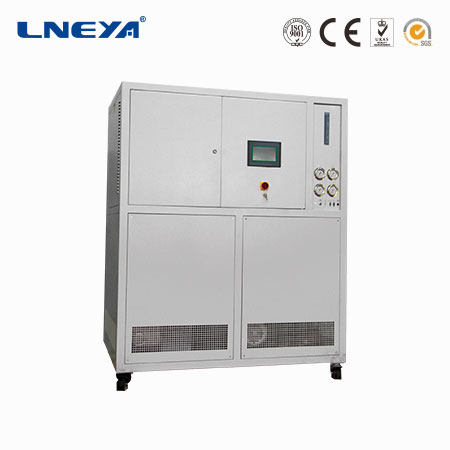
Our LNEYA self-developed low-temperature
refrigeration circulator, also known as the glycol chiller, has a cooling
temperature range from -125°C to -20°C, using a computer cascade temperature controller and a PT100
temperature sensor. The product adopts ethylene glycol and water mixture for
circulating refrigeration to save water resources; adopts supercooling
technology to ensure temperature stability at low temperatures; adopts a fully
enclosed design to ensure the purity of the cold heat transfer medium, prevent ice
crystals, and increase the life of the heat transfer fluid. There are two
temperature series, LX and LT, to meet the low temperature control requirements
of chemical and pharmaceutical low temperature reactions. You can contact us to
obtain the detailed parameters of the temperature range you need.
Related recommendations
-
Precautions for installation of special chiller for new energy testing
1880The installation of the special chiller for new energy testing is an important link before operation. The quality of the installation is directly related to the operation and operation status of the special chiller for new energy testing. So, what...
View details -

Common fuel cell environmental test device inspection method
2359During the cooling process of the fuel cell environmental test device, there is a chance of dripping inside. This is not a normal phenomenon used by the fuel cell environmental test device, but is caused by improper installation. After the fuel ce...
View details -
Comparison of Three Test Methods for Low Temperature Chamber
22642. Non-heat dissipation test samples and heat dissipation test samples When the temperature of the test sample is stable during the conditional test period, the hottest spot temperature on the surface of the test sample is higher than the ambient...
View details -
Introduction to Heated Water Circulator System
2006The heated water circulation system (commonly known as hot treasure, backwater, heated water speeder, circulating water, heated water circulator, heated water preheater, preheating circulating system, etc.) is to solve the problem that hot water w...
View details