 工業冷水機製造商 LNEYA Taiwan



Automotive new energy battery / motor thermal management performance test
1. Thermal management physical architecture analysis
New energy vehicle thermal management systems typically include engine cooling systems, power device cooling systems for motors, motor controllers, battery pack cooling/heating systems, passenger compartment cooling and heating systems. The thermal management physical architecture analysis starts from three aspects: medium flow, energy flow, and signal flow. Among them, media flow analysis includes air flow path analysis, cooling water flow path analysis, refrigerant flow path analysis and oil cooling medium path analysis; energy flow analysis mainly includes power system high temperature heat source heat generation and heat transfer path analysis, thermal management system Energy conversion mode and transmission path analysis of power-consuming components; signal flow analysis is analyzed according to sensor-controller-actuator signal transmission path, and the analysis content mainly includes sensor signal type, signal transmission and interaction mode.
2. Thermal management performance test and working condition formulation method
The vehicle thermal management performance test generally includes vehicle heat balance test, vehicle air conditioning cooling performance test, vehicle air conditioning heating performance test, vehicle air conditioning optimal charge test, vehicle anti-frost performance test, windshield glass defrosting Performance test, windshield defogging performance test, vehicle air conditioning air volume test.
For the new energy vehicle thermal balance test, the pure electric vehicle usually cannot complete the whole working condition test under the single charge, and the switching of the hybrid vehicle power mode has a great influence on the thermal management performance test result; for the power battery, The thermal management performance not only considers the discharge state, but also needs to consider the state of charge. The charging and discharging depth of each model is also different; therefore, the new energy vehicle thermal balance test conditions need to be formulated according to the characteristics of a single vehicle.
The following conditions apply to the development of working conditions:
(1) Determine the test environment temperature, humidity and light intensity according to the characteristics of the development model positioning market;
(2) The definition of working conditions needs to be combined with the driving conditions of typical automobile roads, usually including mountain road climbing, high-speed climbing, high-speed, urban working conditions; the determination of the speed and the climbing degree under various working conditions is based on the standard vehicle or the whole vehicle. Performance model determination;
(3) The conditions for determining the end of each working condition test can be referred to:
o The longest distance the current operating condition can operate, or the SOC state from full power to an allowable depth of discharge;
o According to the road test criteria: the temperature rise is less than 2 °C within 4 minutes, and the temperature rise rate is less than the previous one after two adjacent time periods;
o PHEV models, mode switching stop test.
3. Strategy analysis and working condition formulation method
The purpose of the strategy analysis of the new energy vehicle thermal management system is to analyze the control strategy of the vehicle thermal management system under different working conditions and environmental conditions, and obtain the key components of the cooling system and the air conditioning system. Basic control ideas (such as fans, pumps, solenoid valves, compressors, etc.). The control strategy analysis content mainly includes:
(1) Low temperature loop thermal management strategy (battery thermal management system): low temperature discharge heating control strategy; low temperature charging heating control strategy; high temperature discharge cooling control strategy; high temperature charging and cooling control strategy.
(2) High temperature loop thermal management strategy (motor and controller thermal management system): motor low temperature heating control strategy; motor high temperature cooling control strategy.
(3) Coordination strategy for air conditioning system and low temperature circuit cooling.
(4) Coordination strategy between air conditioning system and low temperature circuit heating.
Policy analysis conditions are usually based on vehicle usage scenarios and usually include three categories:
(1) In the static state, investigate the high and low temperature slow charge and fast charge management strategies.
(2) Start and idle state, investigate the thermal management strategy under high and low temperature idle speed and start-up.
(3) Comprehensive driving conditions, such as high temperature and high speed, low temperature and high speed, high temperature climbing, rapid acceleration, and rapid deceleration, and investigating cooling and heating strategies.
4, thermal management performance test evaluation
China Automotive Research Automotive Powertrain Research Center has a vehicle thermal management benchmarking hardware and data acquisition platform. With the goal of vehicle thermal management performance development, the thermal management performance test evaluation platform was developed to realize the deep excavation and analysis of thermal management performance data, covering more than 20 models including traditional fuel vehicles, pure electric vehicles and hybrid vehicles.
Through the analysis of physical architecture of thermal management of new energy vehicles, thermal management performance testing, thermal management strategy analysis and evaluation of test results, it provides support for the development and optimization of thermal management performance of new energy vehicles.
Related recommendations
-

The cooling circulation system is used to collect the non-condensable tail gas in the distillation s
1919Most rectification towers are two-stage condensation. The first stage uses cooling water, mainly condensing the top steam, and the second stage uses chilled water or ethylene glycol, which is mainly used to treat tail gas and remove a small amount...
View details -
There are usually three ways to control the temperature of laboratory reactors
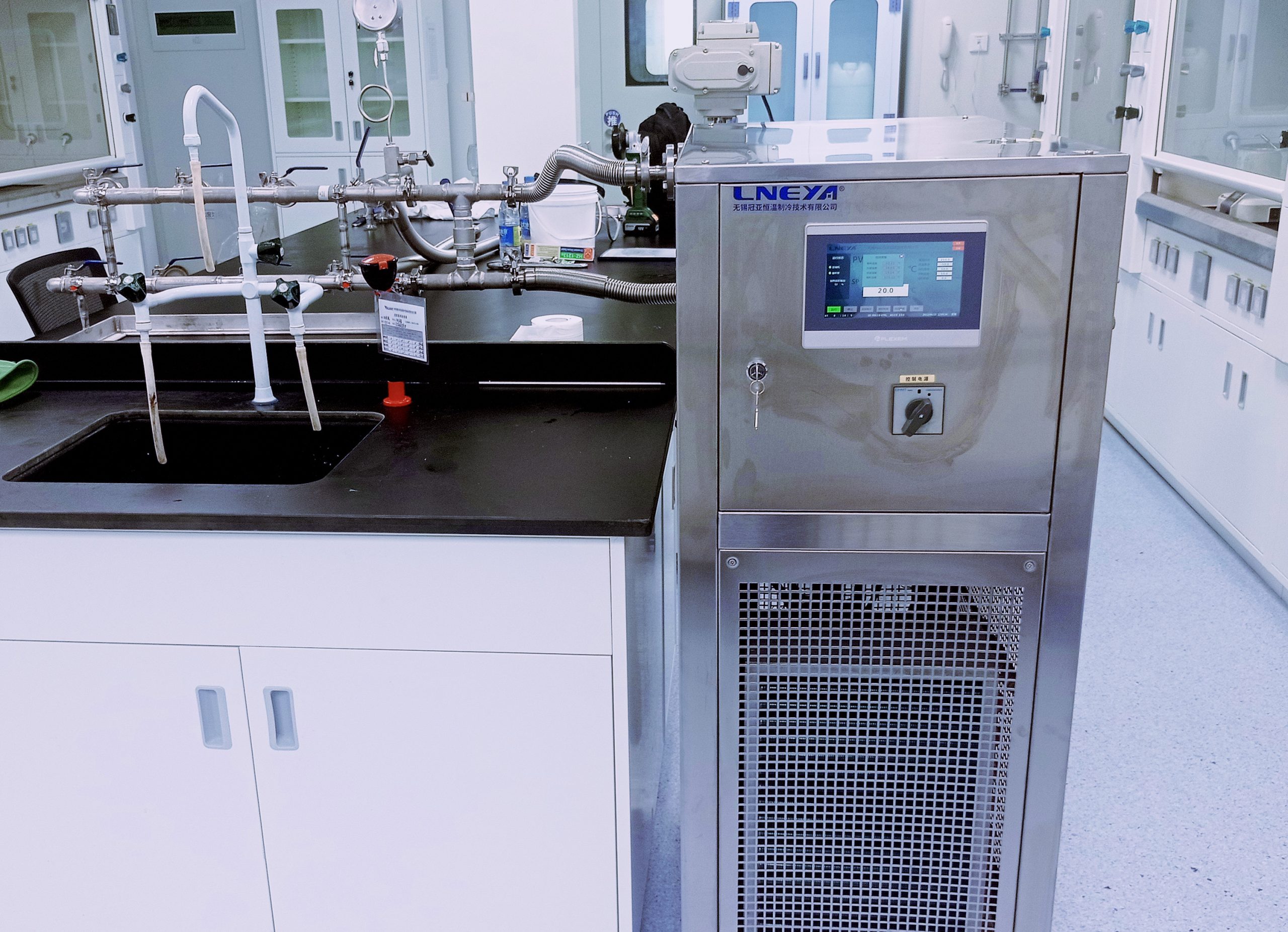
18011. Manual control: Manually operate the knob on the front of the reactor controller.2. Control by PC: The PC and the controller are connected by a network cable, and the operation is carried out on the PC.3. Controlled by thermostat: Silicone oil...
View details -

How does the cooling and heating system achieve simultaneous temperature control?
2001Temperature control system The thermostat has heating and cooling functions, and can use the same medium for continuous temperature control from -120℃~320℃. The heating and cooling system of cooling and heating system is mainly composed of four pa...
View details -
After Adding A Backwater to the Heater, Hot Water Will Come Out Anytime and Anywhere in Winter
1687The principle is also simple. A water pipe is added at the outlet of the hot water pipe to form a closed circuit. The recirculation pump is connected to the water heater. When the tap is turned on, the circulating pump automatically pumps the cold...
View details