 工業冷水機製造商 LNEYA Taiwan



Description of refrigeration principle in semiconductor wafer temperature control
NEWS 2416
In the operation of the semiconductor wafer temperature control refrigeration system, a state transition of a certain working fluid is used, and the necessary heat Q0 is extracted from the heat source of a lower temperature, and the heat Qk is sent to the heat source of the tropical heat through a storage process of the consumption power W. In this process, Qk = Q0 + W is taken from the conservation of energy.
In order to achieve temperature control of semiconductor wafer temperature migration, a process of lowering the temperature of the refrigerant to a lower temperature environment is forcibly performed, and heat is continuously extracted from the object to be cooled, and this is achieved within the boundary of the refrigeration technique. The process has several basic steps: phase change refrigeration: the use of liquid evaporation at low temperatures or the dissolution or sublimation of solids at low temperatures to extract heat from the object being cooled. Normal air conditioners are all such cooling steps. Gas expansion refrigeration: The high pressure gas can reach a lower temperature after adiabatic expansion, so that the low pressure gas can be reheated to cool. Gas eddy current refrigeration: After the high pressure gas is expanded by the vortex tube, it can be respectively hot and cold air flow, and can be cooled by the reheating process of the cool air flow. Thermoelectric cooling: The direct current is passed through the semiconductor thermopile, which can have a cold effect at one end and a thermal effect at the other end.

The temperature of the semiconductor wafer is controlled during operation. At the high temperature, no heat transfer medium evaporates, and it can be realized without pressure. -80 to 190 degrees, -70 to 220 degrees, -88 to 170 degrees, -55 to 250. Degree, -30 ~ 300 degrees continuous temperature control. The principle and function of semiconductor wafer temperature control have many advantages for the user: Because only the heat transfer medium in the expansion chamber is in contact with the oxygen in the air (and the temperature of the expansion tank is between normal temperature and 60 degrees), the reduction can be achieved. The heat transfer medium is oxidized and absorbs moisture in the air.
In the semiconductor wafer temperature control, the principle of refrigeration is as shown above. When the user controls the temperature control of the semiconductor wafer, the user should pay attention to the principle of refrigeration, and better operate the semiconductor wafer temperature control after understanding.
Related recommendations
-
The Phenomenon of Ice Jam in Low Temperature Chiller System
1602The phenomenon of ice jam in low temperature chiller system is mainly due to the excessive water in the refrigeration system. With the continuous circulation of refrigerants, the water in the refrigeration system gradually concentrates at the outl...
View details -

The use and characteristics of the SUNDI series of high and low temperature cooling circulators
2192The SUNDI series of high and low temperature cooling circulators are equipment for direct or auxiliary heating in the fields of biology, physics, chemical engineering, medical treatment, environmental protection, etc. Moreover, the temperature con...
View details -
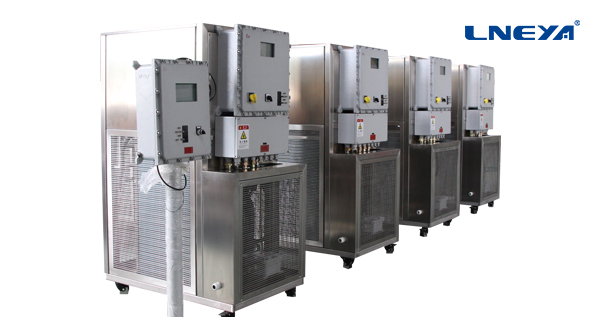
What should I pay attention to when using the reactor for chilling and cooling?
2033When using the reactor chilling and cooling and cooling device, users need to pay attention to their refrigeration and heating operations. Pay attention to the operation within a reasonable temperature range to avoid excessive temperature and pres...
View details -
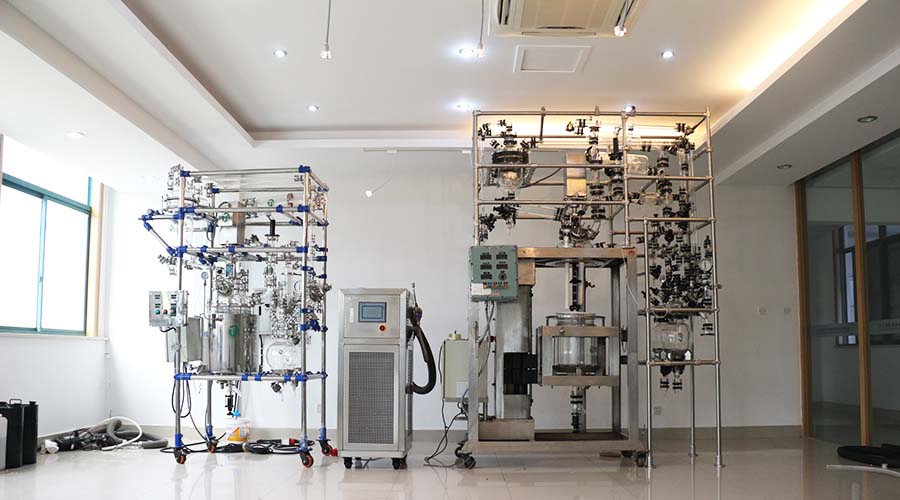
Approaching LNEYA 5 Main Products
3304Industrial Chiller:Industrial Chiller varies from dynamic temp. control systems, heating and cooling machine, water/air cooled chiller and heating circulator.Dynamic temp. control systems.All the industrial chiller differ sometimes considerably i...
View details