 工業冷水機製造商 LNEYA Taiwan



Principle of TCU temperature control system
Use area: can be used in various explosion-proof areas
The temperature control unit (TCU) is mainly used in reactor heating, cooling temperature control in fine chemical, chemical pharmaceutical, and biopharmaceutical processes. It can realize automatic control of temperature rise, temperature drop, constant temperature and distillation during the reaction process, especially suitable for the reaction process. There is a process control that requires heat and heat.
When the TCU temperature control unit is in high-efficiency operation, it must pay attention to timely protection and maintenance. If the equipment is actively handled under the condition that the equipment is subject to defects, the service life of the equipment will become longer.
Users can get a closed and repeatable temperature control over a wide temperature range, temperature control from -120 to 300 °C; avoid the need for replacement of traditional equipment and jacket maintenance; smaller fluid volume is also guaranteed The control loop reacts quickly and the thermal reaction delay is small. Built-in electric heating and heat conduction and auxiliary system, can be automatically opened according to demand, reducing steam pressure. The device has a standardized interface, which can increase the heat source heat exchange module according to actual needs.
The TCU device opens the angle of the electric regulating valve according to the instruction given by the system PLC, and controls the flow rate of the low temperature liquid into the reaction jacket jacket, thereby achieving energy saving and high efficiency. All signals fed back by this process are based on temperature.
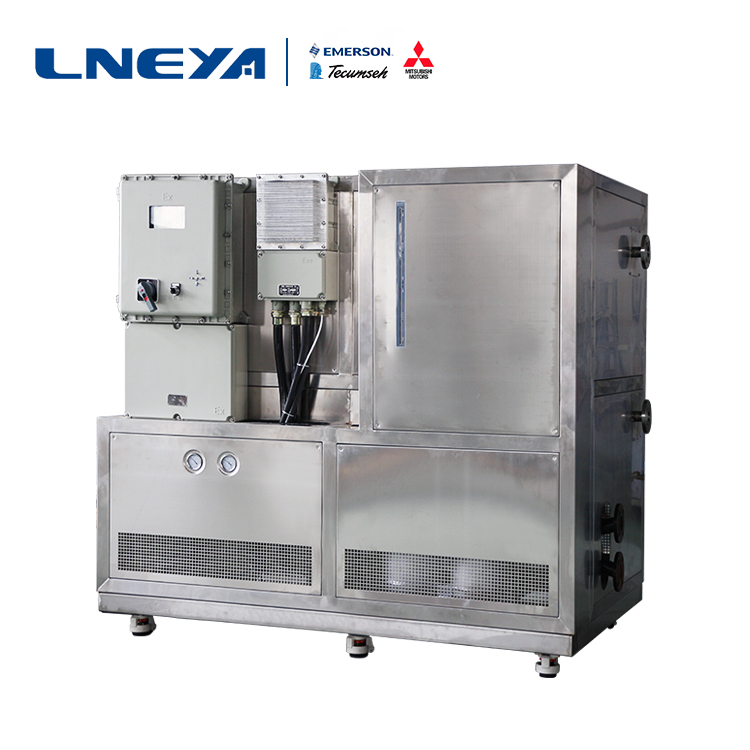
LNEYA’s TCU temperature control system principle:
1. The method of changing the control set value can respond to the system lag in the process as soon as possible, and get a small system overshoot. Control consists of two sets of PIDs (each group of PIDs are variable) control loops;
2. A specially designed lag predictor (no model self-built tree algorithm) generates a dynamic signal yc(t) instead of the process variable y(t) as a feedback signal. Generating an e(t) signal to the controller to cause the controller to predict that the control action has no large hysteresis, so that the controller can always generate a suitable control signal;
3. Through three-point sampling (material temperature point, temperature control system outlet temperature, temperature control system inlet temperature), through our company’s own model-free self-built tree algorithm and general anti-lag cascade algorithm.
Related recommendations
-
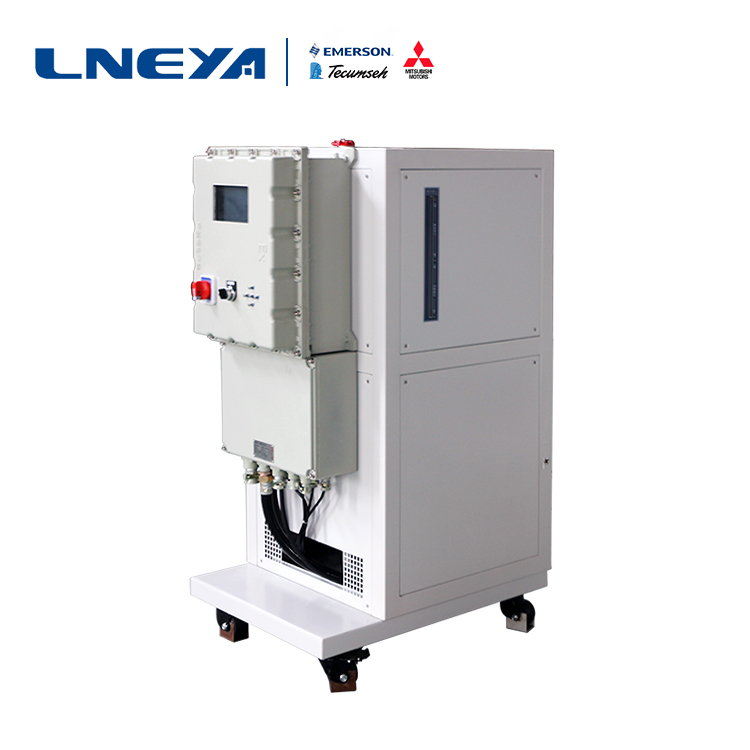
Bioreactor temperature rise and temperature control equipment
1748A bioreactor is a reaction system in which a naturally occurring microorganism or a microorganism having a special degrading ability is inoculated into a liquid phase or a solid phase. The two reactors currently studied the most are "elevator type...
View details -

How to use multiple reactors for high and low temperature integrated machine
2606Multiple reactors high and low temperature integrated machine temperature control system will be connected with thermal conductive synthetic oil and power supply before use, and multiple reactor high and low temperature integrated machine temperat...
View details -

Low temperature chilled lubricant selection considerations
2406When you use a cryogenic chilled, you definitely want to know about all aspects of the cryocooler. But one of the things that needs everyone's attention is that the type of lubricant for the chilled is chosen because there are many influencing fac...
View details -
Principle analysis of operation of refrigeration heating circulator
2020With the continuous development of technology, more and more refrigeration equipment has appeared in our lives, such as: refrigeration and heating circulators, in fact, they are not ordinary, are remarkable refrigeration equipment. The refrigerati...
View details