 工業冷水機製造商 LNEYA Taiwan



Features and applications of vacuum heat sink chillers
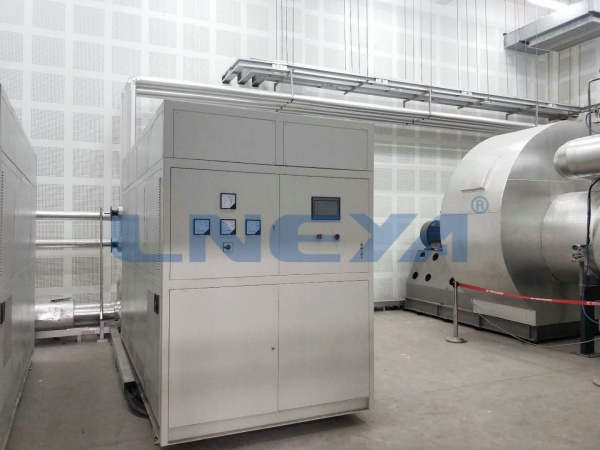
Vacuum heat sink chillers are a type of equipment specially designed to provide cooling in a high vacuum environment, and are typically used in scientific research, semiconductor manufacturing, aerospace, and other fields that require high-precision temperature control. This chiller can effectively remove heat from a high vacuum environment, ensuring temperature stability and reliability during experiments or production.


Application areas
- Scientific research:
- Cryogenic physics: When conducting low-temperature physics experiments, it is necessary to maintain extremely low temperatures in a high vacuum environment.
- Materials science: Study the performance of materials at different temperatures, especially under high vacuum conditions.
- Semiconductor manufacturing:
- Chip manufacturing: During semiconductor wafer processing, temperature needs to be precisely controlled to ensure process consistency and quality.
- Ion implantation: During the high-energy particle implantation process, a stable low temperature environment needs to be maintained.
- Aerospace:
- Satellite component testing: Thermal vacuum testing of satellite components is performed on the ground to simulate the space environment.
- Spacecraft thermal management: Cryogenic cooling systems are used in spacecraft to manage heat loads.
- Medical equipment:
- MRI equipment: Superconducting magnets in magnetic resonance imaging (MRI) equipment need to operate at extremely low temperatures.
- Cryogenic surgical instruments: Some cryogenic surgical instruments need to operate in a high vacuum and low temperature environment.
5. Other applications:
- Optical instruments: When conducting precision optical experiments in a high vacuum environment, a stable low temperature environment is required.
- Nuclear magnetic resonance spectrometer: When performing NMR spectroscopy under high vacuum conditions, precise temperature control is required.
Features of vacuum heat sink chillers
- High-precision temperature control:
- PID controllers or other advanced temperature control technologies are usually used to achieve high-precision temperature control.
- The control accuracy is generally ±0.1°C or less to ensure temperature stability.
- Wide temperature range:
- It can provide cooling capacity from room temperature to extremely low temperatures (such as below -200°C).
- Suitable for a variety of different experimental and production needs.
- Rapid cooling capability:
- It has the ability to quickly cool down and can reduce the temperature to the required level in a short time.
- Rapid cooling helps improve experimental efficiency, especially in applications where temperature conditions need to be changed frequently.
- Circulating cooling system:
- Heat is removed by circulating a circulating cooling medium (such as liquid nitrogen, helium or other refrigerants) in a high vacuum environment.
- The circulation system can ensure uniform temperature distribution and avoid local overcooling or overheating.
- Automation and remote control:
- Usually has highly automated control functions, which can automatically adjust the temperature according to actual needs.
- Support remote monitoring and data logging functions to facilitate real-time understanding of temperature changes.
- Safety protection measures:
- Equipped with a variety of safety protection measures, such as over-temperature protection, over-pressure protection, leak detection, etc.
- Safety protection measures help ensure the safe operation of the equipment and prevent accidents.
- Vacuum-resistant design:
- Use vacuum-resistant materials and sealing design to ensure normal operation in high vacuum environments.
- Usually has good corrosion resistance and high temperature resistance.
Vacuum heat sink chillers are widely used in scientific research, semiconductor manufacturing, aerospace and other fields. Through precise temperature control, rapid cooling capacity and automatic control functions, they ensure temperature stability and reliability in a high vacuum environment. When choosing a vacuum heat sink chiller, it is necessary to determine the most suitable equipment based on specific temperature requirements, cooling requirements, and application environment. It is recommended to consult a professional equipment supplier or engineer to ensure the performance and safety of the system.
Recommended Products
loading…
已经是到最后一篇内容了!