 工業冷水機製造商 LNEYA Taiwan



Types of Environmental Tests
The environmental chamber is one of the many types of experiments used in scientific research, product development, production and evaluation. The fundamental difference between environmental tests and other tests is that there are specific requirements for the environmental conditions of the tests. Its purpose is to obtain the product material, the change of the structure, function, performance, information of products’ physical response characteristics to the environmental stress and ultimate ability to the environment in specific environmental conditions, simulating the environment, so as to provide a basis for various decisions or take appropriate measures. Therefore, environmental testing is generally not carried out in the familiar living and working environment, that is, under the so-called normal temperature, pressure and often encountered humidity conditions. More scientifically, says it is in the environmental testing standards specified in the standard atmospheric conditions (usually for 15 ~ 35 ℃, 50 ~ 80% RH, 104 ~ 106 kPa) outside under the condition of the experiment, namely environmental chamber.
Types of environmental tests
It is generally believed that environmental test can be used as a means to check the stability of the batch production process and determine whether the product can be accepted before leaving the factory, that is, environmental acceptance test and environmental routine test, which are the means to check the quality of the batch production. In fact, the purpose of environmental testing goes far beyond this range, which is not only the assessment of conformity of the product adaptability to the environment requirements and evaluation means of product environment adaptability, but also a tool to find the environmental adaptability design flaws, improve product design information and a tool that access to products of all kinds of information, so as to get a better use of the product. Thus, it is also a kind of test that makes the products value-added. Because of this, more and more attention has been paid to environmental tests at home and abroad. According to MIL-STD-810F environmental engineering considerations and laboratory test methods and GJB4239 general requirements for equipment environmental engineering, environmental tests can be divided into three categories, namely, natural environmental tests, laboratory environmental tests and operational environmental tests.
Related recommendations
-
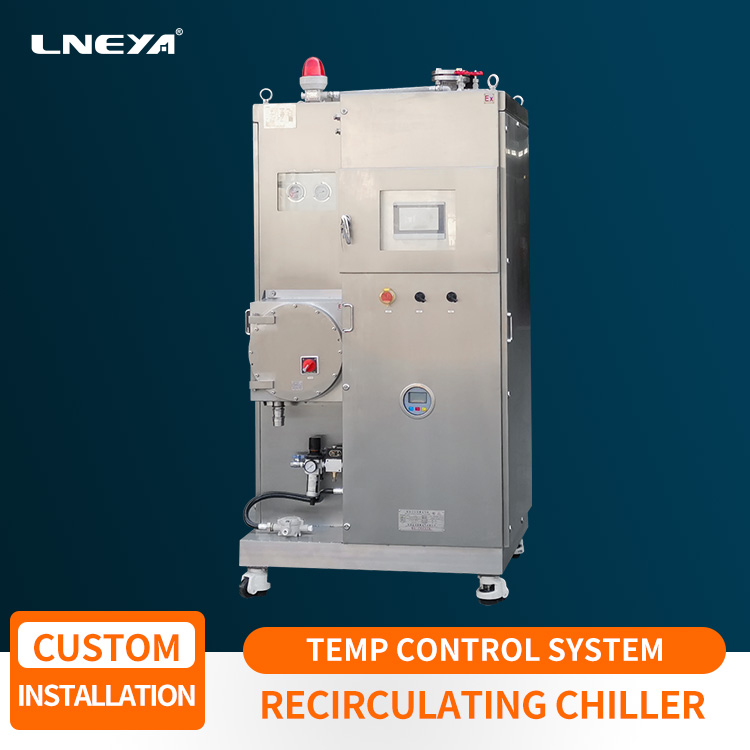
Structural Characteristics of Industrial Recirculating Chiller
1614In the chemical reaction, there are strict requirements for the reaction temperature. It is necessary to raise the temperature to an appropriate temperature to carry out the chemical reaction smoothly. After the reaction, the temperature in the re...
View details -
SUNDI Cooling And Heating System-R & D testing of organic synthetic materials and fine chemicals
2221LNEYA's customer is a research institute engaged in the research, development and production of high-performance, environmentally-friendly new organic materials and fine chemicals.The adhesives produced by customers can be used in integrated circu...
View details -

Global cooperation against COVID-19, LNEYA provides support within its ability
2528At the current stage of virus transmission, it is imperative to study effective drugs and vaccines against coronavirus. As a manufacturer of high-precision temperature control technology, we believe that it is our responsibility to support the wo...
View details -
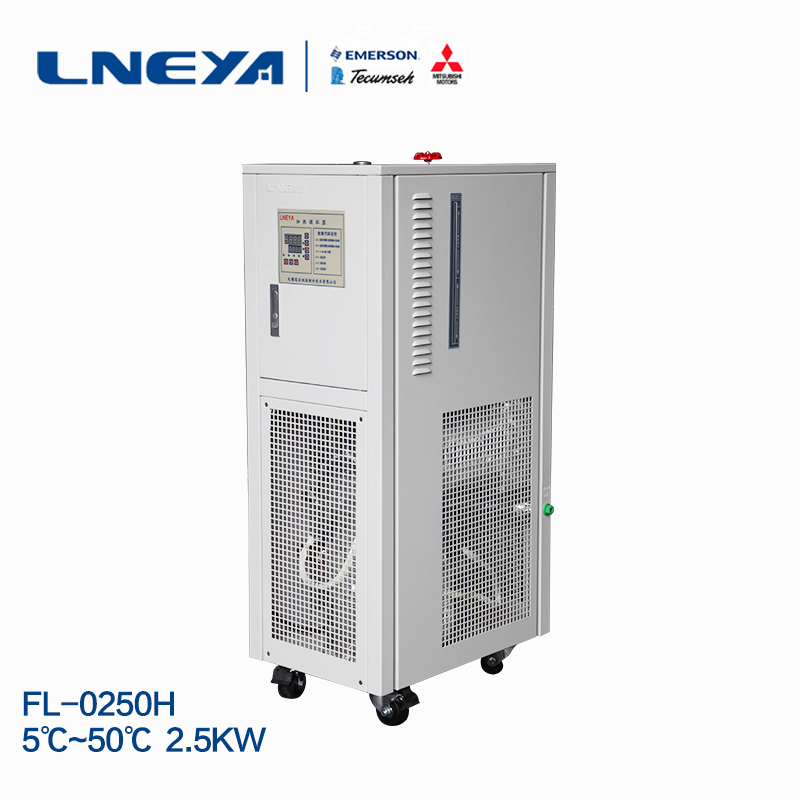
Steaming system temperature control safety requirements
2149The steaming system temperature control is one of the low temperature refrigerators designed and produced by Wuxi Guanya LNEYA. The temperature range is from -5 °C to -150 °C. The secondary subcooling technology is adopted, the refrigeration is ra...
View details