 工業冷水機製造商 LNEYA Taiwan



What should I do if there is noise from industrial cooling and heating chillers?
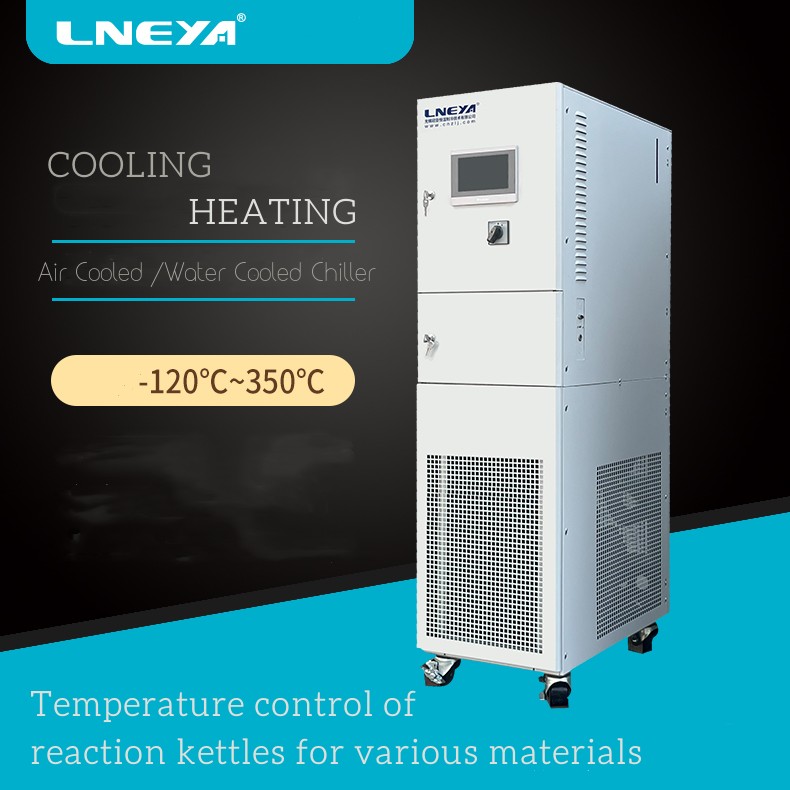
The industrial cooling and heating temperature control equipment adopts a PID algorithm temperature control system to accurately adjust the temperature based on the detected temperature and the set temperature value, improving the drawbacks of traditional manual control of the reaction kettle.
1. The industrial cooling and heating temperature control equipment, the chiller circulating pump, converts electrical energy into mechanical energy to promote the liquid phase circulation of the heat transfer oil, and transfers heat to the reaction kettle. The heat transfer oil exchanges with the materials in the reaction kettle and then returns to the oil heater, where it is heated again under the pressure of the pump and enters the next cycle. Through repeated cycles, heat is transferred and transported, heated and cooled, or the temperature of the reactor is maintained to meet the temperature requirements required by the production process.
2. When high noise occurs during the operation of the industrial cooling and heating temperature control equipment, the chiller needs to be inspected and promptly addressed if any problems are found. The internal components of the industrial grade cold and hot temperature control thermostat are excessively worn, such as the wear and tear of the cylinder body and valve plate of the plunger pump, as well as the wear and tear of the matching parts between the plunger and the plug hole, causing serious internal leakage in the pump. When the pump outputs high-pressure and low flow oil, flow pulsation will occur, causing high noise.
3. The pump valve plate is also one of the important components that can easily cause noise. Industrial cooling, heating, and temperature control equipment. During use, the water chiller may shorten the unloading groove and change the unloading position due to surface wear or oil sludge deposition at the opening of the unloading groove, resulting in oil trapping and higher noise.
4. When air is mixed into the cold water oil of industrial cooling and heating temperature control equipment, it is easy to form cavitation phenomenon in its high-pressure zone, which spreads in the form of pressure waves, causing oil oscillation and causing cavitation noise in the system.
Related recommendations
-

Troubleshooting of Common Faults of Industrial Water Chiller
2494As we all know, with the rapid development of modern industrial technology, in order to improve production efficiency, improve product quality and reduce consumption costs, the demand for temperature control equipment in the process is higher and ...
View details -

Manufacturers of temperature simulation systems for chip testing analyze why chip testing is necessa
2054When users run the chip test temperature simulation system, they need to understand the chip test clearly. For this reason, the manufacturer LNEYA analyzes the relevant knowledge of the chip test and provides you with more detailed knowledge. Func...
View details -

The advantages of water cooled chiller you need to know
1911Industrial chillers can be generally divided into water-cooled and air-cooled according to the type of refrigeration. The heat exchange medium of Water Cooled Chillers is water.LNEYA has designed and developed a new type of temperature control equ...
View details -

What if the cooling rate of the cooling and heating temperature control system of the reactor slows
2092LNEYA cooling and heating temperature control system is a laboratory instrument and equipment for temperature control of supporting reactors in pharmaceutical and chemical laboratories and other industries. It adopts a fully closed circulation pip...
View details