 工業冷水機製造商 LNEYA Taiwan



How Refrigerated Circulators Maintain Stable Cooling Performance
In many industrial and laboratory cooling applications, users often notice a common problem. The system may cool quickly at the beginning, but after running for some time, temperature stability becomes worse. Cooling speed slows down, and small fluctuations begin to appear in the process. A refrigerated circulator can help you solve this problem.
It is not only a cooling device but also a system designed to maintain continuous and stable heat transfer between the process and the refrigeration unit.
Why Stable Cooling Matters More Than Low Temperature
In industrial processes, achieving a very low temperature is often not the main goal. What really matters is whether the temperature can remain stable over time under changing heat loads.
For example, in semiconductor testing, battery cycling, or chemical reaction control, even a small temperature fluctuation can affect product consistency, reaction behavior, or measurement accuracy. A stable 20°C process is often more valuable than an unstable 5°C condition.
How Heat Moves Through a Refrigerated Circulation Loop
To understand how a refrigerated circulator maintains stability, you need to understand how heat moves inside a closed-loop system. Inside the system, heat does not disappear instantly. It moves through a continuous energy exchange process.
The process generates heat during operation. Then the circulating fluid absorbs this heat from the process. The pump transports the warmed fluid back to the refrigeration unit. And the refrigeration unit removes heat from the fluid. The cooled fluid returns to the process again.
This cycle repeats continuously, forming a closed thermal loop. Because of this continuous loop, the system can maintain a relatively stable thermal condition even when external heat loads are constantly changing.
Why Refrigerated Circulators Are Critical in This Process
Unlike static cooling systems, a refrigerated circulator does not only remove heat once. It continuously transfers energy between the process and the refrigeration unit. This continuous circulation improves thermal response speed and reduces temperature lag between the equipment and the actual process.
It also allows the system to react dynamically when process conditions change, such as sudden heat generation or load variation. This is the foundation of stable process temperature control in modern industrial systems.
Signs That Cooling Performance Is Declining
In industrial applications, cooling performance degradation usually does not happen suddenly. Instead, it appears gradually through several observable signs. One of the first signs is longer stabilization time. The system takes more time to reach the target temperature compared to normal operation conditions.
Another sign is increased temperature fluctuation during operation. Even if the average temperature remains within range, small oscillations begin to appear more frequently.
Process temperature drift is also a common indicator. The system may maintain equipment temperature, but the actual process temperature slowly deviates from the setpoint. Finally, energy consumption may increase without any change in process conditions. This usually means the system is working harder to maintain the same cooling performance.
How to Keep Refrigerated Circulator Performance Stable
Maintaining stable cooling performance is not only about selecting the right refrigerated circulator. It is also about how the system is operated, maintained, and matched with the real process conditions.
One of the most important factors is circulation stability. A stable flow ensures that heat is continuously and evenly transferred between the process and the refrigeration system. When flow becomes unstable, temperature differences begin to appear across the system.
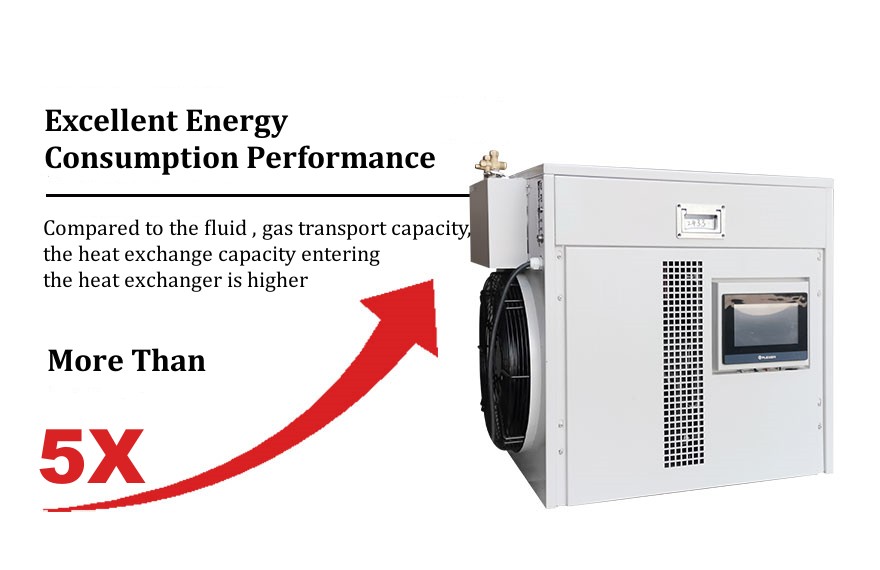
Another key factor is heat transfer efficiency. Keeping heat exchangers clean and ensuring good fluid quality helps maintain fast and consistent thermal exchange. Any reduction in heat transfer efficiency directly affects system response speed.
Proper thermal load management is also essential. The system should always operate within its designed capacity range. Continuous overload operation will reduce stability and shorten equipment lifespan.
Conclusion
If you wish to improve cooling stability and reduce temperature fluctuations, please feel free to contact us. LNEYA provides high-performance refrigerated heating circulators, industrial chillers, and advanced process temperature control systems designed for precise and stable thermal management.
Need a custom cooling solution for your process?
FAQ
CONTACT US
TEL:
EMAIL:
WeChat & WhatsApp:

Wechat QR