 工業冷水機製造商 LNEYA Taiwan



Semiconductor Manufacturing: Precision Temperature Control
Semiconductor manufacturing is one of the most advanced manufacturing processes in modern industry. Every integrated circuit, memory chip, processor, and power semiconductor begins with thousands of highly controlled production steps.
Throughout these processes, temperature is not simply an operating parameter—it is a critical factor that directly influences process stability, production yield, product consistency, and long-term device reliability.

Semiconductor Manufacturing Process Overview
Semiconductor manufacturing is a multi-step process that transforms silicon into integrated circuits, and temperature control is involved in almost every stage. The process begins with wafer production, where silicon is refined and formed into extremely pure and flat wafers that serve as the base of all chip fabrication.
Next comes wafer fabrication, which includes photolithography, deposition, etching, and ion implantation to build complex circuit patterns layer by layer on the wafer surface. After fabrication, the wafers are tested to identify functional chips, then cut into individual dies and packaged into usable semiconductor devices.
This entire process requires extremely high precision and strict environmental control to ensure that each chip meets performance and reliability standards.
Key Manufacturing Processes That Require Temperature Control
Wafer Cleaning
Wafer cleaning is one of the first and most crucial processes in semiconductor manufacturing. The purpose of cleaning is to remove particles, organic residues, metal contamination, and chemical impurities before subsequent processing. Cleaning efficiency depends on multiple factors, including chemical concentration, flow rate, and liquid temperature.
Stable temperature helps maintain consistent chemical activity, improving cleaning quality while reducing process variation.
Photolithography
Photolithography is widely recognized as one of the most precise manufacturing steps in semiconductor production. During lithography, microscopic circuit patterns are transferred onto the wafer surface through optical exposure.
Even extremely small temperature changes may cause thermal expansion of wafers, optical components, or positioning stages, reducing alignment accuracy.
Thin Film Deposition
Thin film deposition creates functional material layers on wafer surfaces. Film thickness, uniformity, adhesion, and electrical properties are all influenced by process temperature. Accurate temperature regulation helps maintain stable deposition conditions and improves wafer-to-wafer consistency across production batches.
Etching
Etching removes selected materials from the wafer surface to create the microscopic structures that form integrated circuits. Modern semiconductor manufacturing relies on extremely precise etching processes. Whether it is wet etching or plasma etching, the process temperature will directly affect the reaction rate, material selectivity, and surface quality.
If the process temperature fluctuates, etching depth may become inconsistent across the wafer, increasing process variation and reducing manufacturing yield.
Packaging and Final Testing
Temperature control remains important even after wafer fabrication is complete. During packaging, semiconductor devices may undergo thermal curing, bonding, or encapsulation processes. Final electrical testing is often performed under multiple temperature conditions to verify product reliability.
Process Temperature Control Logic in Semiconductor Manufacturing
In semiconductor manufacturing, temperature control is not only about cooling equipment but about controlling the actual process temperature. First, temperature sensors are placed at key process points to directly measure real operating temperature. Then, the system compares measured temperature with the target setpoint and calculates the deviation.
Finally, the control system dynamically adjusts heating power, cooling capacity, and flow rate to eliminate temperature deviation and maintain stable process conditions. This closed-loop control structure ensures high precision and stable operation even under fluctuating process loads.
Temperature Control Equipment in Semiconductor Manufacturing
Semiconductor manufacturing depends on multiple thermal control systems working together across different production stages. Each type of equipment is designed to handle specific heat loads, process sensitivity, and precision requirements.
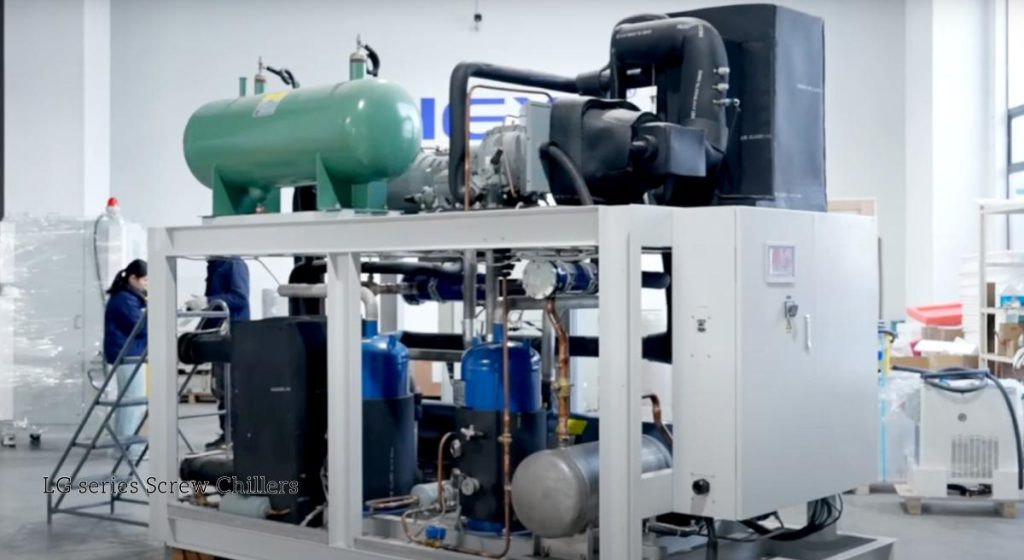
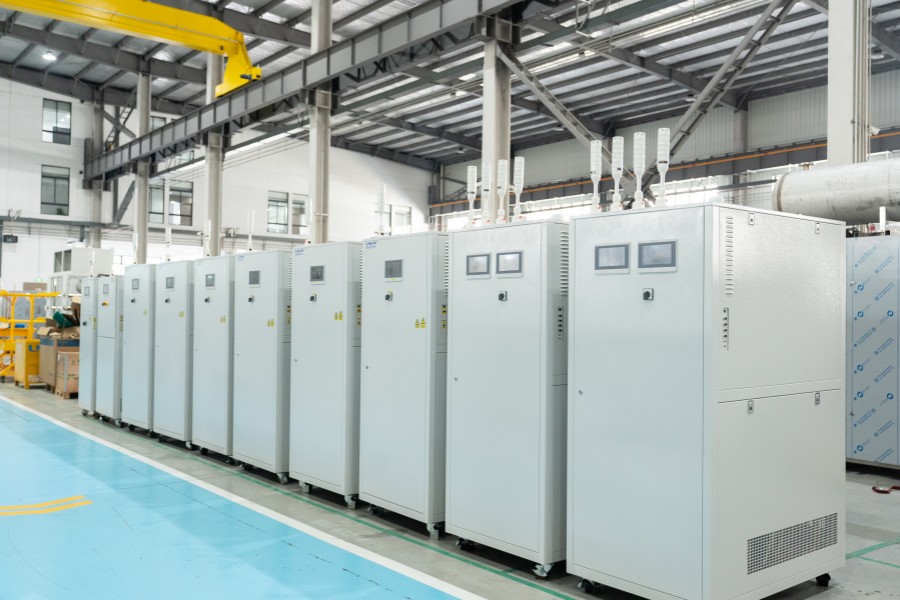
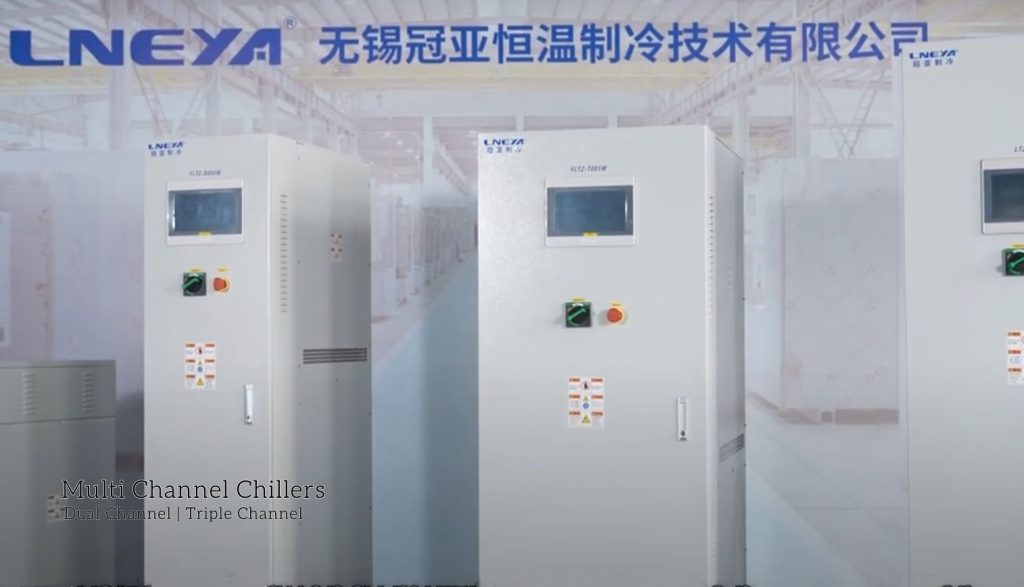
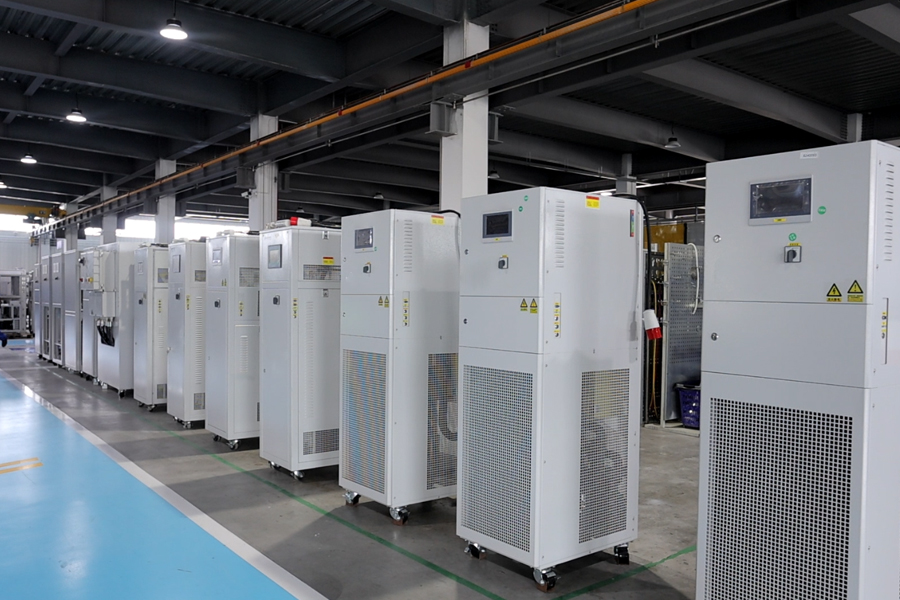
Semiconductor chillers are commonly used to provide stable cooling for lithography systems, etching tools, vacuum equipment, and wafer processing machines. These systems focus on maintaining continuous and highly stable temperature conditions.
Process temperature control systems are used when both heating and cooling are required. Instead of controlling coolant temperature alone, they directly regulate the process temperature to maintain precise operating conditions.
Refrigeration circulators are widely used in semiconductor laboratories, material testing, and research and development scenarios, and are suitable for applications that require flexible and stable temperature control. High dynamic temperature control systems are designed for applications requiring rapid temperature changes while maintaining precise stability under varying thermal loads.
Key Challenges in Semiconductor Thermal Management
One of the biggest challenges in semiconductor manufacturing is increasing heat density. As chip performance improves, more heat is generated in smaller areas. Another challenge is process miniaturization. As feature sizes shrink, thermal tolerance becomes extremely narrow, requiring higher precision temperature control.
Continuous production also places high demands on thermal systems. Semiconductor fabs operate 24/7, requiring stable and reliable cooling performance over long periods. Cleanroom compatibility is also essential. Any thermal system must avoid vibration, contamination, and airflow disturbance.
Conclusion
LNEYA provides industrial-grade temperature control solutions designed for semiconductor manufacturing environments, helping customers achieve higher precision, better stability, and improved production efficiency.
If you have high temperature control requirements in semiconductor manufacturing processes and need professional temperature control equipment tailored to various process scenarios, please feel free to contact us.
Need a custom cooling solution for your process?
FAQ
CONTACT US
TEL:
EMAIL:
WeChat & WhatsApp:

Wechat QR